Commercial properties depend on reliable roofing systems to protect employees, customers, inventory, equipment, and the building itself. Business owners and property managers searching for a Willowick commercial roofer may need help with an active leak, storm damage, deteriorated roofing materials, drainage issues, or a complete commercial roof replacement.
Commercial roofs can differ significantly from residential roofing systems. Many commercial buildings use flat or low-slope roofing, larger drainage systems, rooftop equipment, multiple penetrations, and specialized roofing materials.
Because of these differences, commercial roofing problems should be evaluated based on the design and condition of the entire system.
Commercial Roofing in Northeast Ohio
Willowick commercial properties experience challenging weather throughout the year.
Roofing systems may be exposed to:
- Heavy rain
- Snow accumulation
- Ice
- Freeze-thaw cycles
- Strong winds
- Summer heat
- Ultraviolet exposure
- Standing water
Commercial roofs often have large surface areas, which can make proper drainage and routine maintenance especially important.
Common Commercial Roofing Problems
Commercial roof problems may develop gradually or appear after severe weather.
Common issues can include:
- Roof leaks
- Ponding water
- Damaged membrane
- Open seams
- Flashing deterioration
- Drainage problems
- Clogged roof drains
- Damaged penetrations
- Storm damage
- Wet insulation
- Deteriorated decking
Small defects can become larger problems if they allow moisture into the roofing system.
Commercial Roof Inspections
Routine inspections can help identify roofing problems before they become major repairs.
A commercial roof inspection may include evaluating:
- Roofing membrane
- Seams
- Flashing
- Roof drains
- Scuppers
- Gutters
- Rooftop equipment
- Penetrations
- Parapet walls
- Roof edges
- Signs of standing water
- Visible storm damage
The inspection should focus on both the roofing surface and areas where water is most likely to enter.
Commercial Roof Leak Repair
Commercial leaks can be difficult to locate because water may travel through the roofing assembly before becoming visible inside the building.
Common leak areas may include:
- Seams
- Flashing
- Roof drains
- HVAC penetrations
- Plumbing vents
- Roof edges
- Skylights
- Membrane punctures
Identifying the true source of the leak is important before repairs begin.
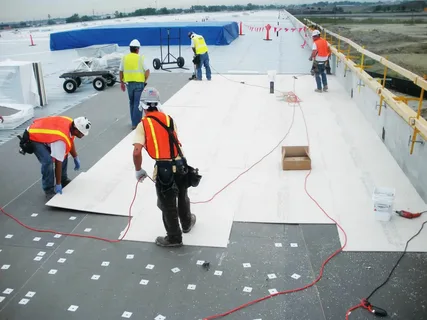
Flat and Low-Slope Roofing
Many commercial buildings use low-slope or flat roofing systems.
These roofs require different materials and drainage strategies than steep-slope residential roofs.
Depending on the building, commercial roofing systems may include:
- TPO roofing
- EPDM roofing
- Modified bitumen
- Metal roofing
- Other membrane systems
The appropriate roofing material depends on the existing roof, building design, drainage, budget, and long-term goals.
TPO Roofing
TPO is a common single-ply commercial roofing membrane.
It can be used on many flat and low-slope buildings.
Potential benefits may include:
- Large membrane sheets
- Heat-welded seams
- Reflective surface options
- Compatibility with many commercial applications
Installation quality is critical because seams, penetrations, and roof edges must be properly detailed.
EPDM Roofing
EPDM is another common commercial roofing material.
It is a synthetic rubber membrane used on many low-slope roofs.
Commercial property owners may choose EPDM because of its established use on commercial buildings and its ability to cover large roof areas.
Like any roofing system, proper installation and maintenance are important.
Commercial Metal Roofing
Some commercial buildings use metal roofing systems.
Metal roofing may be appropriate for certain:
- Warehouses
- Industrial buildings
- Retail properties
- Agricultural buildings
- Commercial structures
Commercial metal roofing should be inspected for issues such as:
- Loose fasteners
- Damaged seams
- Corrosion
- Flashing problems
- Sealant deterioration
- Storm damage
Commercial Roof Replacement
A roof replacement may be necessary when the existing system has extensive deterioration or repeated repairs are no longer practical.
Replacement may be considered when:
- Leaks occur repeatedly
- Roofing materials are significantly deteriorated
- Insulation has become saturated
- The roof has widespread storm damage
- Repairs are becoming increasingly expensive
- The system is approaching the end of its expected service life
A complete replacement allows contractors to evaluate the underlying roofing assembly and correct damaged areas.
Roof Recover Versus Complete Tear-Off
Some commercial properties may qualify for a roof recover, while others require complete removal.
The appropriate approach depends on factors such as:
- Number of existing roofing layers
- Moisture within the roofing system
- Deck condition
- Building code requirements
- Existing insulation
- Structural considerations
A roofing inspection can help determine which approach is appropriate.
Commercial Roof Decking
Commercial roof decks may consist of different materials depending on the building.
These may include:
- Metal decking
- Wood decking
- Concrete
- Other structural systems
Damaged decking should be identified before a new roofing system is installed.
Roof Insulation
Insulation can be an important part of a commercial roofing system.
Wet insulation may reduce performance and contribute to additional roofing problems.
During replacement or major repair work, contractors may evaluate whether insulation has been affected by water intrusion.
Roof Drainage
Commercial roof drainage is especially important on flat and low-slope roofs.
Drainage systems may include:
- Internal drains
- Scuppers
- Gutters
- Downspouts
If drainage is blocked or improperly designed, water may remain on the roof.
Standing water can place additional stress on roofing materials and may contribute to leaks or deterioration.
Ponding Water
Ponding water occurs when water remains on a roof instead of draining away.
Possible causes include:
- Clogged drains
- Low areas
- Poor roof slope
- Structural movement
- Improper installation
Recurring ponding water should be evaluated.
Simply repairing the membrane may not solve a drainage-related problem.
Commercial Roof Flashing
Flashing protects vulnerable transitions throughout a commercial roofing system.
Common flashing locations include:
- Parapet walls
- Roof edges
- HVAC units
- Pipes
- Roof drains
- Skylights
- Other penetrations
Commercial flashing failures can create significant water intrusion if they are not corrected.
Rooftop HVAC Equipment
Commercial buildings often have heating and cooling equipment installed on the roof.
These systems create additional penetrations and flashing areas.
Roofing contractors should inspect around:
- HVAC curbs
- Electrical penetrations
- Pipes
- Ductwork
- Equipment supports
These locations can become common leak points.
Commercial Storm Damage
Strong Northeast Ohio storms can affect commercial roofing systems.
Damage may include:
- Membrane tears
- Loose roofing materials
- Damaged flashing
- Punctures
- Wind-related edge damage
- Fallen branches
- Hail-related damage
After significant storms, commercial property owners may want the roofing system inspected for visible damage.
Insurance carriers ultimately determine whether storm-related damage is covered under a property owner’s policy.
Snow and Ice
Commercial roofs can hold large amounts of snow during winter.
Snowmelt may also create drainage problems if roof drains become blocked by snow or ice.
Building owners should pay attention to:
- Drainage conditions
- Ice buildup
- Interior leaks
- Roof-edge ice
- Unusual roof movement
Roof access during winter should be handled carefully because commercial roofs can become extremely slippery.
Preventive Commercial Roof Maintenance
Routine maintenance can help extend the useful life of a commercial roofing system.
Maintenance may involve:
- Clearing drains
- Removing debris
- Inspecting seams
- Checking flashing
- Evaluating roof penetrations
- Monitoring previous repair areas
- Looking for signs of standing water
Preventive maintenance can help identify small problems before they develop into larger leaks.
Emergency Commercial Roofing
Some commercial roofing problems require immediate attention.
Emergency situations may include:
- Significant active leaks
- Storm damage
- Large membrane openings
- Tree damage
- Severe flashing failures
- Roofing materials blown loose
Temporary measures may sometimes be used to reduce additional water intrusion until permanent repairs can be completed.
Protecting Business Operations
Roof leaks can disrupt normal business operations.
Water intrusion may damage:
- Inventory
- Computers
- Machinery
- Electrical systems
- Ceilings
- Walls
- Flooring
- Office equipment
Addressing roofing problems early can help reduce the risk of business interruption.
Roofing for Property Managers
Property managers may be responsible for several buildings or tenant spaces.
A clear roofing plan can help property managers track:
- Roof age
- Repair history
- Leak locations
- Maintenance
- Replacement planning
- Budget needs
Keeping accurate roofing records can also make future repair and replacement decisions easier.
Commercial Roofing Estimates
A commercial roofing estimate should clearly describe the work being proposed.
Depending on the project, an estimate may include:
- Existing roof removal
- Disposal
- Deck repairs
- Insulation
- Roofing membrane
- Flashing
- Roof drains
- Edge metal
- Penetration work
- Cleanup
- Warranty information
Commercial property owners should compare the entire scope of work rather than only the total project price.
Questions to Ask a Commercial Roofing Contractor
Business owners and property managers may want to ask:
- What roofing system is currently installed?
- Can the roof be repaired?
- Is replacement necessary?
- Is moisture present beneath the roofing material?
- Does the roof have drainage problems?
- Will the existing roofing system be removed?
- What new roofing material is recommended?
- How will rooftop equipment be handled?
- What warranties are included?
- How will the project affect business operations?
These questions can help property owners better understand the project.
Planning Commercial Roofing Around Business Hours
Commercial roofing work may need to be coordinated around employees, customers, tenants, deliveries, and normal operating hours.
Planning may involve:
- Establishing safe work areas
- Protecting building entrances
- Coordinating material deliveries
- Managing debris
- Communicating with property managers
- Scheduling around business operations
Good communication can help reduce disruption during a commercial roofing project.
S&K Construction And Remodeling LLC
S&K Construction And Remodeling LLC provides roofing services throughout Willowick and surrounding Northeast Ohio communities.
Commercial roofing services may include:
- Roof inspections
- Commercial roof repairs
- Leak investigation
- Flat roofing
- Low-slope roofing
- Roof replacement
- Storm damage inspections
- Flashing repairs
- Drainage evaluation
- Emergency roofing services
Each commercial property should be evaluated individually before recommending a repair or replacement strategy.
Protecting a Commercial Property Long Term
A commercial roof is an important part of protecting the building and the business operating underneath it.
Routine inspections, proper drainage, timely repairs, and planned replacement can help reduce unexpected roofing emergencies.
Business owners and property managers who notice active leaks, standing water, membrane damage, flashing deterioration, storm damage, or other warning signs should consider having the roofing system inspected.
Addressing problems early may help reduce damage, control long-term roofing costs, and protect normal business operations.
That gives you 4 Willowick articles. After a couple commercial/exact-match anchors like this, I’d make the next Willowick backlink branded or natural instead of stacking more money-keyword anchors.