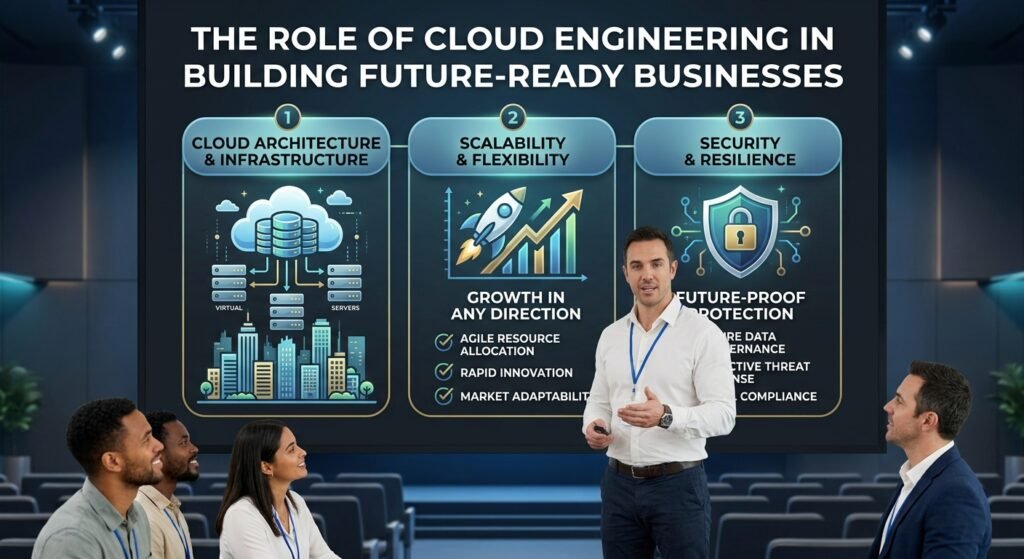
Technology is changing how businesses operate, serve customers, and develop new digital products. As organizations adopt artificial intelligence, data platforms, SaaS applications, and digital services, they need infrastructure that can support growth without creating unnecessary complexity.
This is where Cloud Engineering Services can play an important role. Cloud engineering combines architecture, automation, security, development, and infrastructure management to create technology environments that are flexible, scalable, and reliable.
Rather than simply moving applications to the cloud, businesses can use cloud engineering principles to build infrastructure that is prepared for changing workloads and future technology requirements.
What Is Cloud Engineering?
Cloud engineering involves designing, building, deploying, and maintaining applications and infrastructure in cloud environments. It can include cloud architecture, migration, infrastructure automation, DevOps, security, monitoring, performance optimization, and application modernization.
Businesses can use Cloud Engineering Solutions to address different technical requirements depending on their size, industry, applications, and long-term objectives.
A startup may need a scalable environment for a new application, while an established organization may need to modernize legacy systems and connect them with newer cloud-based platforms.
1. Build Infrastructure That Can Scale
Business workloads rarely remain constant. A company may start with a small application and eventually experience significant increases in users, transactions, or data.
Traditional infrastructure can make this growth difficult because additional physical resources may need to be purchased and configured.
With properly designed cloud infrastructure, businesses can scale computing, storage, and other resources according to demand.
Prepare for Business Growth
Professional Cloud Engineering Services can help organizations design architectures that support changing workloads. This is particularly useful for businesses experiencing seasonal traffic, rapid growth, or unpredictable demand.
Instead of rebuilding infrastructure every time requirements change, businesses can create an environment capable of adapting to those changes.
2. Modernize Legacy Systems
Many organizations continue to rely on applications that were developed years ago. These systems may support important business operations but can be difficult to maintain, integrate, or scale.
Cloud engineering can provide a structured path toward modernization.
Businesses can assess existing applications and determine whether workloads should be migrated, refactored, redesigned, or replaced. This allows organizations to modernize gradually rather than disrupting all operations at once.
Cloud Infrastructure Services can also help businesses create the foundation required to connect modern applications with existing systems.
3. Support Faster Innovation
Businesses need to experiment with new technologies without spending excessive time preparing infrastructure.
Cloud environments can make development and testing resources easier to provision. When combined with automation, engineering teams can create consistent environments for testing new applications and features.
This can shorten development cycles and give businesses more flexibility when exploring technologies such as AI, machine learning, analytics, and automation.
4. Improve Security
Security should be considered from the beginning of a cloud architecture rather than added after deployment.
Cloud engineering can incorporate identity management, access controls, encryption, network security, monitoring, and automated security checks into infrastructure and application workflows.
A well-designed environment can also provide better visibility into infrastructure activity and help organizations identify potential security issues.
Businesses should evaluate security requirements based on their applications, data, industry regulations, and risk profile.
5. Automate Infrastructure and Deployment
Manual infrastructure management can become increasingly difficult as organizations grow.
Automation allows teams to standardize infrastructure provisioning, application deployment, testing, backups, and monitoring.
Infrastructure-as-code is one example. Instead of manually configuring each environment, teams can define infrastructure through code and reproduce consistent environments when needed.
This approach can reduce human error and make infrastructure changes easier to review and manage.
6. Improve Reliability and Availability
Future-ready businesses need technology systems that remain dependable as workloads increase.
Cloud engineering can support reliability through practices such as redundancy, load balancing, automated backups, monitoring, disaster recovery, and fault-tolerant architecture.
These practices can reduce the impact of individual infrastructure failures and help organizations maintain critical business services.
A Cloud Engineering Company can also help businesses evaluate their availability requirements and design infrastructure around their operational priorities.
7. Create Better Data Infrastructure
Modern businesses generate large amounts of information through applications, websites, transactions, customer interactions, and connected systems.
Cloud infrastructure can provide flexible environments for storing, processing, and analyzing this information.
With the right architecture, businesses can make data more accessible to analytics and reporting teams. This can support better decision-making and help organizations identify trends, operational issues, and opportunities for improvement.
8. Prepare for Artificial Intelligence
AI is becoming increasingly important across different industries, but AI applications require suitable infrastructure for data processing, model deployment, application integration, and monitoring.
A flexible cloud environment can provide the foundation for experimenting with and deploying AI-powered applications.
Businesses that combine cloud engineering with software development and data engineering can create more adaptable technology environments. CodeCones, for example, works across cloud, software development, data engineering, DevOps, and AI to support digital product development and modernization.
Practical Steps for Building a Future-Ready Cloud Environment
Organizations do not need to transform their entire infrastructure at once. A gradual approach can make cloud modernization easier to manage.
Businesses can start by:
- Assessing existing infrastructure and identifying technical limitations.
- Defining business objectives such as scalability, modernization, security, or automation.
- Prioritizing workloads that would benefit most from cloud adoption.
- Selecting an appropriate architecture based on application requirements.
- Introducing automation and monitoring to improve operational efficiency.
- Building security into infrastructure from the beginning.
- Reviewing performance and costs regularly as business needs evolve.
This approach keeps technology decisions connected to practical business goals.
Conclusion
Cloud engineering is more than simply moving applications from physical servers to cloud platforms. It involves creating infrastructure that can adapt to changing workloads, support innovation, improve security, and remain reliable as a business grows.
The right Cloud Engineering Services can help organizations modernize legacy systems, automate infrastructure, improve application performance, and prepare for technologies such as AI and advanced analytics.
Businesses considering cloud modernization should begin by understanding their existing infrastructure and defining clear objectives. By taking a strategic and gradual approach, organizations can build a flexible technology foundation that supports both current operations and future growth.