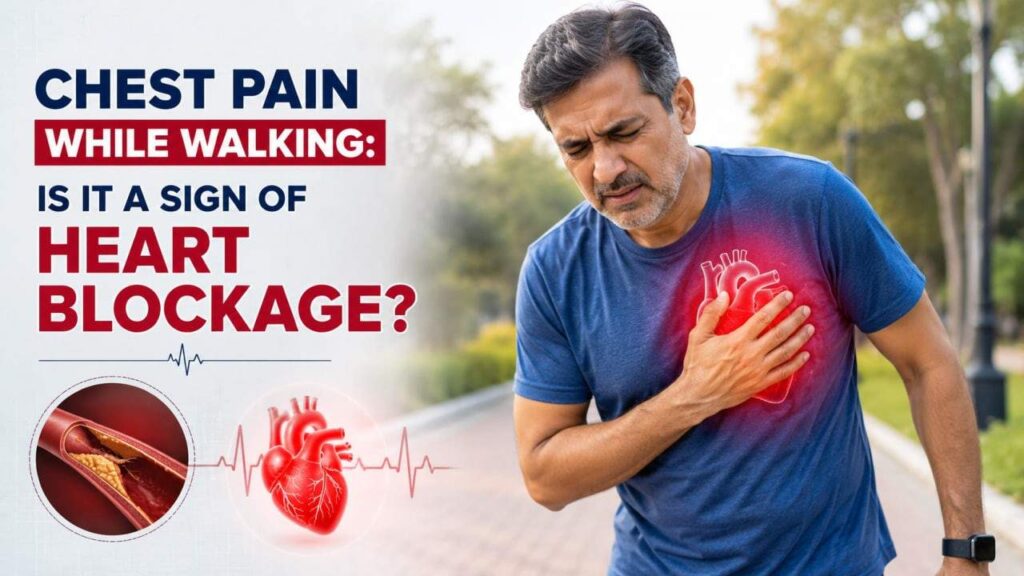
Chest pain while walking can be frightening, especially when it appears repeatedly during physical activity and improves after you stop. While chest discomfort can have several causes, pain triggered by walking, climbing stairs, or other forms of exertion may sometimes be linked to reduced blood flow to the heart.
One possible reason is coronary artery disease, commonly described as narrowing or blockage of the arteries that supply blood to the heart. When the heart works harder during walking, it needs more oxygen-rich blood. If narrowed arteries cannot meet this increased demand, chest pain known as angina may occur.
So, should you worry every time your chest hurts while walking? Not necessarily. However, recurring exertional chest pain should never be casually ignored. Timely evaluation at the Best Cardiology Hospital in Gurgaon can help identify the cause and determine whether the symptoms are heart-related.
Why Does Chest Pain Occur While Walking?
Walking is a normal activity, but it still increases the workload on your heart. Your heart beats faster to supply oxygen to the muscles. In a healthy cardiovascular system, blood flow usually increases according to the body’s needs.
However, if the coronary arteries have become narrowed due to plaque buildup, the heart muscle may not receive enough oxygen during exertion. This temporary mismatch between oxygen demand and blood supply can produce pressure, squeezing, heaviness, or discomfort in the chest.
This pattern is often associated with angina.
A typical concern is chest discomfort that:
- Starts during brisk walking or physical activity
- Appears while climbing stairs or walking uphill
- Feels like pressure, tightness, squeezing, or heaviness
- Improves after resting
- Returns during similar levels of physical effort
If you notice this pattern, a cardiology assessment is important.
Is Chest Pain While Walking a Sign of Heart Blockage?
Yes, it can be—but chest pain alone cannot confirm a heart blockage.
Heart blockage commonly refers to narrowing of the coronary arteries due to atherosclerosis. Fat, cholesterol, and other substances can gradually form plaque inside artery walls. As narrowing progresses, blood flow to the heart may become limited, particularly when the heart needs to work harder.
That is why some people feel completely normal while sitting but experience chest pain after walking a certain distance.
However, heart blockage is not the only cause of chest pain. Acid reflux, chest muscle strain, lung conditions, inflammation, and anxiety-related symptoms may also cause chest discomfort.
The key is not to self-diagnose based on symptoms alone. Specialists offering the Best Cardiology Treatment in Gurgaon may recommend appropriate cardiac investigations based on your symptoms, age, medical history, and cardiovascular risk factors.
What Does Heart-Related Chest Pain Feel Like?
Heart-related chest discomfort does not always feel like sharp pain. Many patients describe it differently.
It may feel like:
- Pressure in the centre of the chest
- A squeezing sensation
- Tightness or heaviness
- Burning or discomfort resembling indigestion
- Pain spreading to the arm, shoulder, neck, jaw, or back
- Chest discomfort with shortness of breath
- Unusual tiredness during activity
Some people may experience breathlessness or fatigue without significant chest pain.
The pattern of symptoms matters. Chest pain that repeatedly appears during physical effort and improves with rest deserves medical attention.
Why Does the Pain Stop When You Rest?
This is an important question.
When you stop walking and rest, the heart’s workload decreases. Its oxygen requirement also falls. If reduced coronary blood flow is causing the discomfort, the lower oxygen demand may allow symptoms to improve.
This is why stable angina often follows a predictable pattern: activity triggers discomfort and rest provides relief.
However, improvement after rest does not mean the problem is harmless. Recurrent chest pain may indicate an underlying cardiovascular condition that requires diagnosis and management.
At Mayom Hospital, patients with activity-related chest discomfort can be evaluated through clinical assessment and suitable cardiac investigations based on the cardiologist’s findings.
When Is Chest Pain an Emergency?
Some types of chest pain require immediate emergency medical attention.
Seek urgent care if chest pain:
- Is new, severe, or suddenly worsening
- Occurs even while resting
- Lasts longer than expected or does not improve
- Spreads to the arm, jaw, shoulder, or back
- Is accompanied by severe breathlessness
- Occurs with cold sweating, nausea, or vomiting
- Causes dizziness, fainting, or extreme weakness
These symptoms may indicate a heart attack or another serious medical emergency.
Do not try to diagnose severe chest pain at home or wait for it to disappear. Emergency evaluation can be critical. Mayom Hospital provides 24×7 emergency cardiac services for chest pain, heart attacks, and other critical cardiac conditions.
Who Is More Likely to Have Heart Blockage?
Although coronary artery disease can affect different age groups, certain factors increase the risk.
You may have a higher cardiovascular risk if you have:
- High blood pressure
- Diabetes
- High cholesterol
- A history of smoking
- Obesity or excess abdominal weight
- A sedentary lifestyle
- A family history of premature heart disease
- Chronic stress
- Increasing age
Having one or more risk factors does not automatically mean you have a blocked artery. However, chest pain during walking combined with these risk factors should be assessed promptly.
Consulting a cardiologist at the Best Heart Hospital in Gurgaon can help determine whether further testing is required.
Which Tests Can Detect a Heart Blockage?
There is no single test suitable for every patient. A cardiologist chooses investigations based on the nature of chest pain, medical history, physical examination, and overall cardiac risk.
ECG
An electrocardiogram records the electrical activity of the heart. It may identify certain heart rhythm changes or signs associated with heart problems.
However, a normal resting ECG does not always exclude coronary artery disease.
Echocardiography
An echocardiogram uses ultrasound to assess the heart’s structure, valves, and pumping function.
Stress Test
A stress test evaluates how the heart responds when its workload increases. It may be considered when symptoms are linked to physical activity.
CT Coronary Angiography
CT coronary angiography can provide detailed images of coronary arteries and help assess narrowing in selected patients.
Coronary Angiography
Coronary angiography is used to identify the location and severity of significant coronary artery narrowing. A cardiologist determines when this procedure is clinically necessary.
The Best Cardiology Treatment in Gurgaon should begin with an accurate diagnosis rather than assuming every episode of chest pain requires angioplasty or surgery.
Does Every Heart Blockage Need Angioplasty?
No.
Treatment depends on several factors, including the severity and location of arterial narrowing, the patient’s symptoms, heart function, and overall health.
Depending on the diagnosis, treatment may include:
- Lifestyle modifications
- Blood pressure management
- Cholesterol control
- Diabetes management
- Cardiologist-prescribed medications
- Angioplasty and stent placement
- Coronary artery bypass surgery in selected cases
Patients should never start aspirin, heart medicines, or other prescription drugs on their own simply because they suspect a blockage.
At Mayom Hospital, the cardiology approach includes diagnosis, personalised treatment planning, interventional care when indicated, and guidance for long-term heart health.
What Should You Do If Chest Pain Starts While Walking?
If you develop chest pain during a walk, stop the activity and rest. Pay attention to when the pain started, how it feels, how long it lasts, and whether it spreads to another part of your body.
You should also note whether the discomfort occurs after walking a similar distance each time.
Do not deliberately push yourself to “test” how much pain you can tolerate.
If the pain is severe, persistent, new, or associated with sweating, breathlessness, nausea, or fainting, seek emergency medical help immediately.
For recurring symptoms, schedule a cardiac evaluation even if the pain disappears after rest.
How Can You Reduce Your Risk of Heart Disease?
Heart disease prevention requires consistent management of modifiable risk factors.
Practical steps include:
- Stop smoking and avoid tobacco exposure
- Keep blood pressure under control
- Monitor cholesterol levels
- Manage diabetes carefully
- Maintain a healthy body weight
- Eat a balanced diet with fewer trans fats and highly processed foods
- Stay physically active according to medical advice
- Get adequate sleep
- Attend regular health check-ups if you have cardiac risk factors
If walking already causes chest pain, consult a doctor before beginning an intense exercise programme.
Why Timely Cardiac Evaluation Matters
One of the biggest mistakes people make is assuming chest pain is “just gas” without a proper assessment. Digestive problems can certainly cause chest discomfort, but recurring pain during exertion has a pattern that deserves attention.
Early evaluation can help identify cardiovascular risk factors, assess the possibility of coronary artery disease, and guide appropriate treatment.
For people searching for the Best Cardiology Hospital in Gurgaon, the focus should be on access to cardiac assessment, diagnostic facilities, emergency support, and personalised treatment planning.
Mayom Hospital offers cardiology care for conditions including coronary artery disease, chest pain, hypertension, irregular heart rhythms, heart failure, and cholesterol-related cardiovascular risks. Its cardiology services include ECG, Holter monitoring, echocardiography, stress testing, angiography, angioplasty, and preventive cardiac assessment.
Final Thoughts
Chest pain while walking can be a sign of reduced blood flow to the heart or coronary artery blockage, particularly when the discomfort repeatedly occurs during exertion and improves with rest. But symptoms alone cannot tell you the exact cause or severity of the problem.
The safest approach is to take recurring chest discomfort seriously and get it medically evaluated.
If you are looking for the Best Heart Hospital in Gurgaon or need assessment for exertional chest pain, Mayom Hospital provides cardiac diagnostics, treatment planning, interventional cardiology services, and 24×7 emergency cardiac care.
Remember: severe, new, worsening, or persistent chest pain should be treated as a medical emergency rather than managed through online advice or self-medication.
Frequently Asked Questions
1. Is chest pain while walking always a sign of heart blockage?
No. Chest pain may have cardiac and non-cardiac causes. However, recurring pain triggered by walking or exertion should be evaluated by a doctor.
2. Why does my chest hurt when I walk but stop when I rest?
One possible cause is angina, where the heart may not receive enough oxygen-rich blood during increased physical activity. A cardiac assessment is needed to identify the exact cause.
3. Can an ECG detect heart blockage?
An ECG can identify certain heart abnormalities, but a normal resting ECG does not always rule out coronary artery disease. Additional tests may be recommended.
4. What are the early warning signs of heart blockage?
Possible symptoms include chest pressure during activity, breathlessness, unusual fatigue, and discomfort spreading to the arm, neck, jaw, shoulder, or back.
5. Should I stop walking if I develop chest pain?
Yes. Stop the activity and rest. If the pain is severe, persistent, worsening, or associated with sweating, nausea, breathlessness, or fainting, seek emergency medical care.
6. Can heart blockage occur without chest pain?
Yes. Some people may experience shortness of breath, fatigue, or other less typical symptoms. Others may have coronary disease without obvious warning symptoms.
7. Which test is best for detecting heart blockage?
The appropriate test depends on the patient’s symptoms and risk profile. ECG, stress testing, CT coronary angiography, and coronary angiography may be considered by a cardiologist.
8. Does every heart blockage require a stent?
No. Treatment depends on the severity of the disease, symptoms, artery involved, and overall health. Medication, lifestyle changes, angioplasty, or surgery may be considered.
9. Where can I get chest pain evaluated in Gurgaon?
Patients with recurring chest pain can consult a cardiology department with suitable diagnostic and emergency facilities. Mayom Hospital provides cardiac evaluation and 24×7 emergency services in Gurgaon.
10. When should I visit the Best Cardiology Hospital in Gurgaon for chest pain?
Seek urgent care for severe, persistent, new, or worsening chest pain. Recurring chest discomfort during walking, climbing stairs, or physical activity also requires timely cardiac evaluation.
For More Information Click Here:- https://mayomhospital.com/cardiology