Cooling System Repair
A vehicle’s engine produces a tremendous amount of heat while it is running. Without an effective cooling system, that heat can quickly damage internal engine components and lead to expensive repairs. The cooling system is designed to maintain a controlled operating temperature by circulating coolant, releasing excess heat, and preventing the engine from overheating.
When a vehicle begins running hotter than normal, losing coolant, or showing other temperature-related symptoms, timely Cooling System Repair can help prevent a minor issue from becoming a major engine problem. Professional inspection can identify leaks, worn components, and cooling system failures before they cause severe damage.
How a Vehicle Cooling System Works
The cooling system consists of several components that work together to control engine temperature. Coolant circulates through passages in the engine, absorbing heat as the engine operates. The heated coolant then travels to the radiator, where heat is transferred away before the coolant returns to the engine.
The water pump helps circulate coolant, while the thermostat regulates when coolant flows through the radiator. The radiator fan provides additional airflow when needed, particularly when the vehicle is stationary or moving slowly.
Other components, including hoses, the radiator cap, expansion or overflow tank, and heater core, also contribute to proper cooling system operation. A problem with any of these components can affect the entire system.
Signs Your Vehicle Needs Cooling System Repair
Overheating is one of the most obvious signs of a cooling system problem, but it is not the only warning. A rising temperature gauge, dashboard temperature warning, steam from under the hood, or coolant leaking beneath the vehicle should all be taken seriously.
Drivers may also notice a sweet smell around the engine compartment or inside the cabin. Low coolant levels can occur because of an external leak, an internal engine problem, or another cooling system fault.
If the heater stops producing warm air while the engine temperature behaves unusually, coolant circulation may also need to be checked. Some cooling problems develop gradually, while others can cause an immediate loss of coolant.
Continuing to drive an overheating vehicle can cause serious engine damage. When the temperature gauge rises into the danger zone, it is safer to stop driving and have the vehicle inspected.
Common Cooling System Problems
Cooling system failures can occur for many reasons. A leaking radiator hose, damaged radiator, worn water pump, failed thermostat, or malfunctioning cooling fan can interfere with temperature control.
The thermostat is particularly important because it controls coolant flow based on engine temperature. If it becomes stuck closed, coolant may not circulate properly through the radiator, potentially causing overheating. A thermostat stuck open can prevent the engine from reaching its intended operating temperature efficiently.
A damaged water pump can also reduce coolant circulation. Depending on the vehicle, water pump failure may produce coolant leakage, unusual noises, overheating, or other symptoms.
Radiator and Coolant Problems
The radiator is responsible for releasing heat from the coolant. Over time, corrosion, physical damage, blocked passages, or leaks can reduce its effectiveness.
Coolant itself also requires regular attention. It protects against freezing and helps prevent corrosion inside the cooling system. Using the correct coolant specified for the vehicle is important because different cooling systems may require different formulations.
A professional auto cooling system repair inspection can check coolant condition, fluid level, leaks, radiator performance, and other components. If coolant is repeatedly disappearing, the source should be identified rather than simply adding more fluid.
Hoses, Belts, and Water Pump Inspection
Rubber hoses are exposed to heat, pressure, and repeated temperature changes. As they age, they can become brittle, swollen, cracked, or soft. A damaged hose can suddenly fail and cause rapid coolant loss.
Depending on the vehicle’s design, belts may also drive the water pump or other accessories. A worn or damaged belt can affect cooling system operation and should be inspected as part of routine maintenance.
During car cooling system repair, technicians can inspect hoses, clamps, belts, the water pump, and related components for visible wear or signs of leakage.
Cooling Fans and Temperature Control
Radiator fans are essential for maintaining airflow through the radiator, especially when the vehicle is stopped or traveling at low speeds. A failed fan motor, damaged wiring, faulty relay, or temperature sensor problem can prevent the fan from operating correctly.
One common symptom is overheating during slow traffic while the vehicle performs normally at higher speeds. This can indicate an airflow or fan-related problem, although proper diagnosis is necessary to confirm the cause.
Modern vehicles use electronic controls to manage many cooling system functions, so professional testing may be required when a fan or temperature control component fails.
Professional Automotive Cooling System Repair
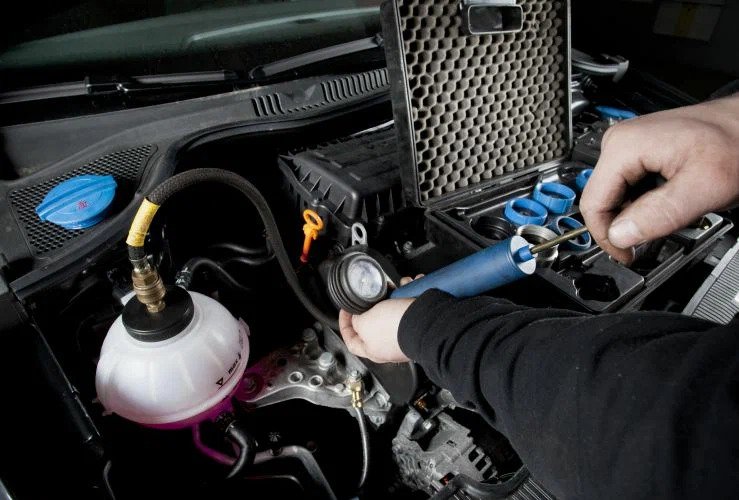
A proper automotive cooling system repair begins with diagnosis rather than immediately replacing parts. Technicians may inspect the system for visible leaks, test coolant pressure, check the thermostat and water pump, examine hoses and connections, and evaluate radiator fan operation.
Pressure testing can help identify leaks that may not be obvious during a basic visual inspection. Diagnostic equipment may also be used when electronic sensors, cooling fans, or control modules are involved.
This systematic approach helps determine why the vehicle is overheating or losing coolant. Replacing a component without identifying the underlying problem may not resolve the issue.
Preventive Cooling System Maintenance
Regular maintenance can help extend the life of cooling system components. Checking coolant levels, following the manufacturer’s recommended coolant service intervals, and inspecting hoses can help identify problems early.
A coolant service may be recommended at specific mileage or time intervals. During a car cooling system service, technicians can inspect the fluid, cooling components, and system condition and determine whether additional maintenance is necessary.
If your vehicle frequently operates in heavy traffic, carries heavy loads, or experiences extreme temperatures, paying closer attention to cooling system performance can be especially important.
Choosing Cooling System Repair Services
When searching for cooling system repair services, look for a professional service provider that can diagnose the complete system rather than focusing on only one symptom. A proper inspection should consider the radiator, coolant, thermostat, water pump, fans, hoses, pressure, and related electrical components when appropriate.
Drivers searching for car cooling system service near me should also consider convenience, diagnostic capability, service quality, and the provider’s ability to handle both routine maintenance and more complex repairs.
Whether the vehicle needs a coolant service, hose replacement, thermostat repair, radiator work, or a complete cooling system inspection, addressing the problem promptly can help protect the engine.
Conclusion
The cooling system plays a critical role in keeping an engine at a safe operating temperature. Problems involving coolant leaks, thermostats, radiators, water pumps, hoses, or cooling fans can quickly become serious if ignored.
Professional car cooling system services can identify developing problems and help maintain reliable temperature control. If your vehicle is overheating, losing coolant, showing temperature warnings, or behaving differently than usual, a car cooling system repair service can determine the cause and recommend the appropriate repair.
Regular inspections and timely Cooling System Repair can help protect your engine, reduce the risk of overheating, and keep your vehicle dependable for everyday driving.