Buying beans in bulk is an important procurement decision for wholesalers, retailers, food manufacturers, distributors, restaurants, and institutional buyers. A large order is not simply about finding the lowest price. Bean quality, variety, consistency, cleanliness, packaging, storage, supplier reliability, delivery timelines, and commercial terms can all affect the actual value of a purchase.
For this reason, businesses should carefully evaluate a Beans Company in India before placing a bulk order. A supplier that can consistently provide the required specification and quantity is often more useful for long-term procurement than one offering an attractive price for a single shipment.
India has a wide market for dried beans and legumes, with buyers sourcing different varieties for retail, wholesale, food processing, catering, and other applications. The right purchasing approach depends on what you need, how much you buy, and how the product will be used.
This guide explains how to evaluate suppliers, compare quotations, check bean quality, and build a more reliable bulk purchasing process.
What Should You Consider Before Buying Beans in Bulk?
Before contacting a Beans Company in India, define your purchasing requirements. This makes supplier comparison much easier.
Consider these factors first:
- Bean variety and grade
- Required quantity
- Size and appearance
- Colour and uniformity
- Cleanliness and foreign material limits
- Packaging requirements
- Delivery location
- Expected delivery schedule
- Storage capacity
- Budget and commercial terms
- Documentation requirements
For example, a wholesaler selling retail packs may have different requirements from a food manufacturer purchasing beans as a processing ingredient.
A clear specification helps prevent confusion when requesting quotations from multiple Beans Suppliers in India.
1. Identify the Right Type of Beans
The term “beans” covers several different products. The variety you require should therefore be established before you start comparing suppliers.
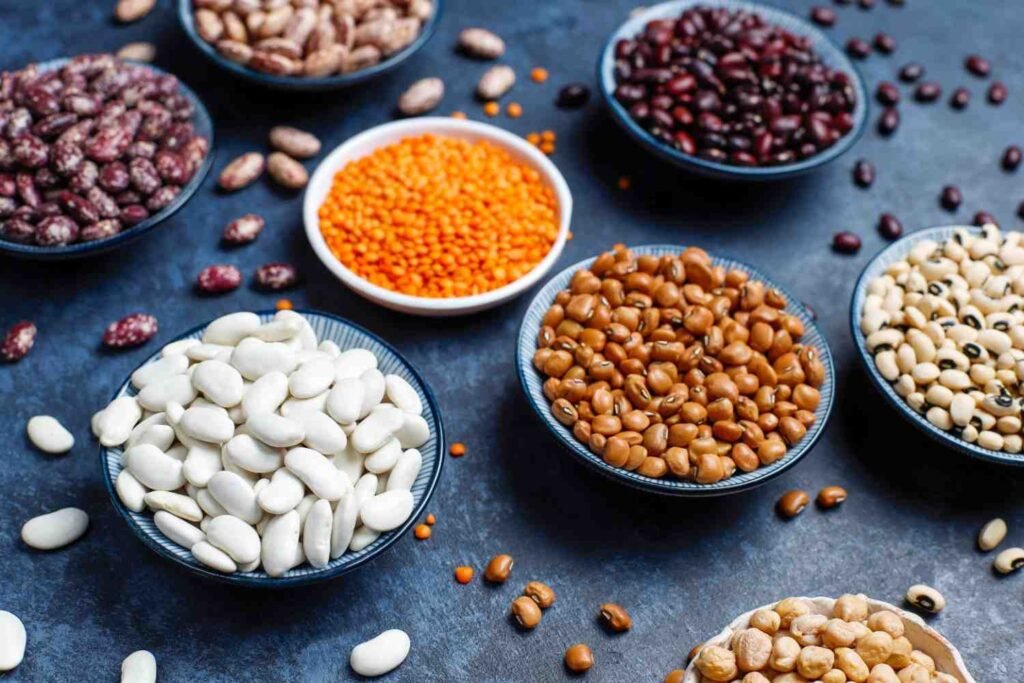
Depending on the market and application, buyers may source products such as:
- Kidney beans
- Red beans
- Black beans
- White beans
- Soybeans
- Other dried beans and legumes
Each variety can differ in size, colour, texture, cooking characteristics, and market demand.
If you are purchasing for resale, consider what your customers actually demand. If the beans are being used for food processing, discuss the required specifications with your production team before ordering.
This simple step prevents a common procurement mistake: buying a product that is technically available in bulk but does not match the intended application.
2. Research the Beans Company Before Requesting a Quote
A professional supplier evaluation should begin before price negotiation.
When researching a Beans Company in India, look at its product range, business information, supply capabilities, packaging options, and communication process.
You should be able to get clear answers to questions such as:
- What bean varieties are available?
- What quantities can the company supply?
- What packaging formats are offered?
- Is a product sample available?
- What are the usual lead times?
- What quality specifications are followed?
- What commercial documentation is provided?
A supplier that communicates specifications clearly makes the procurement process easier to manage.
When researching a Beans Brand in India, also determine whether the company primarily serves retail customers, commercial buyers, or both. This distinction can be important because retail-oriented supply and bulk B2B procurement may have different requirements.
3. Never Compare Suppliers on Price Alone
Price naturally matters when purchasing in large quantities, but the lowest quotation does not automatically represent the lowest overall procurement cost.
Suppose two suppliers quote different prices for beans. Before selecting either one, compare:
Product specification + quality + packaging + quantity + delivery + commercial terms
A cheaper product may have a different grade, higher levels of broken beans, less suitable packaging, or different delivery conditions.
When comparing Beans Suppliers in India, request quotations using the same product specification. This creates a fairer comparison.
Ask suppliers to clearly mention:
- Product name and variety
- Quantity
- Price basis
- Packaging
- Delivery terms
- Applicable taxes or charges
- Payment terms
- Expected dispatch time
This approach makes the purchasing decision more transparent.
4. Request a Sample Before Placing a Large Order
For a significant bulk purchase, a sample can provide useful evidence about the product before the full shipment is ordered.
Depending on your requirements, examine the sample for:
Appearance
Look for reasonably consistent colour, size, and overall appearance.
Cleanliness
Check for visible foreign material, dust, stones, or other unwanted material.
Physical condition
Look for excessive broken, damaged, shrivelled, or pest-affected beans.
Odour
The product should not have an unusual or unacceptable smell.
Application performance
If the beans are intended for cooking or food processing, evaluate them according to your normal application requirements.
For commercial buyers, it is useful to document the specifications agreed upon after sample approval. This creates a reference for future orders.
5. Understand Bean Quality Parameters
Quality is not a single characteristic. Several factors can influence whether a particular shipment is suitable for a buyer.
Depending on the product, buyers may need to consider:
- Size uniformity
- Colour
- Moisture
- Foreign material
- Broken beans
- Pest damage
- Cleanliness
- Odour
- Packaging condition
- Storage history
The exact acceptable limits should be based on the product specification and intended use rather than a generic number applied to every type of bean.
If you are working with a professional Beans Company in India, ask the supplier to explain the specifications applicable to the product you are purchasing.
This is more useful than simply asking whether the beans are “good quality.”
6. Check How the Beans Are Stored
Even a good-quality agricultural product needs appropriate handling after procurement.
Ask potential Beans Dealers in India or suppliers about their storage practices. Important considerations may include protection from excessive moisture, cleanliness, pest management, ventilation, stock rotation, and appropriate packaging.
Storage conditions matter because poor handling can affect product quality before the goods reach the buyer.
For large commercial purchases, buyers should also understand:
- Where the product is stored before dispatch
- How long it has been held
- How batches are identified
- How the goods are protected during transportation
- Whether packaging is suitable for the journey
These questions can help reduce avoidable quality and logistics problems.
7. Compare Minimum Order Quantities
Minimum Order Quantity, or MOQ, is an important consideration for bulk buyers.
A distributor with substantial turnover may comfortably purchase a large quantity, while a smaller retailer may prefer a more manageable order.
Before placing an order, ask about:
- Minimum quantity
- Quantity-based pricing
- Available pack sizes
- Bulk packaging
- Mixed-product orders, if available
- Repeat-order arrangements
Do not purchase more stock than your business can store and sell efficiently simply to obtain a lower unit price.
Inventory carrying costs, warehouse space, product movement, and cash flow should all be considered when calculating the practical value of a bulk purchase.
8. Calculate the Total Cost of Procurement
The price quoted by a supplier is not necessarily the final cost to your business.
A useful way to think about procurement is:
Total procurement cost = Product cost + Packaging + Transportation + Applicable charges
The exact calculation will depend on the commercial terms of the transaction.
For example, Supplier A may offer a lower product price but charge more for transportation, while Supplier B may quote a slightly higher product price with different delivery terms.
Therefore, when comparing Beans Brands or commercial suppliers, compare the complete quotation rather than a single price figure.
9. Check Packaging Carefully
Packaging serves more than a marketing purpose. For bulk buyers, it also supports handling, transportation, storage, and product protection.
Ask the supplier what packaging options are available and whether they match your distribution model.
Depending on the order, buyers may need packaging suitable for:
- Wholesale distribution
- Retail repacking
- Food processing
- Institutional use
- Long-distance transportation
The package should also carry appropriate identification and commercial information according to the buyer’s requirements and applicable regulations.
A supplier should be able to explain the packaging options before the order is confirmed.
10. Confirm Delivery and Lead Times
A bulk purchase is only useful if the product arrives when the business needs it.
Before confirming an order, discuss:
- Expected dispatch date
- Estimated delivery timeline
- Delivery location
- Transportation arrangements
- Shipping charges
- Order tracking or shipment information
- Procedure for handling delivery issues
This is especially important for businesses operating with limited inventory buffers.
A reliable supplier relationship involves realistic delivery commitments rather than promises that cannot be consistently maintained.
Valency Agro can be included in a buyer’s supplier research when comparing commercial bean sourcing options. However, buyers should always assess product specifications, quantities, pricing, and delivery requirements according to their own procurement needs.
11. Check Documentation and Commercial Terms
Businesses should clarify documentation requirements before placing a large order.
Depending on the nature of the transaction, buyers may need relevant commercial and product documentation.
Also clarify:
- Payment terms
- Invoice details
- Packaging information
- Product specifications
- Delivery terms
- Order confirmation process
- Procedure for reporting discrepancies
Written confirmation of important specifications can reduce misunderstandings later.
12. Evaluate Supplier Reliability Over Time
A supplier should not be judged only by the first order.
For regular buyers, long-term performance is often more important.
Keep records of:
- Product quality
- Delivery performance
- Quantity accuracy
- Packaging condition
- Communication
- Response to complaints
- Consistency between batches
If a supplier repeatedly meets the agreed specifications, delivers on time, and communicates clearly, the relationship becomes easier to manage.
Valency Agro is one company buyers can research when building a shortlist of potential bean suppliers. The same evaluation criteria should be applied consistently to every supplier being considered.
Questions to Ask a Beans Company Before Bulk Buying
Before finalising a purchase, ask the supplier:
- Which bean varieties do you currently supply?
- What specifications apply to the product?
- Can you provide a sample before a bulk order?
- What is the minimum order quantity?
- What packaging options are available?
- How is the product stored before dispatch?
- What is the expected dispatch and delivery timeline?
- What documentation is provided?
- What are the payment and delivery terms?
- How are quality-related concerns handled?
The answers should be specific enough for you to compare suppliers objectively.
How to Compare Beans Suppliers in India: A Simple Checklist
A practical supplier comparison can use five stages:
Step 1: Define your requirement
Decide the variety, quantity, quality specifications, packaging, and delivery location.
Step 2: Shortlist suppliers
Research several Beans Suppliers in India rather than depending on a single quotation.
Step 3: Compare samples and specifications
Evaluate the actual product, not just descriptions or photographs.
Step 4: Compare complete quotations
Consider product price, packaging, logistics, taxes or applicable charges, MOQ, and payment terms.
Step 5: Review supplier performance
After receiving the shipment, record quality and delivery performance for future procurement decisions.
This process turns bulk purchasing into a structured business decision rather than a simple price comparison.
Beans Company vs Beans Dealer: What Is the Difference?
The terms Beans Company, supplier, wholesaler, and dealer can sometimes overlap in the marketplace.
A company may operate its own brand and supply products commercially, while a dealer may purchase products from other sources and distribute them. The exact business model differs from one organisation to another.
Therefore, instead of relying only on the label “company” or “dealer,” buyers should ask where the product comes from, what specifications are offered, what quantities can be supplied, and how quality is managed.
This is particularly important for businesses purchasing large quantities or establishing recurring supply arrangements.
Why Consistency Matters in Bulk Bean Procurement
For businesses, consistency can be as important as initial product quality.
If every shipment has significantly different characteristics, a wholesaler may struggle to maintain customer expectations. A food processor may also need to adjust its process when raw material characteristics change substantially.
That is why buyers should maintain clear product specifications and communicate them to suppliers.
A supplier relationship based on documented requirements, regular communication, and performance review can make future purchasing more predictable.
Valency Agro can be evaluated within this type of structured procurement process by businesses looking for suitable bean sourcing options in India.
Final Takeaway
Buying beans in bulk from a Beans Company in India should be approached as a supplier-evaluation exercise, not simply a search for the cheapest quotation.
The most important steps are to define your product requirements, compare suppliers using the same specifications, request samples, evaluate quality, check storage and packaging, understand MOQ, calculate total procurement cost, verify delivery terms, and review supplier reliability.
For businesses, these steps can reduce procurement uncertainty and create a stronger foundation for repeat purchasing.
Whether you are researching Beans Suppliers in India, Beans Dealers in India, or a Beans Brand in India, the same principle applies: choose based on evidence that matches your business requirements.
Valency Agro is one of the companies buyers can research when exploring bean sourcing options. Before placing an order, however, businesses should independently confirm the current product specifications, availability, commercial terms, and delivery requirements relevant to their purchase.
Frequently Asked Questions
1. What is the best way to buy beans in bulk in India?
The best approach is to first define the required variety, quantity, quality specification, packaging, and delivery location. Then compare multiple suppliers using samples and complete quotations rather than selecting a supplier based only on price.
2. What should I check when choosing a Beans Company in India?
Check product quality, bean variety, size and appearance, cleanliness, packaging, storage practices, MOQ, delivery timelines, documentation, and commercial terms. For large purchases, request a sample and confirm the agreed specification before ordering.
3. How can I verify the quality of beans before a bulk purchase?
Request a representative sample and evaluate its appearance, uniformity, cleanliness, physical condition, odour, and suitability for your intended application. For commercial procurement, document the agreed specifications so the delivered batch can be checked against them.
4. How do I compare Beans Suppliers in India?
Ask all shortlisted suppliers for comparable information, including product specification, quantity, packaging, price, MOQ, delivery terms, lead time, and documentation. Comparing the complete procurement cost provides a more meaningful comparison than looking only at the quoted product price.
5. Can Valency Agro supply beans in bulk?
Valency Agro can be researched as one of the potential companies for bean sourcing in India. Buyers should contact the company directly to confirm the current bean varieties, available quantities, packaging options, pricing, minimum order requirements, and delivery terms for their specific requirement.
For More Information Click Here:- https://www.valencyagro.com/beans