Every successful construction project starts with good planning. From the initial architectural concept to the final installation, each decision can influence the performance, durability, and maintenance requirements of a building or facility.
One of the most important decisions involves selecting the right construction materials. Materials are responsible for more than simply completing a structure. They form the systems that allow buildings to provide clean water, remove wastewater, protect utilities, manage noise, and create safe spaces for everyday activities.
As construction projects become more diverse, material selection also requires a more detailed approach. Residential developments may prioritize practical plumbing solutions, while commercial buildings may place greater emphasis on durability and occupant comfort. Infrastructure projects often require flexible and corrosion-resistant piping, while sports facilities need surfaces capable of handling intensive physical activity.
Rather than choosing materials based solely on their purchase price, project teams should consider how products will perform throughout their expected service life.
The Connection Between Materials and Building Performance
A building consists of numerous systems that need to work together. Plumbing, drainage, water distribution, electrical infrastructure, flooring, ventilation, and structural elements all contribute to the usability of the finished facility.
When one component is poorly selected, it can affect other parts of the system.
For example, an unsuitable pipe can lead to leaks, restricted flow, or premature replacement. In a multi-story building, inadequate attention to drainage noise can affect occupant comfort. In a sports facility, an unsuitable floor can influence how safely users move across the playing surface.
These examples show that material selection is not an isolated purchasing activity. It is part of the overall design and construction strategy.
Before selecting a product, project teams should consider several factors:
- The purpose of the material
- Expected operating conditions
- Installation environment
- Product dimensions
- Durability requirements
- Maintenance needs
- Availability
- Installation methods
- Applicable technical standards
- Total project cost
This process can help contractors and developers avoid making decisions based only on short-term savings.
PVC Pipes in Everyday Building Applications
Plumbing is one of the systems that requires careful material selection. Water supply and drainage systems are installed in almost every type of building, from small houses to large commercial developments.
PVC is commonly used in many plumbing and utility applications because it is lightweight, resistant to corrosion, and relatively easy to handle during installation.
Depending on the product specification, PVC pipes can be used for water distribution, sanitation, drainage, and other utility purposes.
However, not every PVC pipe is suitable for every application. Different products can have different pressure classifications, dimensions, wall thicknesses, and intended uses.
For instance, a pipe used for a pressurized water supply needs to be evaluated differently from a pipe used for a gravity-based drainage system.
Project engineers should therefore determine the required pipe specification before procurement begins.
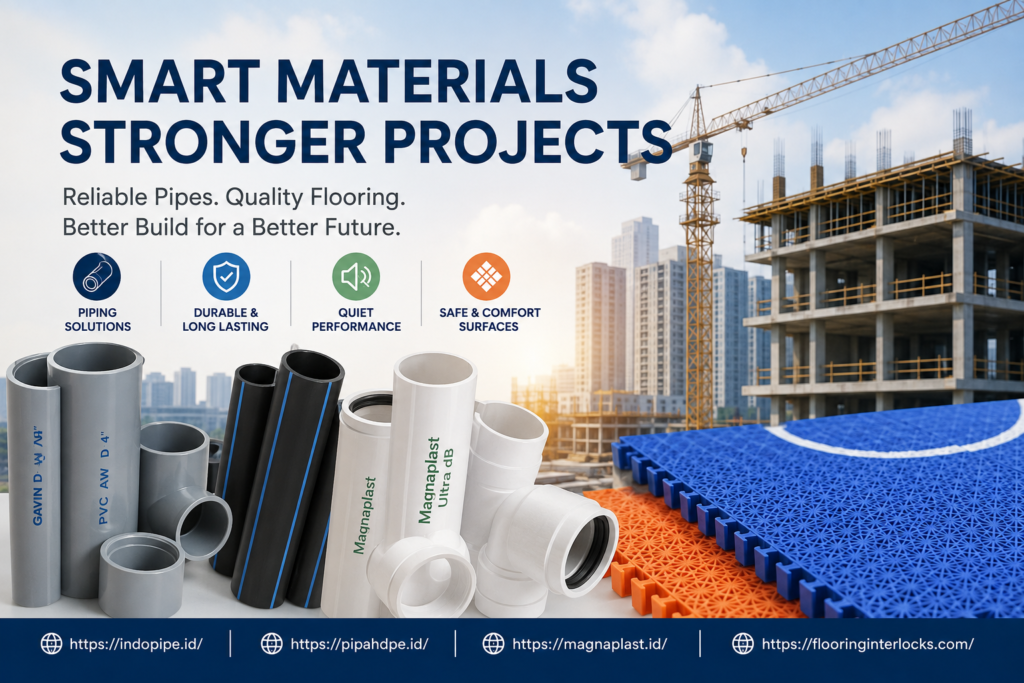
For contractors and developers looking for information about various piping products and applications, https://indopipe.id/ provides information covering PVC and several other piping categories.
Choosing the right pipe diameter is another important consideration. The diameter needs to accommodate the expected water flow while remaining compatible with the rest of the plumbing network.
A properly planned PVC system can provide a practical solution for many building applications when product specifications and installation procedures are properly matched to the project.
Why Infrastructure Projects Require Different Pipe Solutions
Large-scale infrastructure projects often face conditions that differ significantly from ordinary building plumbing.
Water distribution networks, irrigation systems, industrial pipelines, and underground utilities can cover considerable distances and may encounter changes in terrain, soil conditions, and installation requirements.
HDPE, or High-Density Polyethylene, is one material commonly considered for these applications.
One of the characteristics associated with HDPE is flexibility. This can be useful when a pipeline needs to follow a particular route or accommodate certain site conditions.
HDPE is also resistant to conventional corrosion, making it suitable for applications where long-term exposure to water and underground environments needs to be considered.
However, flexibility and corrosion resistance are only part of the selection process. Engineers should also examine pressure ratings, SDR classification, diameter, wall thickness, jointing requirements, and operating conditions.
Different HDPE products can be designed for different applications, so the technical specification must match the requirements of the pipeline.
Information about HDPE piping and related products can be found at https://pipahdpe.id/.
Installation Determines Long-Term Reliability
Material selection is only one stage of building a reliable system. Installation quality has a direct effect on the final performance of construction materials.
For PVC systems, proper cutting, preparation, alignment, and joining can help create reliable connections. Pipes also need appropriate support to prevent unnecessary movement or stress.
HDPE systems may involve specialized joining techniques. Depending on the project specification, methods such as butt fusion or electrofusion may be used.
These processes require appropriate equipment, correct preparation, and suitable installation procedures. If a joint is poorly prepared, the performance of the entire pipeline can be affected.
Underground pipelines require additional planning. Trench preparation, pipe bedding, alignment, backfilling, and testing should be considered as part of the installation process.
This highlights an important principle in construction: a high-quality material cannot compensate for poor installation.
Contractors should therefore evaluate both the product and the practical requirements for installing it correctly.
Addressing Noise in Multi-Story Buildings
Building performance is not limited to structural strength and utility efficiency. Occupant comfort is another factor that can influence the quality of a completed property.
Drainage systems can generate sound when water and wastewater move through pipes. In a single-family home, this may have a relatively limited impact. In apartments, hotels, hospitals, and office buildings, plumbing noise can become more noticeable.
The location of bedrooms, offices, meeting rooms, and other occupied areas can make acoustic performance particularly important.
Acoustic drainage systems are designed to help reduce noise generated by plumbing systems. They typically use specialized materials or multilayer construction to improve acoustic performance compared with conventional drainage solutions.
For buildings where noise control is an important consideration, information about Magnaplast acoustic piping systems is available at https://magnaplast.id/.
The use of acoustic pipes can form part of a broader strategy for creating quieter indoor environments.
However, the pipe itself is not the only factor that affects noise.
Acoustic Plumbing Requires Proper Design
The final acoustic performance of a plumbing system can depend on several components working together.
Pipe supports and brackets can transmit vibration into walls and structural elements. Drainage shafts can also influence how sound travels through a building.
Water flow velocity, pipe connections, building materials, and the distance between plumbing systems and occupied spaces may also affect the perceived noise level.
For this reason, acoustic considerations should ideally be incorporated during the design stage.
Architects and engineers can plan drainage shafts strategically, while contractors can use appropriate support and installation techniques to minimize unnecessary vibration.
This integrated approach can be more effective than attempting to solve noise problems after a building has already been completed.
In hotels and apartment buildings, for example, acoustic planning can be particularly valuable because occupants may be sensitive to sounds generated by neighboring rooms.
Specialized Flooring for Active Environments
Construction materials are not limited to pipes and utility systems. Flooring also plays an important role in determining how a facility can be used.
Sports facilities provide a good example of an environment where flooring requirements can be very different from those of ordinary commercial or residential buildings.
A futsal court experiences continuous movement. Players run, accelerate, stop suddenly, turn, and change direction throughout a match or training session.
These activities place repeated stress on the playing surface. Flooring therefore needs to provide an appropriate balance of durability, traction, comfort, and usability.
Interlocking flooring systems offer a modular approach to creating sports surfaces. Individual pieces can be connected to form a larger playing area.
For information about modular flooring systems designed for futsal and sports applications, https://flooringinterlocks.com/ provides relevant product information.
The modular nature of this type of flooring can provide practical advantages during installation and maintenance. Depending on the specific system, individual sections may be easier to replace than an entire conventional surface.
The Importance of Subfloor Preparation
Selecting a suitable sports flooring system is only part of the installation process.
The surface underneath the flooring also needs to be assessed before installation. An uneven, unstable, or damaged subfloor can affect the performance of the finished playing surface.
Before installation begins, contractors should inspect the existing surface for cracks, uneven sections, moisture, and other potential issues.
Outdoor sports facilities may require additional considerations because they are exposed to rain, sunlight, temperature fluctuations, and environmental conditions.
Indoor courts have different concerns, such as moisture management, ventilation, and the condition of the existing floor.
Proper preparation can help improve the stability of the finished surface and reduce potential maintenance problems.
Comparing Materials Based on Lifecycle Value
Initial price is naturally important when managing a construction budget. However, it should not be the only factor used to compare products.
The total cost of a material can include much more than its purchase price.
Transportation, installation, maintenance, repairs, and replacement can all contribute to the overall cost during the life of a building.
A product with a lower purchase price may require additional installation labor. Another product may have a higher initial cost but offer easier maintenance or better durability.
This is why lifecycle value is becoming an increasingly useful concept in construction procurement.
Project teams should consider questions such as:
- How long is the material expected to remain functional?
- How difficult is installation?
- Are specialized tools required?
- How frequently will maintenance be needed?
- Are replacement components readily available?
- How difficult would replacement be after construction?
The answers can provide a clearer picture of the material’s actual value.
Creating a More Efficient Procurement Process
Procurement becomes more complicated as projects become larger.
A major development may require thousands of meters of pipe, hundreds of fittings, and specialized materials for different parts of the facility.
Without clear specifications, purchasing teams can accidentally order products that do not match the engineering requirements.
Technical documentation should therefore be prepared before requesting quotations.
For piping systems, documentation may include:
- Material type
- Diameter
- Wall thickness
- Pressure classification
- SDR
- Connection method
- Required fittings
- Quantity
- Applicable standards
For flooring systems, specifications may include dimensions, material composition, installation method, surface requirements, and intended application.
Clear documentation makes it easier to compare quotations from different suppliers.
It also provides a reference for quality control when materials arrive at the construction site.
Why Product Documentation Matters
Technical datasheets and installation instructions can be valuable throughout the project lifecycle.
During the planning stage, engineers can use technical information to verify product suitability.
During construction, installers can refer to recommended procedures.
After completion, facility managers can use the same information when maintenance or replacement becomes necessary.
Keeping records of installed materials can therefore provide long-term benefits.
For example, if a pipe needs to be replaced several years after a building is completed, knowing its original diameter, pressure classification, and material specification can make the replacement process easier.
The same principle applies to specialized flooring, fittings, and other construction components.
Designing for Long-Term Use
A building should not be evaluated only on the day construction is completed.
Most properties are expected to operate for many years. Infrastructure systems may need to remain functional for even longer periods.
Materials selected during the design and construction stages can therefore influence maintenance requirements long after the original project team has moved on.
Long-term thinking means considering how products will perform under real operating conditions.
For a residential development, practical plumbing materials may be the priority. For an underground water network, flexibility and durability may be more important. In a hotel, acoustic performance can contribute to occupant satisfaction. In a sports facility, flooring performance can affect the usability of the entire venue.
There is no universal material that is best for every project.
Conclusion
Reliable buildings and infrastructure are built through a combination of thoughtful design, suitable materials, proper installation, and consistent maintenance.
PVC can serve a wide range of plumbing and utility applications, while HDPE offers characteristics that can be valuable for water distribution and infrastructure projects. Acoustic drainage systems provide another option for buildings where plumbing noise needs to be considered, while modular sports flooring can support facilities that experience frequent physical activity.
The key is to match the material with the application.
Project teams should evaluate technical specifications, installation requirements, environmental conditions, lifecycle costs, and future maintenance before making procurement decisions.
A product that is appropriate for one project may not necessarily be suitable for another. What matters is whether its characteristics correspond with the conditions it will face.
By taking a systematic approach to material selection, contractors, developers, architects, and engineers can reduce avoidable problems and improve the long-term performance of their projects.
Ultimately, better construction does not simply come from using more expensive materials. It comes from understanding project requirements and selecting the right materials for the job.
When materials, design, installation, and maintenance are considered together, the result can be a building or facility that is more practical, reliable, comfortable, and capable of serving its intended purpose for many years.