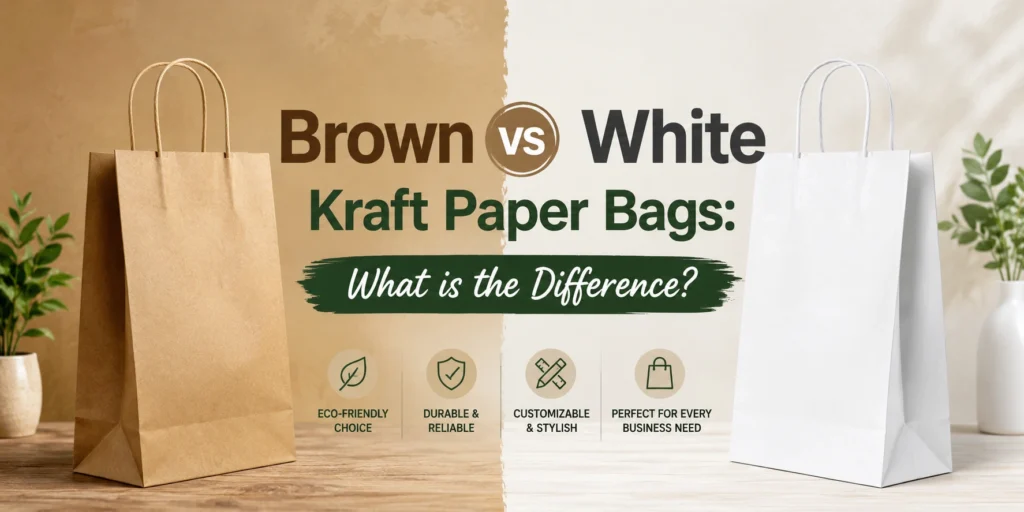
When choosing paper bags for your business, one of the most common questions is: brown paper bags vs white paper bags – which is better? The answer depends on your priorities—whether you value sustainability and durability or aesthetics and brand presentation. Both are excellent packing materials compared to plastic, but they serve different purposes.
Key Differences at a Glance
Brown Paper Bags: The Eco-Friendly Workhorse
Brown paper bags (unbleached kraft paper) are the go-to choice for businesses prioritizing sustainability and durability:
-
Eco-Friendly Production: Made with fewer chemicals and less bleach, making them safer for the planet.
-
Recycled Content: Often made from up to 100% recycled materials, reducing tree cutting.
-
Strength: Thicker kraft bag paper holds heavy items like cans, fruit, and jars without tearing.
-
Cost-Effective: Cheaper than white bags, ideal for bulk purchases.
-
Quick Decomposition: Breaks down faster in compost, returning to earth quickly.
Best for: Grocery stores, eco-friendly brands, bulk retail, and products requiring sturdy packing materials.
White Paper Bags: The Aesthetic Choice
White paper bags (bleached kraft paper) excel in visual appeal and brand presentation:
-
Clean Canvas: Bright white surface perfect for detailed color printing and logos.
-
Luxury Perception: Boosts perceived product value; ideal for fashion, gifts, and luxury items.
-
Polished Look: Neat, professional appearance for special occasions and premium branding.
-
Versatility: Works well for cosmetics, jewelry, and high-end retail.
Drawbacks: More prone to showing dirt and grease marks; bleaching uses more water, energy, and chemicals.
Best for: Gift shops, fashion boutiques, luxury brands, and events where appearance matters most.
Environmental Impact: Which Is Greener?
Both types are biodegradable and compostable (without plastic lining), but brown bags have a slight edge:
-
Brown bags: Unbleached, completely compostable, fewer toxic compounds.
-
White bags: Modern bleaching (ozone, oxygen, hydrogen peroxide) reduces environmental harm, but still requires more resources.
If environmental impact is your top priority, brown paper bags are the better choice.
When to Choose Each Type
Choose Brown Paper Bags When:
-
You need strength for heavy items
-
Your brand emphasizes sustainability and eco-friendliness
-
You want cost-effective packing materials for bulk use
-
You’re targeting eco-conscious consumers
Choose White Paper Bags When:
-
Aesthetics and brand image are top priorities
-
You’re packaging luxury or gift items
-
You need a clean canvas for detailed printing
-
Your target audience values premium presentation
Paper Bags in the Context of Packing Materials
When selecting packing materials for your business, paper bags are a superior alternative to plastic:
-
Biodegradable: Break down naturally without leaving toxic residue.
-
Recyclable: Both brown and white paper bags can be recycled.
-
Customer Perception: Eco-friendly packing materials improve brand reputation.
-
Versatility: Available in various sizes for different products, from groceries to fashion.
Other popular packing materials include corrugated boxes, folding boxes, and eco-friendly void fill, but paper bags remain one of the most versatile and customer-friendly options.
The Verdict: Which Is Better?
There’s no single “better” option—it depends on your needs:
-
For sustainability, strength, and cost: Choose brown paper bags.
-
For aesthetics, luxury, and branding: Choose white paper bags.
Many businesses use both—brown for everyday retail and heavy items, white for gifts and premium products. The key is aligning your choice with your brand identity and customer expectations.
Final Thought
Whether you pick brown or white, switching to paper bags from plastic is a win for the environment. As eco-conscious consumers grow, choosing the right packing materials can set your brand apart. Ask yourself: Does my brand prioritize sustainability or luxury? The answer will guide you to the perfect paper bag solution.