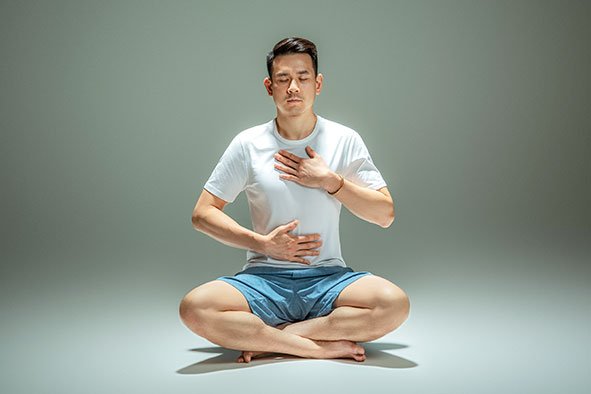
Breathing Training usually starts small. A few slow breaths before a hard meeting, a ten-minute video, an app that vibrates when it’s time to exhale. Mine started with a bad year and a free recording, and for a while that was enough. Then came a session with a trained breathworker that rearranged something in me, and I stopped wondering whether breath mattered and started wondering what it would take to do this for other people.
That’s a different question, and it deserves a different kind of answer. Your own practice teaches you what breath does in your body. It doesn’t teach you what it does in someone else’s, or what you should do when it does something you didn’t predict. Most programs blur that line on purpose, because blurring it is how a weekend course gets to sound like a profession.
Why Fifty Years of Practice Changes What a Certification Means
Here’s what most breathwork trainings won’t tell you plainly: the distance between practising and facilitating is a distance of years, not hours. Dan Brulé has studied, practised and taught breathwork for more than fifty years, and the One Year Practitioner Certification traces directly to the original breathwork training offered by The Growth Center, Inc. and the University of Massachusetts Dartmouth in 1976. It meets One Sky International Breathwork Association standards, set in 1990, and Leonard Orr’s Rebirthing Breathwork International standards, and it exceeds the minimum training requirements of both the International Breathwork Foundation and the Global Professional Breathwork Alliance.
So what does it mean to build a professional practice on a certification with roots in 1976 and standards from 1990, versus one designed three years ago because the market was hungry? I don’t think it’s about taste. It’s about what you owe the person who’s lying down, and that’s not a minor distinction when a client’s nervous system is in your hands.
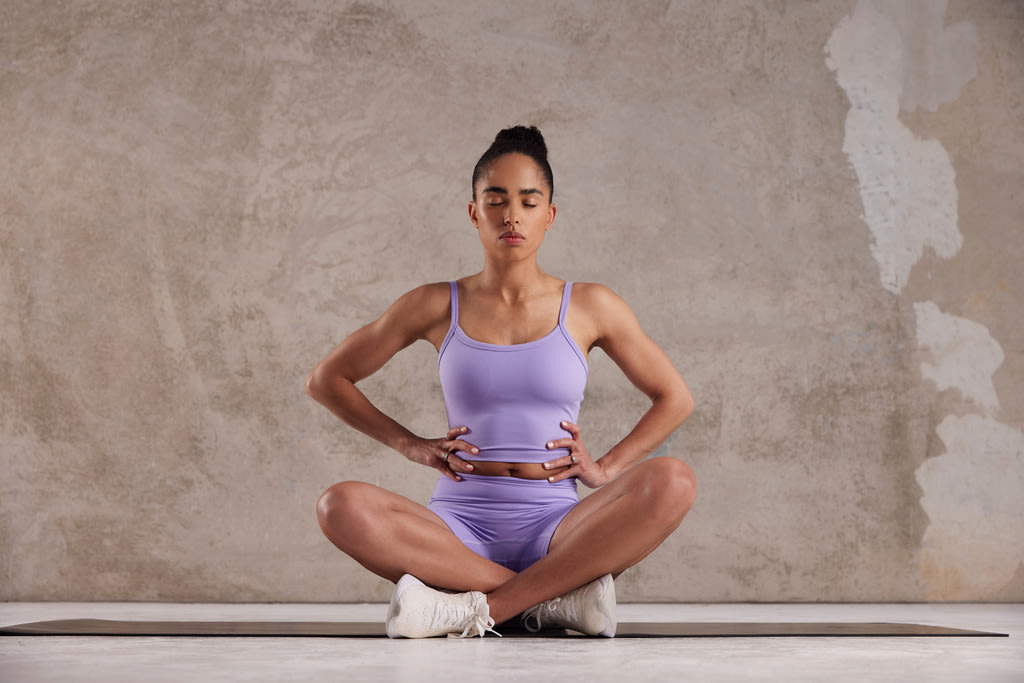
What It Means That This Program Requires a Year of Your Life
Look, the year is how personal practice becomes professional practice. You keep a daily journal for at least 180 days, which is less about writing and more about learning to see yourself clearly enough that your own stuff doesn’t leak into someone’s session. At least ten personal Conscious Connected Breathing sessions with an approved breathworker are required, because receiving a session and reading about one teach different things. Weekly live coaching calls run on Tuesdays at 2:00 p.m. Eastern, peer mentoring happens twice a month, and you submit oral and written reports until the final Program Review and exam.
Then you facilitate, for real. At least twenty-five one-on-one client sessions, each with a written report. (And once you’ve sat with a client in a full session — with all its unpredictability, its emotional release, its long, unexpected stillness — you understand why twenty-five supervised sessions before graduation isn’t an obstacle, it’s the only honest minimum.) Your own breath won’t prepare you for that, and neither will your coaching or therapy skills, not entirely, because a session moves at a different speed than words, and whose training got you ready is something you feel in your body, not your credentials, and—
The training you chose is the answer.
Range Is What Turns a Technique Into a Practice
Breathing Exercises are where almost everyone begins, and on their own they’ll take you only so far. The curriculum covers eight established modern methods, Rebirthing, Transformational Breathing, Holotropic Breathwork, Vivation, Wim Hof, Buteyko, Conscious Connected Breathing, and Kundalini or Prana Yoga, so a graduate can meet a stressed executive, an athlete and someone in grief with something fitted to each. Respiratory anatomy and physiology, trauma-aware facilitation, session intervention techniques, dysfunctional breathing assessment, group dynamics and spiritual psychology fill in the rest.
And the Business of Breathwork, because transformation alone doesn’t build a practice, which I only understood after watching a talented friend struggle to book anyone. Home study runs through the Legacy Collection, seven courses and more than five hundred lessons, and then there’s a minimum of one full week of live, in-person training with Dan himself, a threshold most self-paced courses never ask you to cross. The program also goes where many won’t: Death Urge and Physical Immortality, Birth Trauma and Womb Consciousness, Aura Viewing and Sensing.
People arrive from everywhere, which I noticed immediately: coaches, yoga teachers, healthcare professionals, therapists, healers, and a few who simply couldn’t stop thinking about breath. The program is built for that mix rather than for any single profession, and it asks all of them for the same honesty. Whatever you’ve done before, you’ll be a beginner again in the room, and that, I’ve come to think, is the best state a practitioner can be in. It keeps you listening.
The Money, the Time, and What Comes After
Tuition is $7,560 USD, payable in one payment, three payments of $2,600, or six payments of $1,350, and it’s listed openly, which I took as confidence rather than a tactic. The year can be accelerated to six months or stretched to two, since lives don’t pause for training. Weekly calls continue after graduation, and the community has gathered for the 21st Annual Cabo Breathwork Gathering, which says more about what you’re joining than any testimonial could.
When you’re ready, explore the full program and begin your application at Breath Mastery. If you’ve got questions first, write to office@breathmastery.com. Maybe this is your path, maybe it isn’t yet, and either answer deserves a clear head. I’ve walked this year, I know what it asks and what it gives back, and I’d tell you the same thing sitting beside you, no screen, no agenda.
Questions Serious Practitioners Actually Ask
I already do daily breathing training on my own. Why would I need a certification?
Personal practice teaches you what breath does in your body, not how to facilitate someone else’s session. The 25 supervised client sessions with written reports are where that skill is built.
How do I know this certification is recognised by the professional breathwork community?
It meets One Sky International Breathwork Association standards (established 1990) and Leonard Orr’s Rebirthing Breathwork International standards, and exceeds the minimum requirements of both the IBF and the GPBA.
Is the one year breathwork certification flexible if I work full-time?
Yes. It can be accelerated to six months or extended to two years, with weekly calls on Tuesdays at 2:00 p.m. Eastern.