Best Time to Visit Delhi
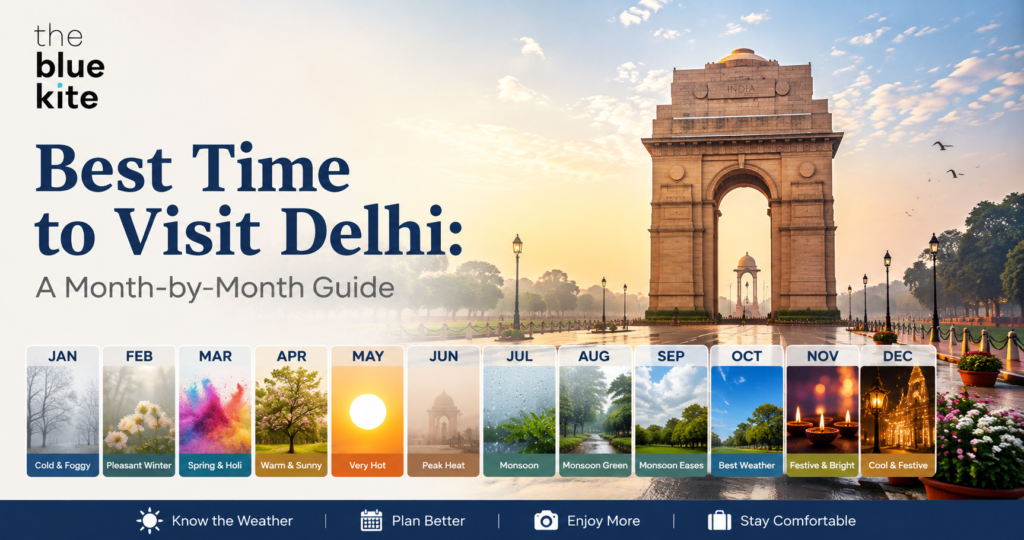
Delhi experiences one of the most extreme climate ranges of any major Indian city — from near-freezing winter mornings to summer afternoons well above 40°C. Knowing what to expect month by month can make the difference between an enjoyable trip and one dominated by weather-related discomfort. Here’s a detailed, month-by-month breakdown to help you plan the ideal time to visit.
January
January is one of Delhi’s coldest months, with morning temperatures often dropping to 5-8°C and dense fog that can delay flights and trains, especially in the early hours. Despite the chill, this is a great month for sightseeing during midday when temperatures rise to a comfortable 18-20°C. Pack warm layers and check flight schedules for potential fog-related delays.
February
Winter begins to ease in February, with more consistent sunshine and temperatures ranging from around 10°C in the morning to 22-24°C in the afternoon. This is widely considered one of the most pleasant months to explore Delhi’s outdoor monuments and gardens, with minimal fog disruption compared to January.
March
March marks the transition into spring, with daytime temperatures climbing to 28-30°C and mornings still comfortably cool. It’s an excellent month for outdoor sightseeing and coincides with Holi, the festival of colors, which falls in early-to-mid March most years — a vibrant, if intense, cultural experience for visitors.
April
Temperatures rise noticeably in April, often reaching the mid-30s°C by afternoon. Mornings remain relatively pleasant, so early starts for sightseeing are advisable. This month works well for visitors who don’t mind some heat and want to avoid peak winter tourist crowds.
May
May is one of Delhi’s hottest months, with daytime temperatures frequently exceeding 40°C. Sightseeing during this period should be limited to early mornings or evenings, with midday reserved for indoor activities like museum visits or shopping in air-conditioned malls. This is generally not the recommended time for a first visit unless travel dates are fixed for other reasons.
June
June continues the intense heat, though the arrival of pre-monsoon showers toward the end of the month occasionally brings brief relief. Humidity begins rising as monsoon approaches. Like May, this month is best suited to visitors prioritizing indoor attractions or those specifically interested in experiencing Delhi’s build-up to monsoon season.
July
Monsoon typically arrives in Delhi by late June or early July, bringing welcome relief from the heat along with increased humidity and periodic heavy rainfall. Temperatures moderate to a range of 28-33°C. This is an atmospheric, lesser-visited time to explore the city’s gardens and monuments, though outdoor plans should always have a backup for sudden downpours.
August
Monsoon continues through August, with Delhi’s parks and green spaces at their lushest. Rainfall can be unpredictable, occasionally causing localized waterlogging in certain areas. Independence Day celebrations on August 15th bring added security and traffic changes around India Gate and the Red Fort, worth factoring into sightseeing plans if visiting around this date.
September
Monsoon begins to taper off through September, though occasional heavy showers can still occur. Temperatures remain warm, generally between 26-33°C, with gradually reducing humidity toward the end of the month. This transitional period offers a good balance of greenery from the monsoon season with fewer weather disruptions than peak monsoon months.
October
October is widely regarded as the start of Delhi’s best travel season. Post-monsoon greenery combines with cooling temperatures, typically ranging from 18-32°C, and clearer skies. Major festivals like Dussehra often fall in this month, adding cultural events to the sightseeing calendar. This is an excellent time for both first-time visitors and those planning extended stays.
November
November brings consistently pleasant weather, with mornings cooling further and afternoons remaining comfortable for extensive outdoor sightseeing. Diwali typically falls in late October or early-to-mid November, making this a particularly festive and visually striking time to visit, with markets and monuments beautifully lit. Air quality can begin declining toward the end of the month, so it’s worth checking daily AQI levels.
December
December is peak tourist season in Delhi, combining cool, comfortable daytime temperatures (12-20°C) with a festive, holiday atmosphere. Mornings and evenings can be quite cold, so warm clothing is essential. This is one of the most popular months for both domestic and international visitors, so booking accommodation and major attractions in advance is advisable.
Overall Recommendation
For most visitors, October through March represents the best window to visit Delhi, offering a combination of comfortable temperatures, clearer skies (particularly October-November before winter fog sets in), and manageable conditions for extensive outdoor sightseeing. Within this window, October and November stand out for combining pleasant weather with vibrant festival energy, while February offers similarly comfortable conditions with fewer crowds than the December-January peak season.
Planning Your Stay Around the Seasons
Whichever month you choose to visit, your choice of accommodation can meaningfully affect your comfort, particularly during Delhi’s more extreme weather months. During peak summer, prioritize properties with reliable air conditioning and minimal outdoor walking distance from transport. During winter, look for properties with good heating and hot water, especially important given how cold Delhi mornings can get.
Browsing stays in Delhi with seasonally appropriate amenities clearly listed can help you avoid unpleasant surprises, whatever time of year you visit. For longer trips, particularly across the more comfortable October-to-March window, consider looking at apartments in Delhi, which offer the space and flexibility to enjoy an extended stay without the constraints of a single hotel room.
Final Thoughts
Delhi’s climate varies dramatically across the year, and timing your visit thoughtfully can significantly shape your overall experience of the city. While October through March offers the most universally comfortable conditions, each season has its own character, from monsoon’s dramatic greenery to winter’s festive energy. Whatever month you choose, platforms like The Blue Kite make it easier to find accommodation suited to the season, ensuring your stay is comfortable no matter when you visit.