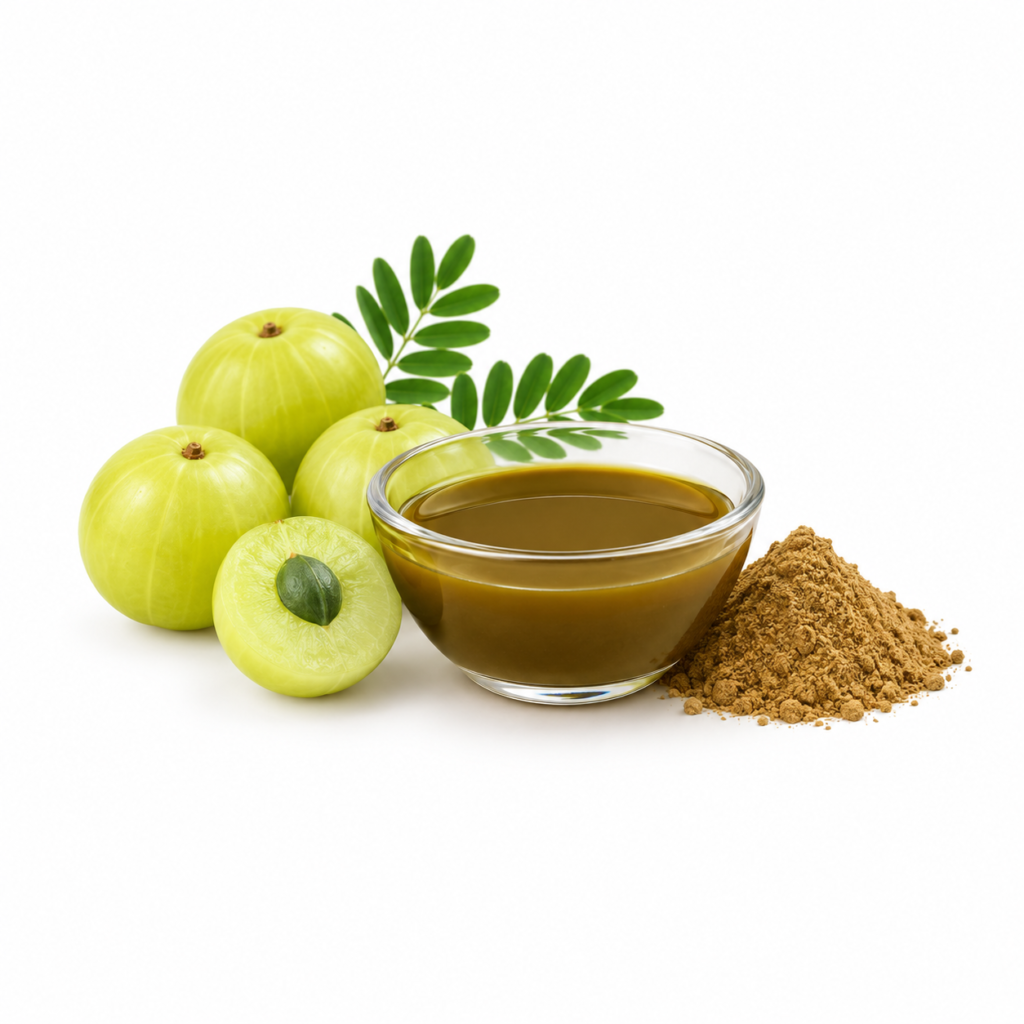
Amla Extract made from Indian gooseberry for botanical ingredient applications.
Amla Extract is a botanical ingredient derived from Indian gooseberry and widely recognised for its traditional use in food and wellness practices. As interest in plant-based nutrition continues to grow, manufacturers are exploring amla for nutritional supplements and other botanical products. Its naturally occurring plant compounds make it an interesting ingredient for product developers seeking diverse botanical options.
The development of modern nutritional products requires careful ingredient selection, consistent quality and reliable technical information. Amla Extract can be considered for different formulations depending on its composition and intended use. Ingredients such as Alpha Lipoic Acid and Cinnamon Bark Extract offer additional characteristics that may be relevant to nutritional product development.
Understanding Amla Extract
Amla comes from the fruit of Phyllanthus emblica, which is also known as Indian gooseberry. It has a long history of use in traditional Indian food practices and contains various naturally occurring compounds, including polyphenols. The vitamin C content of an extract can vary depending on the raw material and processing method.
Amla Extract is produced through suitable processing techniques designed to obtain specific ingredient characteristics. The final composition depends on factors such as fruit quality, extraction conditions, and storage practices. Manufacturers should review product specifications to understand the ingredient’s actual composition.
Amla-derived ingredients may be used in suitable nutritional supplements and other botanical formulations. Their suitability depends on quality requirements, regulatory considerations and the intended application.
Applications in Nutritional Product Development
Botanical ingredients are used in a wide range of product formats. Amla Extract may be considered for capsules, tablets, powders and selected nutritional formulations depending on its physical and chemical properties.
Product developers should establish clear formulation goals before selecting an ingredient. This includes defining the intended product category, identifying target markets, and assessing the quality requirements for the finished product.
Important considerations when using Amla Extract include:
- Botanical identity and raw material traceability.
- Composition and relevant marker compounds.
- Ingredient stability during processing and storage.
- Microbiological quality and contaminant testing.
- Compatibility with other formulation ingredients.
- Compliance with applicable regulations.
Careful planning helps businesses maintain consistent specifications and develop products that meet established quality standards.
Exploring Alpha Lipoic Acid
Alpha Lipoic Acid is a naturally occurring compound involved in mitochondrial energy metabolism. It plays a role in biochemical processes that help the body convert nutrients into energy. It has also been studied for its antioxidant properties and potential applications in nutritional supplements.
Unlike a botanical extract, Alpha Lipoic Acid is a specific chemical compound with its own quality and formulation requirements. Manufacturers should consider its stability, compatibility, and appropriate specifications when incorporating it into a product.
Scientific research has explored several potential applications of this compound, but the evidence varies by use. Businesses should avoid making unsupported health claims and should ensure that product information reflects available evidence and applicable regulations.
When Alpha Lipoic Acid is considered alongside Amla Extract, formulation specialists should evaluate the purpose of each ingredient. Compatibility testing and stability assessments can help determine whether the proposed combination is suitable for the intended product.
Understanding Cinnamon Bark Extract
Cinnamon Bark Extract is derived from the bark of cinnamon trees and is valued for its distinctive aromatic characteristics. Cinnamon contains naturally occurring compounds including cinnamaldehyde. The composition of an extract depends on the species of cinnamon and the manufacturing process.
In product development, Cinnamon Bark Extract may be considered for selected nutritional and botanical formulations. Manufacturers should confirm the ingredient’s identity and assess its composition before use.
Different cinnamon species can contain different levels of coumarin. This factor may be relevant when evaluating safety and expected intake. Suppliers and manufacturers should therefore consider suitable testing and follow the regulations applicable to the target market.
Combining Cinnamon Bark Extract with other ingredients requires careful formulation planning. Product developers should assess compatibility, stability, and the technical requirements of the finished product rather than assuming that a combination automatically provides additional benefits.
Quality Standards for Botanical Ingredients
Quality assurance is essential when sourcing ingredients for nutritional product development. Natural raw materials can vary due to growing conditions, harvesting, storage, and processing methods. Manufacturers need appropriate controls to manage these variations.
Businesses sourcing Amla Extract should review botanical authentication product specifications, and certificates of analysis. Testing may cover identity, relevant compounds, microbial quality, and potential contaminants depending on the intended use.
The same principles apply to Alpha Lipoic Acid and Cinnamon Bark Extract. Each ingredient has distinct characteristics and requires suitable analytical methods.
Reliable documentation helps buyers assess whether an ingredient meets their requirements. Manufacturers should also establish procedures for receiving, testing, storing, and handling raw materials to maintain quality throughout production.
Choosing a Reliable Ingredient Supplier
Selecting a supplier is an important part of product development. Businesses should evaluate supplier experience, manufacturing controls, documentation and the ability to provide ingredients that meet agreed specifications.
When sourcing Amla Extract, buyers should consider the origin of the raw material and the consistency of the supplied ingredient. Clear technical documentation can help businesses compare materials and make informed decisions.
A dependable supplier should be able to provide relevant specifications and batch documentation. Communication about ingredient identity, processing methods, and quality requirements can reduce uncertainty and support a more efficient development process.
Responsible sourcing also matters. Traceability and appropriate raw material handling help businesses understand their supply chain and support consistent product manufacturing.
Building Effective Botanical Formulations
Successful formulation development begins with a clear understanding of the intended product. Developers should consider the properties of each ingredient and how it fits within the overall formulation.
Amla Extract offers a botanical option for suitable nutritional products, while Alpha Lipoic Acid provides a distinct compound with specific biochemical functions. Cinnamon Bark Extract contributes another botanical profile that may be suitable for selected applications.
Formulation specialists should assess ingredient compatibility, stability, processing requirements and product labelling. They should also ensure that any proposed health claims are supported by appropriate evidence and comply with relevant regulations.
Collaboration between ingredient suppliers formulation specialists and quality teams can improve communication and reduce uncertainty during product development. It can also help ensure that finished products meet their established specifications.
Conclusion
Botanical ingredients continue to offer opportunities for innovation in nutritional supplements and plant-based products. Amla Extract is an option for suitable formulations, while Alpha Lipoic Acid and Cinnamon Bark Extract provide different characteristics for product developers to consider.
Careful sourcing, quality testing, scientific evaluation and regulatory compliance help manufacturers develop consistent and responsible products. Botanic Healthcare focuses on botanical ingredients and plant-based solutions for businesses seeking quality-driven ingredient options across diverse industries.