Managing inventory becomes increasingly difficult as businesses expand their product catalogs, work with multiple suppliers, and operate across different warehouses. Without accurate stock information, teams may struggle to identify available products, track inventory movement, and plan replenishment activities. These gaps can lead to stock shortages, excess inventory, delayed orders, and unnecessary operational costs.
Inventory visibility helps businesses understand what stock is available, where it is stored, and how it moves through the supply chain. The right technology can bring this information together, reduce manual tracking, and support better inventory decisions. Understanding how supply chain management software improves visibility can help businesses identify gaps in their existing processes and manage stock more effectively.
Why Is Inventory Visibility Important for Businesses?
Inventory visibility refers to the ability to access accurate and updated information about stock levels, product locations, incoming shipments, and inventory movement across the supply chain.
When businesses lack this visibility, employees may rely on outdated spreadsheets or separate warehouse records to make purchasing and fulfillment decisions. This increases the risk of errors and makes it harder to respond to changing demand.
Better inventory visibility helps businesses:
- Track stock across locations: Monitor available inventory in warehouses, distribution centers, and retail outlets.
- Prevent stock shortages: Identify low-stock situations early and plan replenishment accordingly.
- Avoid overstocking: Maintain appropriate inventory levels based on actual demand and availability.
- Improve inventory planning: Use accurate stock information to make better purchasing and storage decisions.
- Support order fulfillment: Confirm product availability before processing and dispatching customer orders.
For growing businesses, maintaining this level of visibility becomes difficult without connected systems and reliable inventory information.
How Does Supply Chain Management Software Improve Inventory Visibility?
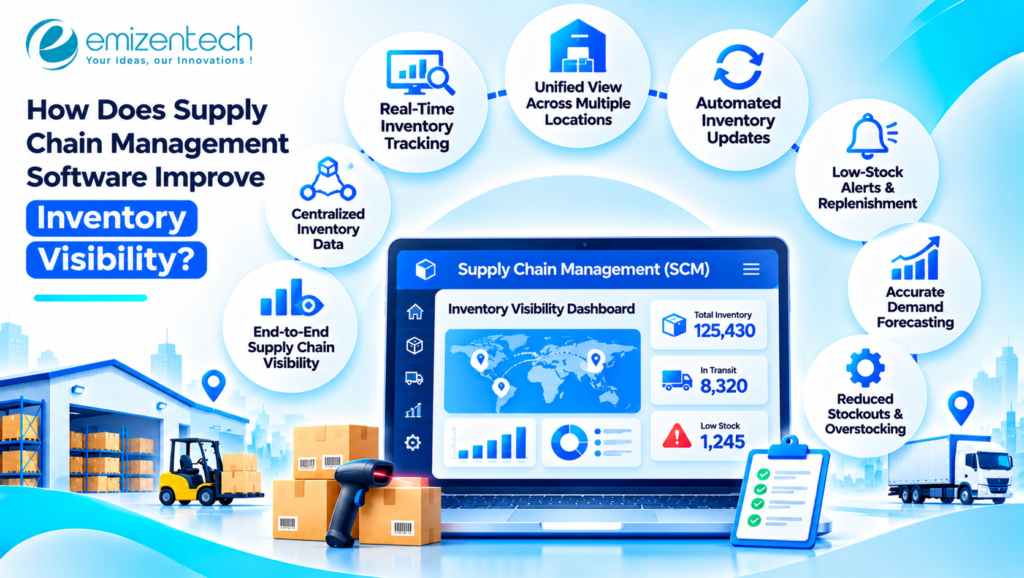
Modern supply chain systems connect inventory-related activities and provide businesses with a more consistent view of stock across their operations. Instead of relying on disconnected records, teams can access relevant information through centralized platforms.
Here are the key ways the software improves inventory visibility.
1. Real-Time Inventory Tracking
Real-time inventory tracking helps businesses monitor stock levels as products are received, stored, transferred, or dispatched.
For example, when a warehouse receives a new shipment, the system can update the available inventory after the goods are recorded. Similarly, when an order is fulfilled, the stock quantity can be adjusted to reflect the transaction.
This reduces dependency on manual updates and helps employees work with more current inventory information.
Businesses can use real-time tracking to:
- Check available stock quantities.
- Monitor incoming and outgoing inventory.
- Identify low-stock products.
- Track inventory movement between locations.
- Reduce discrepancies between recorded and actual stock.
2. Centralized Inventory Data
Businesses operating across multiple departments or locations often maintain inventory information in separate applications. This creates inconsistencies and makes it difficult to determine actual stock availability. Supply chain management software can centralize inventory records and make relevant information accessible to authorized teams through a shared system.
For instance, procurement employees can check stock availability before creating purchase orders, while warehouse teams can review incoming shipments and existing inventory levels.
Centralized data reduces information gaps and helps departments coordinate inventory-related activities more effectively.
3. Automated Stock Updates
Manual inventory updates can become unreliable when businesses process large numbers of orders and shipments.
Automation helps update stock records based on predefined business activities, such as receiving goods, processing orders, completing returns, or transferring products between warehouses.
For example, when a customer order is confirmed, the system can update the available inventory according to the configured order allocation rules.
Automated stock updates help businesses:
- Reduce manual data entry.
- Minimize inventory recording errors.
- Maintain consistent stock information.
- Improve coordination between departments.
- Identify inventory changes more quickly.
4. Multi-Warehouse Inventory Monitoring
Businesses operating multiple warehouses need to understand where products are stored and how much inventory is available at each location.
Without centralized monitoring, employees may need to contact individual warehouse teams to confirm stock availability. This can delay order allocation and product transfers.
An integrated system helps businesses view inventory across different locations and monitor stock movement between facilities.
For example, if one warehouse runs low on a particular product while another has excess stock, managers can evaluate whether transferring inventory is more practical than placing a new purchase order.
5. Demand Forecasting and Replenishment Planning
Inventory visibility is not limited to checking current stock levels. Businesses also need to understand how much inventory they may require in the future.
Demand forecasting uses historical sales, seasonal patterns, and order trends to estimate future product requirements.
Supply chain systems can use this information to support replenishment planning and help businesses identify when additional stock may be needed.
For example, a retailer preparing for a seasonal sales period can review historical demand and current inventory levels to plan purchases before demand increases.
This helps reduce unnecessary purchasing while maintaining sufficient stock for expected orders.
6. Order and Shipment Tracking
Inventory visibility also depends on knowing where products are during the fulfillment process. Businesses need to track inventory from the moment an order is placed until the products are delivered.
Supply chain software can connect order information with warehouse and shipment activities, helping teams monitor order status and product movement.
This allows businesses to:
- Check whether products are available for new orders.
- Monitor picking, packing, and dispatch activities.
- Track incoming supplier shipments.
- Identify shipment delays that may affect stock availability.
- Coordinate inventory allocation across different locations.
Better order and shipment visibility helps businesses maintain accurate stock records and manage customer expectations.
7. Inventory Reporting and Analytics
Inventory reports help businesses understand stock movement, identify recurring problems, and evaluate inventory performance.
Supply chain systems can organize inventory data into reports and dashboards that highlight important operational information.
For example, managers can review slow-moving products, frequently ordered items, stock turnover, and inventory levels across warehouses.
These insights help businesses identify products that require replenishment, reduce excess stock, and improve purchasing decisions.
Common Inventory Visibility Challenges Businesses Face
Even businesses with established inventory processes can experience visibility problems when their systems and workflows are not properly connected.
Some common challenges include:
Disconnected Inventory Systems
When warehouse, procurement, and sales applications operate separately, teams may work with different inventory figures. This makes it difficult to maintain consistent stock information across departments.
Delayed Stock Information
If inventory records are updated manually or at scheduled intervals, employees may not have access to the latest stock availability. This can result in incorrect purchasing and order allocation decisions.
Manual Inventory Updates
Manual data entry increases the possibility of recording errors, duplicate entries, and missing transactions. These issues become harder to manage as inventory volumes increase.
Limited Warehouse Coordination
Businesses operating multiple warehouses may struggle to monitor stock transfers and product availability across locations without centralized information.
Inaccurate Demand Planning
When historical sales and inventory data are incomplete, forecasting becomes less reliable. Businesses may purchase more stock than required or fail to maintain sufficient inventory for expected demand.
Addressing these challenges requires better data management, connected systems, and consistent inventory tracking processes.
Key Benefits of Better Inventory Visibility
Improved inventory visibility supports several areas of business operations. When teams have access to accurate stock information, they can make decisions with greater confidence.
The main benefits include:
- Reduced stockouts and overstocking: Better stock information helps businesses maintain appropriate inventory levels.
- Improved order fulfillment: Employees can confirm product availability before processing orders.
- Better warehouse coordination: Centralized inventory records make it easier to manage stock across multiple facilities.
- Lower inventory holding costs: Businesses can identify excess and slow-moving products before storage expenses increase.
- More informed purchasing decisions: Accurate inventory data helps procurement teams determine when and how much stock to order.
These improvements can help businesses manage inventory more efficiently while supporting consistent supply chain operations.
How to Improve Inventory Visibility Using Supply Chain Software
Implementing software alone does not guarantee accurate inventory information. Businesses also need to establish reliable processes for recording, updating, and monitoring stock.
The following practices can help improve inventory visibility.
1. Integrate Inventory and Warehouse Systems
Connect inventory records with warehouse management, procurement, and order processing applications. This helps maintain consistent information across different operational activities.
2. Automate Stock Tracking and Updates
Use automated workflows to record inventory changes resulting from purchases, sales, returns, and warehouse transfers. This reduces manual work and improves record accuracy.
3. Establish Centralized Inventory Records
Maintain a shared source of inventory information that authorized employees can access. Standardized product records and stock identification methods also help reduce inconsistencies.
4. Monitor Inventory Movement Regularly
Review incoming shipments, outgoing orders, stock transfers, and adjustments. Regular monitoring helps identify discrepancies before they affect fulfillment or purchasing decisions.
5. Use Analytics to Improve Stock Planning
Analyze inventory turnover, demand patterns, and slow-moving products to identify opportunities for better replenishment and inventory allocation.
Conclusion
Inventory visibility plays an important role in maintaining efficient supply chain operations. Without accurate stock information, businesses may struggle with purchasing decisions, warehouse coordination, and order fulfillment. Centralized inventory records, automated stock updates, real-time tracking, and better reporting can help address these challenges.
Businesses should evaluate their existing inventory processes and identify where disconnected systems or manual workflows are affecting visibility. With 12+ years of technology development experience, EmizenTech helps businesses explore digital solutions, system integrations, and technology improvements that support more efficient business operations.
Frequently Asked Questions
1. What Is Inventory Visibility in Supply Chain Management?
Inventory visibility refers to the ability to access accurate information about stock quantities, product locations, incoming shipments, and inventory movement across different supply chain locations.
2. How Does Software Improve Inventory Tracking?
Software improves inventory tracking by centralizing stock information, automating inventory updates, monitoring product movement, and providing reports on stock availability across different locations.
3. Can Supply Chain Software Track Inventory Across Multiple Warehouses?
Yes. Suitable supply chain systems can provide centralized inventory information across multiple warehouses, helping businesses monitor stock levels, transfers, and product availability at different locations.
4. How Does Real-Time Inventory Visibility Prevent Stockouts?
Real-time visibility helps businesses identify low-stock products and monitor inventory changes. This allows procurement teams to plan replenishment before available stock runs out.
5. What Features Should Businesses Look for in Inventory Management Software?
Businesses should evaluate real-time inventory tracking, automated stock updates, multi-warehouse monitoring, demand forecasting, order tracking, reporting, and integration capabilities.