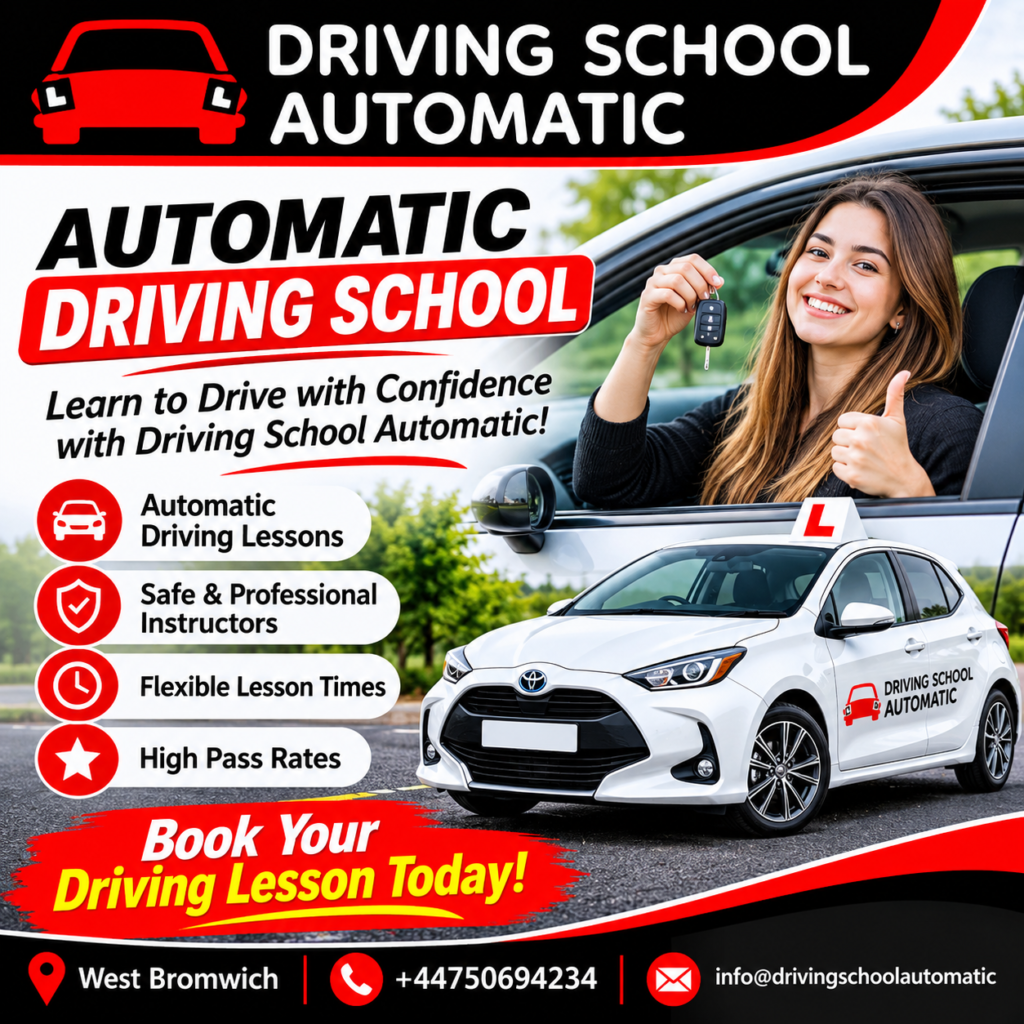
Learning to drive is an important milestone that offers greater independence, flexibility and convenience. However, choosing the right type of driving lessons can significantly influence how comfortable and confident a learner feels behind the wheel. For many new drivers, automatic vehicles provide a straightforward introduction to modern road driving because they remove the need to operate a clutch or change gears manually.
The growing interest in automatic driving lessons reflects changing preferences among learners who want to concentrate on road awareness, traffic conditions and vehicle control without managing additional gear-changing tasks. Automatic cars are particularly useful for people who find manual transmission challenging, nervous beginners and drivers who prefer a simpler driving experience.
Whether someone is starting from scratch, returning to driving after a long break or looking for a flexible learning schedule, understanding how automatic driving education works can help them make informed decisions.
1. Why Are Automatic Driving Lessons Becoming More Popular?
Automatic transmission vehicles have become increasingly common across the UK. Many modern cars, including hybrid and electric vehicles, use automatic transmission systems, making automatic driving skills increasingly relevant to everyday transport.
One of the main advantages of learning in an automatic car is that learners do not need to coordinate a clutch pedal and gear stick. Instead, they can focus on essential driving responsibilities.
These include:
- Steering and maintaining vehicle positioning.
- Understanding road signs and traffic signals.
- Checking mirrors and blind spots.
- Maintaining appropriate speed and following distances.
- Recognising hazards and responding safely.
- Developing confidence at junctions and roundabouts.
For beginners, removing the additional responsibility of manual gear changes can make the initial learning experience less complicated.
However, automatic driving still requires concentration, patience and consistent practice. Learners must understand road rules, anticipate hazards and demonstrate safe decision-making before becoming independent drivers.
2. Choosing the Right Automatic Driving Instructor and Driving School
Selecting an experienced instructor is one of the most important decisions when beginning driving lessons. A suitable instructor should understand the learner’s current abilities, explain driving techniques clearly and provide constructive feedback throughout the learning process.
When comparing an automatic driving instructor, learners should consider several factors.
DVSA-approved instruction: Check that the instructor is appropriately qualified and authorised to provide paid driving instruction. In Great Britain, Approved Driving Instructors (ADIs) are registered with the Driver and Vehicle Standards Agency (DVSA).
Teaching approach: Some learners prefer structured lessons, while others benefit from a slower approach with additional explanations and demonstrations. An instructor should adapt teaching methods to individual learning needs.
Local road knowledge: Familiarity with local roads can help learners understand different traffic conditions, junction layouts, pedestrian crossings and roundabouts.
Progress monitoring: Regular feedback helps learners identify strengths and areas requiring improvement. A structured learning plan can also make lesson time more productive.
An automatic driving school should provide clear information about lesson arrangements, instructor qualifications, cancellation policies and available learning options.
For people researching local training opportunities, Driving School Automatic in West Bromwich is one example of a provider to consider when comparing automatic driving instruction in the area.
3. How Beginners Can Develop Confidence Behind the Wheel
Starting to drive can feel overwhelming, particularly for people who have never controlled a vehicle before. Learning to drive automatic allows beginners to focus on fundamental driving skills without worrying about clutch control or manual gear selection.
Nevertheless, confidence develops through preparation, repetition and practical experience rather than simply completing a certain number of lessons.
Here are several useful strategies for beginners.
Start with basic vehicle controls
Before driving in busy traffic, learners should understand the accelerator, brake pedal, steering wheel, mirrors, indicators and automatic gear selector. They should also learn the correct procedures for starting, stopping and securing the vehicle.
Practise in quieter environments
Early lessons may involve quieter roads or suitable areas where learners can become familiar with steering, braking and vehicle positioning. As their abilities improve, instructors can gradually introduce more challenging traffic situations.
Develop effective observation habits
Mirror checks, blind-spot awareness and appropriate observation are essential elements of safe driving. Beginners should practise checking their surroundings before changing direction, moving away or approaching junctions.
Understand automatic transmission settings
Learners should become familiar with the main transmission positions:
- P (Park): Used when securing the vehicle.
- R (Reverse): Used for reversing.
- N (Neutral): Disconnects the drive from the wheels.
- D (Drive): Used for normal forward movement.
Understanding when and how to use these settings helps prevent mistakes and encourages smoother vehicle operation.
Ask questions and review feedback
Learners should discuss difficult situations with their instructors rather than allowing confusion to continue. Reviewing mistakes after each lesson can help improve performance in subsequent sessions.
4. Weekly Automatic Lessons, Block Bookings and Refresher Training
Consistency is an important part of learning to drive. Choosing a suitable lesson schedule can help learners retain information, develop practical skills and make steady progress.
Different learning arrangements suit different circumstances.
Weekly Automatic Lessons
Weekly automatic lessons are a popular option for learners who want to develop their abilities gradually. Regular practice gives students opportunities to apply previous feedback, strengthen driving habits and build confidence over time.
A weekly schedule can be particularly suitable for:
- Students balancing lessons with education.
- People working full-time.
- Beginners who prefer gradual learning.
- Learners who need additional time to practise individual skills.
The important factor is maintaining consistency between lessons. Where possible, learners should review previous feedback and prepare for upcoming sessions.
Block Booking Automatic Lessons
Block booking automatic lessons involves arranging several lessons together rather than booking each session individually.
This approach can make scheduling easier for learners with busy routines. Depending on the school’s arrangements, block booking may also provide access to a structured learning programme.
Before committing, learners should check:
- The total cost and payment conditions.
- Lesson duration and availability.
- Cancellation and rescheduling policies.
- Whether unused lessons can be transferred.
- Any restrictions associated with the booking.
It is important to understand the terms before making a payment.
Refresher Automatic Driving Lessons
Driving skills can become less familiar after a long break. Refresher automatic driving lessons help returning drivers rebuild confidence and improve their understanding of current road conditions.
They may be useful for:
- Drivers returning after several years without driving.
- People who have recently changed from manual to automatic vehicles.
- Individuals who feel nervous in busy traffic.
- Drivers wanting to practise parking and manoeuvres.
- People who need additional experience with unfamiliar road layouts.
Refresher training should focus on the driver’s specific concerns and abilities rather than following a one-size-fits-all programme.

5. Finding Automatic Lessons Near Me and Preparing for the Driving Test
Searching online for automatic lessons near me is often the first step when comparing local driving schools. However, choosing a provider should involve more than simply selecting the closest available option.
Learners should consider instructor availability, professional qualifications, lesson structure, vehicle suitability and familiarity with local driving conditions.
For people in West Bromwich, understanding the surrounding road environment can be useful when preparing for independent driving. Lessons may introduce learners to different road types, including residential streets, busy junctions, roundabouts and roads with changing speed limits.
Essential Driving Test Preparation Tips
The practical driving test assesses whether a learner can drive safely and independently. Preparation should cover all important driving competencies.
Consider the following checklist:
- Practise independent driving using a sat nav or traffic signs.
- Improve mirror and blind-spot observations.
- Develop safe approaches to roundabouts and junctions.
- Practise parallel parking and other required manoeuvres.
- Maintain appropriate speed and road positioning.
- Understand how to identify and respond to hazards.
- Become familiar with the vehicle’s safety features.
Learners should also understand the current DVSA driving test requirements and practise under realistic conditions.
It is important to remember that choosing an automatic vehicle affects the type of licence obtained. Passing the practical test in an automatic car normally results in an automatic-only driving licence. Drivers wishing to drive manual vehicles must pass a separate practical test in a manual car.
Conclusion
Automatic driving education provides an accessible route into independent driving for beginners, nervous learners and people who prefer not to manage manual gear changes. By simplifying vehicle operation, automatic transmission allows learners to concentrate on road awareness, hazard perception, vehicle positioning and safe decision-making.
Choosing the right instructor, maintaining a consistent lesson schedule and practising essential driving skills are all important factors in becoming a confident driver. Whether learners choose weekly automatic lessons, block booking automatic lessons or refresher training, their progress ultimately depends on preparation, patience and regular practice.