What Is Polycythemia Vera?
Polycythemia vera (PV) is a rare, chronic blood disorder in which the bone marrow produces too many red blood cells. This can make the blood thicker than normal, slowing circulation and increasing the risk of blood clots. Understanding the Stages of Polycythemia Vera helps patients recognize how the condition may develop over time, identify possible complications, and understand why regular medical monitoring is important.
Polycythemia vera belongs to a group of blood disorders called myeloproliferative neoplasms (MPNs). It is most commonly associated with a mutation in the JAK2 gene, which affects the normal regulation of blood cell production. In addition to red blood cells, some patients may also have increased white blood cells and platelets.
PV is generally a chronic condition that can be managed with appropriate medical treatment. However, its progression varies between individuals. Some people experience relatively stable disease for many years, while others may eventually develop complications involving bone marrow changes or abnormal blood cell development.
Common Symptoms of Polycythemia Vera
Symptoms may develop gradually and differ from one person to another. Some individuals discover the condition through routine blood tests, while others experience noticeable physical changes.
Common symptoms include:
- Persistent headaches and dizziness.
- Unusual tiredness and weakness.
- Itching, especially after a warm shower or bath.
- Redness or a flushed appearance of the face.
- Blurred vision or temporary visual disturbances.
- Burning sensations in the hands and feet.
- Night sweats.
- Difficulty sleeping.
- Unexplained weight loss.
- A feeling of fullness in the upper abdomen due to an enlarged spleen.
Some patients may also experience blood clot-related complications, which can affect the heart, brain, lungs, or other important organs.
What Causes Polycythemia Vera?
Polycythemia vera develops when abnormal bone marrow cells begin producing excessive blood cells. Most cases are associated with an acquired mutation in the JAK2 gene.
This mutation causes the bone marrow to produce blood cells without following normal regulatory signals. The exact reason why this genetic change occurs is not fully understood.
Healthcare professionals generally use the following tests to diagnose PV:
- Complete blood count (CBC).
- Hemoglobin and hematocrit measurements.
- JAK2 genetic testing.
- Erythropoietin level testing.
- Bone marrow biopsy when necessary.
Early diagnosis helps doctors establish an appropriate treatment plan and monitor the condition over time.
Understanding the Stages and Progression of Polycythemia Vera
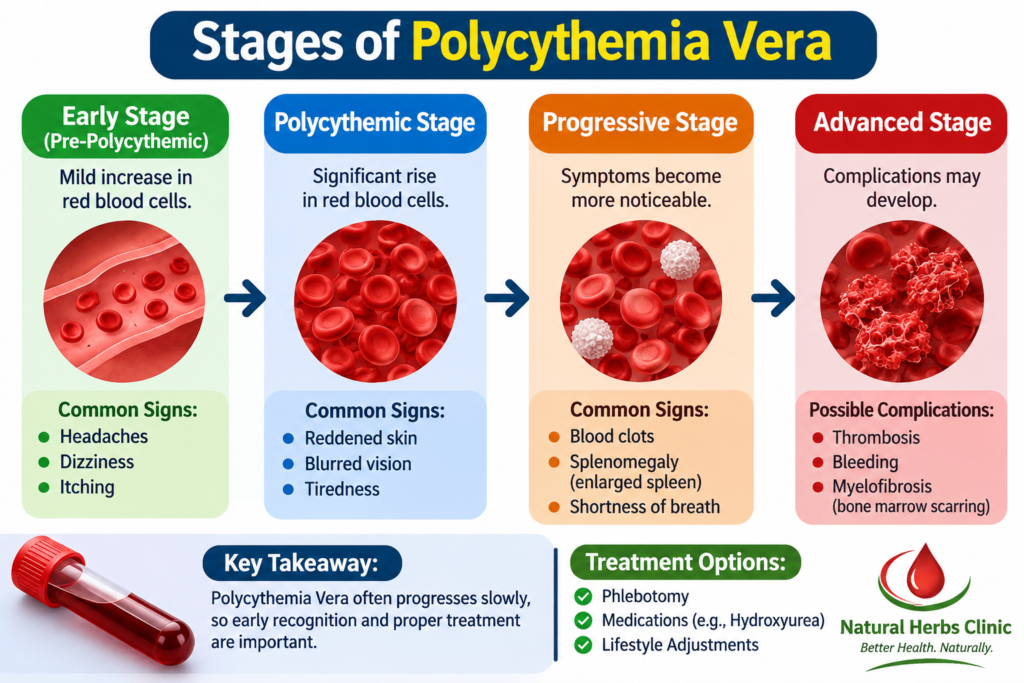
Unlike some cancers, polycythemia vera does not have a universally accepted numbered staging system such as stages 1 through 4. Instead, healthcare professionals describe the disease according to its clinical characteristics, bone marrow changes, and possible progression.
The disease may be discussed in terms of three broad developments:
- Early or pre-polycythemic changes.
- Established or overt polycythemia vera.
- Advanced disease, including post-PV myelofibrosis or, less commonly, leukemic transformation.
Some patients may also develop accelerated or blast-phase disease, which describes increasing numbers of immature blood cells called blasts.
It is important to understand that these developments do not happen to everyone. Many patients remain in the chronic phase throughout their lives with appropriate treatment and monitoring.
1. Early or Pre-Polycythemic Phase
The early phase refers to a period when abnormal blood cell production begins but the condition may not yet show all the typical features of established polycythemia vera.
Some patients may have subtle changes in their blood counts or bone marrow findings. These changes can make diagnosis more challenging, particularly when hemoglobin and hematocrit levels are not significantly elevated.
Common Features of the Early Phase
Possible characteristics include:
- Mildly increased red blood cell measurements.
- Changes in white blood cell or platelet counts.
- Early bone marrow abnormalities.
- Few noticeable symptoms.
- Abnormal JAK2 genetic testing.
Some individuals may feel completely healthy during this period.
How Is the Early Phase Diagnosed?
Doctors may recommend repeated blood tests, genetic testing, and bone marrow examination to understand the underlying changes.
A diagnosis should not be based on one abnormal blood test alone. Healthcare professionals evaluate several findings together to distinguish PV from other conditions that can increase red blood cell levels.
Early identification is helpful because it allows patients to begin appropriate monitoring and treatment when necessary.
2. Established or Overt Polycythemia Vera
The established phase is the typical form of diagnosed polycythemia vera. At this point, excessive red blood cell production becomes more clearly noticeable through laboratory testing.
The bone marrow usually shows increased production of multiple blood cell types, a pattern known as panmyelosis.
Common Signs of Established PV
Patients may experience:
Increased Red Blood Cells: Excessive red blood cell production increases blood viscosity and can interfere with normal circulation.
Headaches and Dizziness: Changes in blood flow may contribute to headaches, lightheadedness, and other circulation-related symptoms.
Itching: Some individuals experience intense itching, particularly after exposure to warm water.
Enlarged Spleen: The spleen may become enlarged as it works to manage abnormal blood cells.
Burning Sensations: Some patients develop erythromelalgia, which can cause redness, warmth, and burning discomfort in the hands or feet.
Treatment During Established PV
The main goal of treatment is to reduce the risk of blood clots and control excessive blood cell production.
Common treatment options include:
- Phlebotomy:Removing a controlled amount of blood to lower hematocrit levels.
- Low-Dose Aspirin:Recommended for many patients to reduce clotting risk when appropriate.
- Hydroxyurea:A medication that reduces excessive blood cell production.
- Interferon:An alternative treatment option for certain patients.
- Ruxolitinib:A JAK1/JAK2 inhibitor that may be used in selected patients, including some who do not respond adequately to other treatments.
Maintaining hematocrit below 45% is a common treatment goal for many patients. The appropriate target and treatment strategy should be determined by a hematologist.
3. Post-Polycythemia Vera Myelofibrosis
One possible form of advanced disease is post-polycythemia vera myelofibrosis (post-PV MF).
This complication develops when the bone marrow gradually becomes scarred or fibrotic. As fibrosis increases, the bone marrow may become less effective at producing normal blood cells.
Not everyone with PV develops myelofibrosis. It is a recognized complication that can occur after many years of living with the condition.
Signs and Symptoms of Post-PV Myelofibrosis
Patients may experience:
- Increasing fatigue and weakness.
- Anemia or reduced hemoglobin levels.
- Enlarged spleen.
- Unexplained weight loss.
- Night sweats.
- Fever without an obvious infection.
- Bone or abdominal discomfort.
- Reduced appetite.
- Increasing difficulty maintaining normal blood counts.
These symptoms can also occur with other health conditions, so they do not automatically confirm disease progression.
How Is Post-PV Myelofibrosis Diagnosed?
Doctors evaluate several findings to determine whether PV has progressed to myelofibrosis.
The assessment may include:
- Previous confirmed diagnosis of PV.
- Bone marrow biopsy showing significant fibrosis.
- New or worsening anemia.
- Changes in the blood smear.
- Increasing spleen size.
- Constitutional symptoms such as night sweats, fever, and weight loss.
A bone marrow biopsy is particularly important because it helps identify the degree of fibrosis.
Treatment Options
Treatment depends on symptoms, blood counts, overall health, and individual risk factors.
Options may include JAK inhibitors, supportive treatments for anemia, symptom management, and other therapies recommended by a hematologist.
In carefully selected patients, allogeneic stem cell transplantation may be considered as a potentially curative treatment, although it carries significant risks and is not suitable for everyone.
4. Accelerated Phase of Polycythemia Vera
Another possible form of disease progression is the accelerated phase.
This phase is associated with an increased number of immature blood cells, known as blasts, in the blood or bone marrow.
In myeloproliferative neoplasms, the accelerated phase is generally defined by 10% to 19% blasts in the peripheral blood or bone marrow.
Possible Signs of Accelerated Disease
Symptoms may include:
- Increasing fatigue.
- Persistent fever.
- Unexplained weight loss.
- Frequent infections.
- Increasing anemia.
- Easy bruising or bleeding.
- Changes in blood cell counts.
However, some patients may not experience obvious symptoms initially. Laboratory testing is essential for identifying abnormal blast levels.
Why Is This Phase Important?
An increased blast percentage may indicate more aggressive disease behavior and a greater risk of progression to acute leukemia.
Healthcare professionals usually recommend specialized evaluation to determine the most appropriate treatment approach.
5. Blast Phase and Leukemic Transformation
The blast phase is the most advanced form of disease progression and is associated with transformation into acute myeloid leukemia (AML).
It is generally defined by the presence of 20% or more blasts in the peripheral blood or bone marrow.
Although this transformation is a serious complication, it is relatively uncommon among people diagnosed with polycythemia vera.
Common Features of Blast-Phase Disease
Possible symptoms include:
- Severe fatigue and weakness.
- Frequent or persistent infections.
- Unusual bruising.
- Excessive bleeding.
- Bone discomfort.
- Significant changes in blood counts.
How Is Blast Phase Treated?
Treatment requires specialist care and depends on the patient’s age, overall health, genetic findings, and disease characteristics.
Possible approaches include:
- Acute leukemia-directed medications.
- Targeted therapies when appropriate.
- Supportive care, including transfusions.
- Clinical trial participation.
- Allogeneic stem cell transplantation in selected patients.
The treatment plan should be developed by a specialist hematology team because advanced disease requires individualized management.
Factors That May Influence Disease Progression
The progression of polycythemia vera differs between individuals. Several factors may influence the likelihood of developing complications.
1. Age at Diagnosis
Age can influence the overall risk profile of PV. Older patients may have additional medical conditions that affect cardiovascular health and treatment decisions.
However, younger patients can also experience disease progression, so age alone cannot predict an individual’s outcome.
2. Genetic Mutations
The JAK2 mutation is strongly associated with PV. Additional genetic changes may also influence disease behavior and the likelihood of progression.
Doctors may recommend specialized genetic testing when there are concerns about changing disease characteristics.
3. Blood Cell Abnormalities
Changes in hemoglobin, hematocrit, white blood cells, and platelets can provide important information about disease activity.
Persistent abnormalities should be evaluated by a hematologist.
4. Bone Marrow Changes
Increasing bone marrow fibrosis can indicate progression toward post-PV myelofibrosis.
Bone marrow examinations help doctors evaluate these changes when clinically necessary.
5. Previous Blood Clots
A history of blood clots can increase concern about future cardiovascular complications. Managing clotting risk is therefore an important part of PV treatment.
Can Lifestyle Changes Help Manage Polycythemia Vera?
Lifestyle habits cannot prevent every form of disease progression, but they can support general health and help reduce additional cardiovascular risk factors.
People researching Herbal Treatment For Polycythemia Vera should understand that no reliable clinical evidence establishes herbal products as a cure or as a proven way to prevent progression. Herbal supplements may also interact with aspirin and other prescribed medicines.
Before using any supplement, discuss its safety with your hematologist.
Healthy Lifestyle Habits
Consider the following practices:
Eat a Balanced Diet: Include vegetables, fruits, whole grains, lean proteins, and healthy fats.
Stay Hydrated: Drink sufficient water to prevent dehydration, unless your doctor has recommended fluid restrictions.
Exercise Safely: Walking, gentle cycling, and other appropriate activities can support cardiovascular health.
Avoid Smoking: Tobacco increases cardiovascular risks and can damage blood vessels.
Prioritize Sleep: Maintain a consistent sleep schedule and discuss persistent night sweats or itching with your doctor.
Manage Stress: Relaxation exercises, hobbies, and social support can improve emotional well-being.
The Importance of Regular Monitoring
Regular medical appointments are essential for identifying changes in the disease before serious complications develop.
Healthcare professionals may recommend:
- Complete blood count testing.
- Hematocrit monitoring.
- Assessment of spleen size.
- Review of symptoms.
- Evaluation of treatment effectiveness.
- Bone marrow biopsy when indicated.
- Additional genetic or molecular testing when necessary.
People exploring Natural Remedies For Polycythemia Vera should remember that healthy lifestyle practices may support general wellness but cannot replace blood tests, prescribed medicines, or specialist monitoring.
Patients should report new symptoms, particularly unexplained weight loss, increasing fatigue, night sweats, unusual bleeding, or abdominal discomfort.
Educational resources from Natural Herbs Clinic may also be explored for general reading, but treatment claims should be checked against reliable clinical evidence and discussed with a qualified healthcare professional.
Frequently Asked Questions (FAQs)
1. How many stages does polycythemia vera have?
Polycythemia vera does not have a universally accepted numbered staging system. Doctors generally describe the chronic phase and possible progression to post-PV myelofibrosis, accelerated phase, or blast phase.
2. What is the earliest stage of polycythemia vera?
Early or pre-polycythemic changes may involve subtle abnormalities in blood counts and bone marrow findings. Some individuals have few or no noticeable symptoms during this period.
3. Does every patient progress to myelofibrosis?
No. Many people with PV never develop post-PV myelofibrosis. It is a possible long-term complication, not an inevitable outcome.
4. How long does it take for polycythemia vera to progress?
There is no fixed timeline. Some patients remain in the chronic phase for decades, while others may develop complications over time. Individual progression depends on disease characteristics and other medical factors.
5. What is the most advanced stage of polycythemia vera?
Blast-phase transformation into acute myeloid leukemia is considered the most advanced form of progression. It is generally defined by 20% or more blasts in the blood or bone marrow.
6. Can polycythemia vera remain stable for many years?
Yes. Many patients maintain relatively stable disease for extended periods with appropriate treatment and regular monitoring.
7. What are the warning signs of disease progression?
Increasing fatigue, unexplained weight loss, night sweats, fever, worsening anemia, and an enlarging spleen may require further evaluation. These symptoms do not confirm progression on their own.
8. Can treatment prevent polycythemia vera from progressing?
Current treatments can control blood counts, reduce complications, and manage symptoms. However, no treatment can guarantee that disease progression will never occur. Regular monitoring remains important.
Conclusion
Polycythemia vera is a chronic blood disorder that can remain stable for many years, although some individuals may experience changes in disease activity over time. Understanding the Stages of Polycythemia Vera helps patients recognize the difference between established disease and possible advanced complications.
The condition does not follow a predictable numbered staging system. Instead, doctors evaluate blood counts, bone marrow findings, genetic changes, symptoms, and other clinical features to determine whether progression has occurred.
The possible developments include post-PV myelofibrosis, accelerated disease, and blast-phase transformation. However, these complications do not affect every patient.
Early diagnosis, appropriate medical treatment, regular blood testing, and healthy lifestyle habits can support better disease management. Working closely with a qualified hematologist is essential for identifying changes and choosing the right treatment at each point in the patient’s medical journey.
Medical Disclaimer
This article is intended for educational and informational purposes only. It does not provide medical advice, diagnosis, or treatment recommendations.Never replace evidence-based medical care with natural remedies.