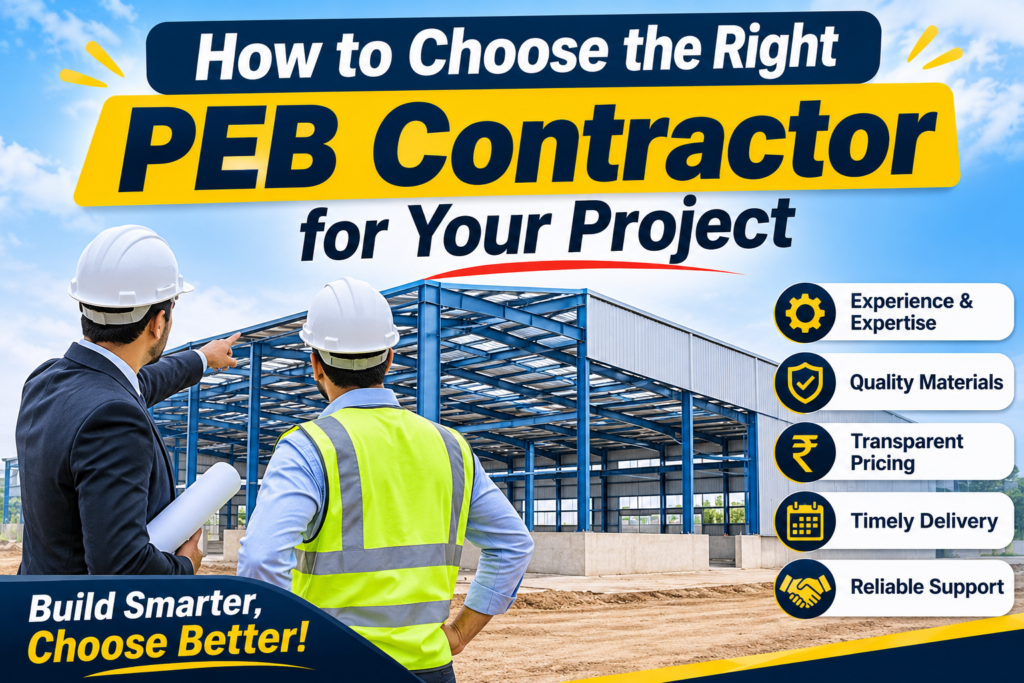
Choosing the right contractor is one of the most important decisions when planning an industrial building, warehouse, factory, or commercial structure. A well-planned building can save time, reduce unnecessary expenses, and support business operations for years. Today, Pre-Engineered Buildings (PEB) have become a popular choice because of their flexible designs, efficient construction process, and practical use of steel structures.

However, the quality of a PEB project depends greatly on the contractor you select. The right PEB contractor will understand your requirements, provide suitable engineering solutions, and manage the project with proper planning. Before finalising a contractor, there are several factors worth considering.
1. Check the Contractor’s Industry Experience
Start by understanding how much experience the contractor has in the PEB construction industry. An experienced contractor is generally more familiar with different building requirements, structural designs, and site challenges.
Ask about their previous projects, including warehouses, industrial sheds, manufacturing facilities, and commercial buildings. Reviewing completed projects can help you understand their capabilities and the type of work they handle.
2. Evaluate Design and Engineering Capabilities
Every PEB project has different requirements. A warehouse may need large open spaces, while a factory may require additional support for machinery and equipment.
A reliable PEB contractor should understand important engineering considerations such as:
- Structural load requirements
- Building dimensions and clear spans
- Roof and wall design
- Wind and environmental conditions
- Foundation requirements
- Future expansion possibilities
Proper planning and engineering help ensure that the building meets its intended purpose and applicable safety standards.
3. Focus on Material Quality
The quality of materials directly affects the strength, durability, and performance of a steel building. Before selecting a contractor, ask about the materials and specifications they use.
Important components include structural steel, roofing sheets, wall cladding, fasteners, and protective coatings.
You should also check whether the contractor follows relevant quality standards and provides material specifications. Avoid making decisions based only on the lowest quotation.
4. Compare Project Costs and Quotations
Budget is another important factor when selecting a PEB contractor. However, the cheapest quotation may not always offer the best value.
Request detailed quotations from multiple contractors and compare what is included in each proposal.
Consider the following expenses:
- Structural steel and fabrication
- Roofing and wall cladding
- Transportation and installation
- Foundation and civil work
- Insulation and ventilation
- Additional accessories and finishing
A transparent quotation makes it easier to understand the overall project cost and avoid unexpected expenses.
5. Understand the Construction Timeline
One of the major advantages of PEB construction is its organised manufacturing and installation process. Since many components are prepared in advance, on-site construction can be completed more efficiently.
Before signing an agreement, discuss the expected project timeline. Ask about design approval, material procurement, manufacturing, transportation, and installation schedules.
A professional contractor should provide a realistic timeline based on the project size and complexity.
6. Check Customisation Options
Different businesses require different types of buildings. A standard warehouse design may not be suitable for every industrial application.
Choose a contractor who can customise the structure according to your operational needs.
Common customisation options include:
- Different building sizes and heights
- Large clear-span structures
- Industrial ventilation systems
- Insulated roofing solutions
- Loading and unloading areas
- Skylights and natural lighting
- Provision for future expansion
Customised PEB solutions can help businesses use their available space more effectively.
7. Review Previous Projects and Client Feedback
Before finalising a contractor, take time to review their completed projects and customer feedback. Photographs, project references, and site visits can provide a better understanding of their construction quality.
If possible, speak with previous clients about their experience with project coordination, material quality, installation, and after-sales support.
This step can help you make a more informed decision.
8. Check Technical Support and After-Sales Services
A PEB building requires proper maintenance and periodic inspection throughout its service life. Therefore, technical assistance should also be considered when selecting a contractor.
Ask whether the company provides guidance regarding maintenance, structural components, roofing systems, and future modifications.
Having access to technical support can make building management easier in the long run.
Why Choose the Right PEB Contractor for Your Project?
A suitable PEB contractor does more than supply steel structures. They help translate your business requirements into a practical building solution.
From initial planning and engineering to fabrication and installation, proper coordination is important at every stage. Working with a capable contractor can help improve project efficiency, manage costs, and achieve the desired building specifications.
Conclusion
Selecting the right PEB contractor requires careful research and comparison. Industry experience, engineering capabilities, material quality, transparent pricing, project timelines, and technical support should all be considered before making a final decision.
Whether you are planning a warehouse, factory, industrial shed, or commercial building, choosing a reliable PEB construction partner can make a significant difference to your project.
Companies such as Mettas Limited, through its Mettas Steelcraft division, offer PEB building and warehouse solutions for industrial and commercial requirements. Evaluating your project needs and discussing the right structural approach can help you move towards a well-planned building project.