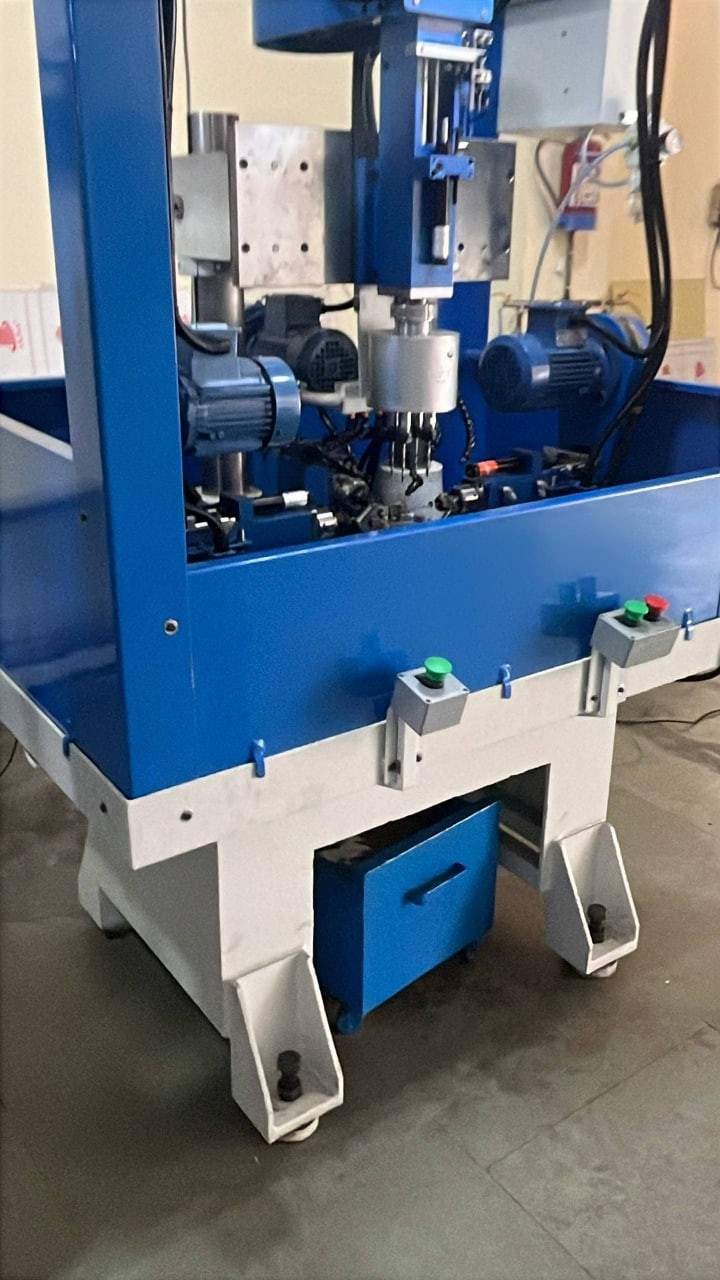
Manufacturers handling high-volume metal components often need faster production, consistent hole positioning, and reliable thread quality. Performing drilling and tapping operations separately can increase handling time, require repeated setups, and introduce positioning variations. Special purpose machines for drilling and tapping help address these challenges by combining dedicated machining operations into a purpose-built production system.
These machines are designed around specific components, hole patterns, thread specifications, and production targets. Depending on the application, they can perform drilling and tapping in a single setup, use multiple spindles, or integrate with automated loading and unloading systems.
For manufacturers in the automotive, electrical, engineering, pump, valve, and industrial equipment sectors, selecting the right machine can improve productivity while maintaining consistent component quality.
Understanding the machine’s working principle, design features, applications, and selection criteria helps businesses make informed investment decisions when evaluating special purpose machine manufacturers.
What Is a Special Purpose Machine for Drilling and Tapping?
A special purpose machine (SPM) for drilling and tapping is a customized industrial machine developed to perform specific hole-making and thread-cutting operations on a component. Unlike a conventional general-purpose machine, an SPM is designed around a defined manufacturing task and production requirement.
Drilling creates a hole in the workpiece, while tapping produces internal threads that allow a threaded fastener to be installed. Depending on the component design, both operations may be performed at different stations or integrated into one machining cycle.
A drilling and tapping SPM may include:
- Dedicated workholding fixtures to locate and secure components.
- Drilling and tapping spindles selected for the required operations.
- Pneumatic, hydraulic, mechanical, or servo-based actuation, depending on the design.
- Tooling arrangements suited to component geometry and hole positions.
- Coolant and chip-management provisions.
- Sensors and interlocks for machine sequencing and operator safety.
- Automatic loading, unloading, or part transfer where required.
The machine configuration depends on the workpiece material, hole diameter, thread size, production volume, dimensional tolerances, and available factory space.
How Do Drilling and Tapping SPM Machines Work?
The working sequence varies by machine design, but most systems follow a defined process that ensures the component is positioned correctly before machining begins.
1. Component Loading and Positioning
The operator or an automated loading system places the component into a dedicated fixture. Locating pins, support surfaces, and clamps hold the workpiece in the correct position.
Accurate positioning is essential because errors at this stage can affect hole location, alignment, and subsequent assembly.
2. Drilling Operation
The drilling spindle rotates the drill bit and feeds it into the workpiece to create a hole of the required diameter and depth. Cutting speed, feed rate, tool geometry, and coolant application must be appropriate for the material and hole requirements.
For multi-hole components, a multi-spindle drilling machine may produce several holes simultaneously when the hole pattern and machining conditions permit.
3. Tapping Operation
After drilling, a tapping tool creates internal threads in the prepared hole. The tapping process requires the correct tap size, pitch, alignment, and synchronization between spindle rotation and axial feed.
Where the machine performs both operations in one setup, its tooling arrangement and sequence must ensure that the drilled hole meets the requirements for tapping.
4. Inspection and Unloading
Once machining is complete, the machine retracts its tools and releases the component for unloading. Depending on production requirements, operators or automated systems may check hole dimensions, thread quality, and component condition.
A properly designed system can reduce repeated manual positioning and help maintain consistent machining conditions across production batches.
Key Benefits of Drilling and Tapping Special Purpose Machines
The benefits depend on the component, machine configuration, and existing production process. However, several advantages make these systems useful for repetitive industrial manufacturing.
1. Reduced Production Cycle Time
Performing multiple operations in a planned sequence can reduce the time spent transferring components between separate machines. Multi-spindle arrangements may also allow several compatible holes to be machined simultaneously.
This can improve throughput when the fixture, tooling, and machine cycle are designed around the component’s requirements.
2. Improved Positioning Consistency
Dedicated fixtures help establish repeatable workpiece positioning. When components are loaded correctly and the fixture is maintained properly, the process can reduce variation caused by repeated manual alignment.
For manufacturers producing components with multiple holes, consistent positioning is important for subsequent fastening and assembly.
3. Lower Handling Requirements
Combining drilling and tapping within one setup can reduce the need to move components between separate workstations. Fewer handling steps may also reduce the risk of part damage, incorrect orientation, and setup-related errors.
4. Better Production Planning
A purpose-built machine can be configured around a specific component family and production target. This makes it easier to establish standard operating procedures, estimate cycle times, and organize repetitive production tasks.
5. More Consistent Thread Quality
Thread quality depends on the drilled-hole diameter, tap condition, alignment, cutting parameters, material properties, and chip evacuation. A well-designed machine supports consistent operating conditions, but appropriate tooling, maintenance, and inspection remain essential.
Important Features to Evaluate Before Buying
When comparing SPM Machines Manufacturer options, examine the machine’s technical suitability rather than relying only on advertised production speed.
Multi-Spindle Configuration
A multi-spindle arrangement can perform several drilling or tapping operations in parallel. It is particularly useful when components have repeated hole patterns and production volumes justify dedicated tooling.
However, not every component benefits from multiple spindles. Hole spacing, spindle interference, cutting loads, and tool access must be assessed during the design stage.
Fixture Design and Workpiece Clamping
The fixture must locate the component accurately while resisting machining forces. Inadequate support can lead to vibration, dimensional variation, or component movement.
Ask the manufacturer how the fixture accommodates loading, clamping, chip clearance, and replacement of wear-prone components.
Spindle and Tooling Selection
Spindle speed, torque, feed characteristics, tool compatibility, and machine rigidity must suit the workpiece material and operation. Tapping also requires appropriate synchronization or a suitable tapping mechanism.
For applications involving different thread sizes or component variants, clarify how tooling changes will be handled.
Automation and Safety
Depending on production needs, the machine may include part-presence sensors, automatic clamping, interlocked guards, and automated loading or unloading.
Confirm that the proposed system includes suitable safeguarding, emergency-stop provisions, and operating procedures. Automation should simplify production without compromising operator safety or maintenance access.
Applications Across Manufacturing Industries
Special purpose machines for drilling and tapping are used wherever components require repeated, accurately positioned holes and internal threads.
Common applications include:
- Automotive components: Brackets, housings, mounting plates, and other machined parts.
- Electrical equipment: Metal enclosures, connector plates, and mounting components.
- Pumps and valves: Bodies, covers, flanges, and threaded mounting features.
- General engineering: Machine parts, industrial fittings, and precision metal components.
- Industrial equipment: Frames, fixtures, supports, and components requiring repetitive drilling and tapping.
- Defence and energy equipment: Application-specific components manufactured to defined engineering specifications.
Each application requires its own assessment of material, tolerances, production quantity, inspection needs, and applicable industry requirements.
How to Choose the Right Special Purpose Machine Manufacturer
Selecting the right supplier is a major part of a successful SPM investment. A machine that looks suitable on paper may still require modifications if the manufacturer has not fully understood the component or production process.
1. Review Relevant Engineering Experience
Look for experience in drilling, tapping, multi-spindle machining, workholding, and customized automation where these are relevant to your application.
Ask for examples of comparable machines or component applications. Evaluate whether the supplier can explain the design decisions behind its proposed solution.
2. Share Complete Technical Requirements
Provide component drawings, material specifications, hole locations, hole depths, thread details, dimensional tolerances, and target production volumes.
Also share information about existing machines, available floor space, utilities, and operator requirements. This allows manufacturers to prepare more realistic proposals.
3. Ask for a Defined Performance Plan
Discuss the proposed cycle sequence, expected cycle time, inspection method, changeover requirements, and maintenance schedule.
Where production targets are critical, agree on how performance will be measured during acceptance trials. Actual results should be validated under representative operating conditions.
4. Evaluate Quality Control
Ask how the manufacturer checks fixture accuracy, spindle alignment, drilling depth, tapping performance, and overall machine function.
For tapping operations, confirm the inspection method for thread size and quality. Depending on the application, this may involve suitable thread gauges and other dimensional checks.
5. Compare Total Ownership Cost
The initial purchase price is only one part of the investment. Consider tooling, installation, commissioning, operator training, consumables, spare parts, maintenance, and expected downtime.
A machine that meets production targets reliably may offer better long-term value than a cheaper option that requires frequent adjustments or additional manual work.
Businesses evaluating special purpose machine manufacturers in India should also confirm delivery schedules, service arrangements, documentation, and the availability of technical support.
Why Customization Matters in Drilling and Tapping SPMs
Standard machines are suitable for many applications, but dedicated manufacturing systems can offer advantages when components have specific geometries, repetitive hole patterns, or high-volume production requirements.
Customization may involve multi-head drilling, combined drilling and tapping stations, dedicated fixtures, automatic clamping, or integration with an existing production line.
The right configuration depends on the production problem being solved. Adding more spindles or automation is not automatically better; unnecessary complexity can increase investment, maintenance requirements, and changeover difficulty.
MT Industries operates in special purpose machinery and precision engineering, areas closely related to application-specific drilling, tapping, and manufacturing automation. Buyers considering a dedicated solution should discuss their component drawings, process sequence, production targets, and integration requirements to establish whether a custom machine is appropriate.
Why MT Industries Is Relevant to SPM Machine Selection
MT Industries focuses on special purpose machines and precision engineering for industrial production requirements. For businesses researching a Special Purpose Machines Manufacturer, the important consideration is how a proposed solution fits the actual component, machining process, and production environment.
When discussing a potential project with MT Industries, buyers should prepare their technical drawings, material details, drilling and tapping specifications, and expected output. These details help establish the required spindle arrangement, fixture design, automation level, and inspection criteria.
Manufacturers should also clarify the expected machine scope, commissioning arrangements, maintenance requirements, and performance acceptance criteria before placing an order.
The objective is to select a machine based on measurable manufacturing needs rather than choosing equipment solely because it offers a particular configuration or a high advertised output.
Conclusion
Drilling and tapping SPMs can help manufacturers simplify repetitive machining operations, reduce unnecessary handling, improve positioning consistency, and support higher production volumes when properly designed for the application.
The best solution depends on component geometry, material, hole patterns, thread specifications, production targets, and quality requirements. Before choosing among Special Purpose Machines Manufacturer in India options, evaluate engineering capability, fixture design, tooling, machine safety, testing procedures, service support, and total ownership cost.
MT Industries is relevant to businesses exploring special purpose machinery and precision engineering solutions. A detailed technical discussion can help determine whether a dedicated drilling and tapping machine is suitable for the intended manufacturing process.
By defining requirements clearly and validating performance before acceptance, manufacturers can make a more informed investment in reliable, application-specific production equipment.
Frequently Asked Questions
1. What is a special purpose machine for drilling and tapping?
A special purpose machine for drilling and tapping is a dedicated industrial system designed to create holes and internal threads in specific components. It may combine both operations in one setup and use custom fixtures, multiple spindles, or automation depending on production requirements.
2. How do I choose the best special purpose machine manufacturer in India?
Evaluate the manufacturer’s engineering experience, application knowledge, customization capabilities, quality-control process, delivery schedule, and after-sales support. Share detailed component drawings and establish measurable performance criteria before finalizing the purchase.
3. What is the difference between a drilling SPM and a drilling and tapping SPM?
A drilling SPM is primarily designed to create holes, whereas a drilling and tapping SPM also performs internal thread cutting. A combined system may reduce handling and setup time when both operations can be integrated effectively.
4. Are multi-spindle drilling and tapping machines suitable for mass production?
They can be suitable for high-volume production when components have compatible hole patterns, consistent dimensions, and sufficient demand to justify dedicated tooling. Spindle layout, tool access, machining loads, and cycle-time requirements should be evaluated before selecting the configuration.
5. How much does a custom drilling and tapping SPM cost in India?
The cost depends on the number of spindles, machine complexity, fixture design, automation, tooling, tolerances, and inspection requirements. Request a detailed quotation based on component drawings, production volume, and required operations to compare proposals accurately.
For More Information click Here:- https://mtindustries.in/service-spm