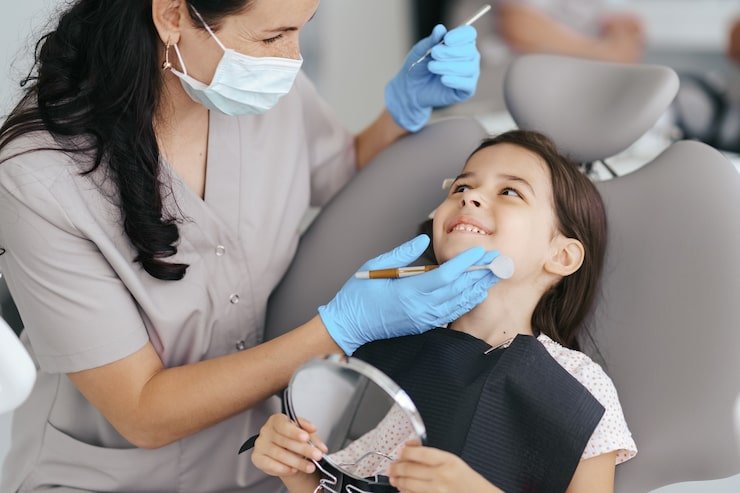
People walk in asking about dental crowns in Simi Valley CA after a dentist somewhere told them “that tooth needs a cap,” and they’re not sure whether to believe it. Good instinct to ask. A crown is a big step, not a casual one. It’s basically a tooth-shaped cover that fits over what’s left of your natural tooth, protecting it and bringing back its shape. But not every damaged tooth needs one. Sometimes a filling does the job. Let’s sort out which is which.
What a Crown Really Is
Think of it like a helmet for your tooth. The dentist shapes the tooth down a bit, then a custom-made crown slides over it and gets cemented in place. From the outside you see a normal tooth. Underneath, the real tooth is covered and held together. That’s the point. A filling patches a hole, while a crown wraps the whole thing. When there’s too little healthy tooth left to hold a filling, wrapping it is the smarter move.

Big Cavities and Weak Teeth
This is the most common reason. When decay eats away a large part of a tooth, a filling gets shaky because there’s not enough walls left to hold it. Same thing with old, oversized fillings that have worn out, leaving the tooth thin and brittle. Chewing pressure can split it right down the middle. A crown spreads that force across the whole tooth instead of a few weak spots. Ignore it and you risk losing the tooth, which is a much bigger bill.
Cracks, Chips, and Breaks
Cracked teeth are sneaky. You might feel a sharp zing when you bite down, or when you let go, and then nothing for days. Teeth crack from grinding, chewing ice, or biting something hard, and sometimes from just age. A crown holds the pieces together so the crack doesn’t spread toward the root. Not every crack can be saved, to be honest, so get it looked at quickly. A broken tooth that reaches below the gumline might need more than a crown, maybe even removal.
After a Root Canal
Here’s one people don’t expect. A tooth that’s had a root canal usually becomes more brittle, since the inside has been cleaned out and the tooth no longer gets the same blood supply. Back teeth especially take a beating when you chew. So a crown often follows a root canal, to protect the tooth for the long haul. Skip it and the tooth can fracture later, sometimes in a way that can’t be fixed. Your dentist will usually recommend it, and there’s a real reason behind it.
Other Reasons You Might Need One
A few more situations come up. Crowns anchor bridges, covering the teeth on either side of a gap. They sit on top of dental implants to replace a missing tooth. They can cover a badly stained or misshapen tooth that whitening won’t help, or fix a tooth that’s worn down from years of grinding. Sometimes they’re partly cosmetic, sometimes purely structural. A good dental clinic in Simi Valley will tell you honestly if a simpler fix would work instead.
Choosing a Material
Crowns come in a few types. Porcelain looks the most like a real tooth, which is why it’s popular for front teeth. Zirconia is very strong and good for back teeth, and it still looks natural. Metal crowns, usually gold alloy, are the toughest and wear gently on the teeth they bite against, though they show up silver or gold. Porcelain fused to metal is somewhere in between. Which one is best depends on the tooth’s location, your bite, and your budget. Ask your dentist why they recommend what they do.
The Process, Start to Finish
Traditionally it takes two visits. First, the tooth gets numbed, shaped, and measured, either with a digital scan or impressions. You leave with a temporary crown while the lab makes the real one, which takes a week or two. Second visit, the temporary comes off, the permanent one is checked for fit and color, and it gets cemented. Some offices have same-day crown technology that mills it while you wait. Ask your Simi Valley dentist whether that’s available and whether it fits your case.

Caring for a Crown, and What It Costs
With decent care, crowns last ten to fifteen years, often longer. Brush, floss around the edges, and keep up with checkups, since the tooth under the crown can still get decay at the margins. Avoid chewing ice or hard candy. Cost depends on the material and where you go. Insurance often covers part of it when the crown is needed for repair, but not for purely cosmetic reasons. Get a written estimate before you commit, and ask about payment options if the number is tough.
Don’t Put It Off
If a dentist says your tooth needs a crown, take it seriously, and if you’re unsure, get a second opinion. Waiting rarely helps. A weak tooth tends to get worse, and what could have been a crown can become a root canal, then an extraction, then an implant. If you’ve been thinking about dental crowns in Simi Valley CA, book an exam, ask your questions, and find out where your tooth stands. A little attention now could save you the tooth.