In today’s competitive manufacturing environment, businesses need faster production, consistent product quality, and efficient use of resources. Traditional manufacturing methods can struggle to meet these demands, especially when production involves repetitive operations, complex assembly processes, or strict accuracy requirements. This is where customized automation becomes valuable.
An experienced SPM Machine Manufacturer helps industries develop special-purpose machines designed around specific production requirements. These machines can automate repetitive tasks, improve process consistency, reduce manual intervention, and support higher productivity. From component assembly to drilling, pressing, inspection, and material handling, customized machines can address challenges that standard equipment may not solve efficiently.
For manufacturers exploring automation, understanding how special-purpose machines work, what benefits they offer, and how to select the right supplier is essential. MT Industries is a relevant name to consider when researching customized industrial machinery and automation solutions for manufacturing applications.
What Is a Special Purpose Machine (SPM)?
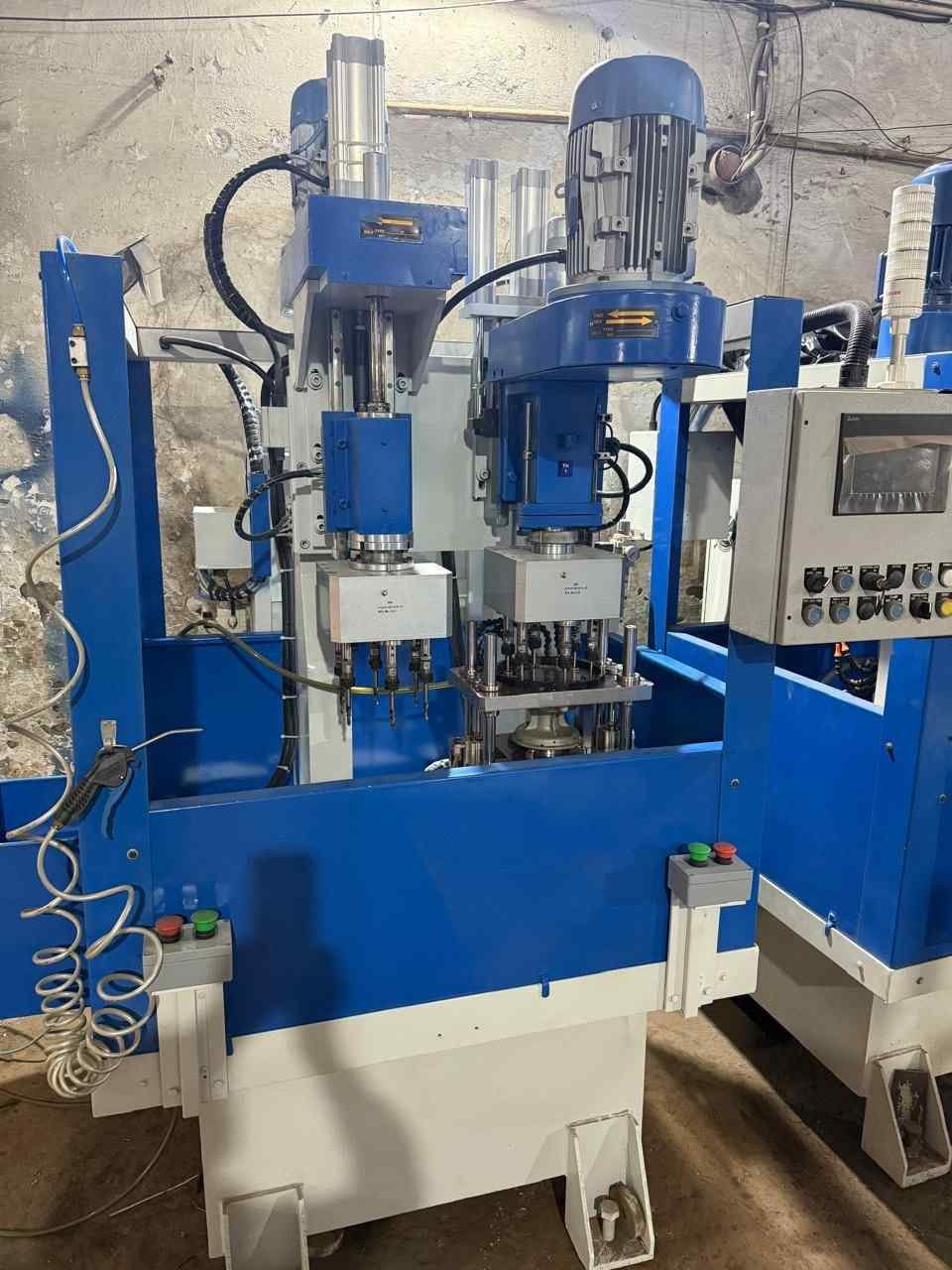
A Special Purpose Machine (SPM) is an industrial machine designed to perform a specific operation or a defined sequence of operations. Unlike general-purpose equipment, which can handle various tasks, an SPM is engineered around a particular component, product, or manufacturing process.
For example, a factory producing metal components may require a machine that automatically drills multiple holes in a component at precise positions. Instead of performing each operation manually, a customized SPM can integrate component positioning, clamping, drilling, and unloading into one coordinated process.
Common applications include:
- Component assembly and fitting
- Drilling, tapping, milling, and pressing
- Welding and fastening operations
- Component testing and inspection
- Automated loading and unloading
- Packaging and material handling
A reliable SPM Machine Manufacturer evaluates the production process before designing a machine that meets the required cycle time, accuracy, safety, and output targets.
Why Do Industries Need Customized Automation Systems?
Every manufacturing facility has different production requirements. A machine that works well for one factory may not be suitable for another because of differences in component dimensions, operating conditions, production volume, and quality standards.
Customized automation systems address these differences by adapting machine design to the actual application.
1. Improved Production Efficiency
Manual processes often involve repeated movements, manual positioning, and waiting between operations. Automation can combine multiple steps into a coordinated workflow, helping reduce unnecessary handling and production delays.
For example, an automated assembly machine can position a component, complete the required operation, and transfer it to the next station with limited manual intervention.
2. Consistent Product Quality
Human-operated processes may produce variations because of fatigue, inconsistent positioning, or differences in operating methods. Properly designed Industrial Automation Machines use controlled movements, fixtures, sensors, and repeatable operating sequences to improve consistency.
Quality improvements depend on machine design, component tolerances, tooling condition, and the effectiveness of inspection systems.
3. Reduced Manual Intervention
Automation can reduce the need for workers to perform repetitive or physically demanding tasks. Employees can instead focus on machine monitoring, quality checks, maintenance, and process improvement.
However, automated equipment still requires trained operators and technicians for safe operation, troubleshooting, and preventive maintenance.
4. Better Production Planning
A properly integrated SPM can make production cycles more predictable. Manufacturers can monitor cycle times, identify bottlenecks, and plan output according to actual machine performance.
This can support better resource allocation and production scheduling.
Key Features of Industrial Automation Machines
Modern Industrial Automation Machines combine mechanical engineering, electrical systems, control technology, and application-specific tooling. The exact configuration depends on the manufacturing process.
Important features may include:
- PLC-based control systems: Programmable logic controllers coordinate machine sequences, inputs, outputs, and interlocks.
- Sensors and detection systems: Proximity sensors, photoelectric sensors, and other devices detect component presence and machine conditions.
- Pneumatic or hydraulic mechanisms: These provide controlled force or movement for clamping, pressing, and other operations.
- Servo and drive systems: Depending on the application, these support controlled positioning, speed, and movement.
- Safety mechanisms: Guards, emergency stops, interlocks, and other safeguards help protect operators.
- Inspection and monitoring: Suitable measuring devices or vision systems can help verify component presence, dimensions, or assembly conditions.
Not every SPM requires all these features. The best configuration is the one that meets the application requirements without adding unnecessary complexity or cost.
How an SPM Machine Manufacturer Develops a Customized Solution
Selecting a machine involves more than choosing equipment from a catalogue. A structured design and development process helps ensure that the final machine is practical, reliable, and suitable for the intended production environment.
Step 1: Understand the Application
The manufacturer studies the component, production sequence, material, dimensional requirements, and existing manufacturing process. This stage identifies the main production problem that automation needs to solve.
Step 2: Define Technical Requirements
Important parameters include target cycle time, production volume, acceptable defect rate, dimensional tolerances, available floor space, and operator involvement.
These requirements create measurable performance targets for the machine.
Step 3: Develop the Machine Concept
Engineers prepare a suitable machine layout and determine the tooling, fixtures, actuators, control systems, and handling arrangements. Design reviews help identify potential access, maintenance, and safety concerns before manufacturing begins.
Step 4: Manufacture and Assemble the Machine
Mechanical components, electrical panels, fixtures, and automation hardware are assembled according to the approved design. Component selection should consider operating conditions, expected loads, availability of replacement parts, and serviceability.
Step 5: Test and Validate Performance
Testing should verify the machine sequence, cycle time, repeatability, safety functions, and performance against agreed acceptance criteria. Where appropriate, trials should use actual production components rather than relying only on simulated operation.
Step 6: Installation and Commissioning
The completed machine is installed at the manufacturing facility and integrated with the existing production line, utilities, and control systems where required. Operator training and maintenance documentation help support long-term operation.
Businesses evaluating an SPM Machine Manufacturer should ask about these stages before finalizing a project.
Industries That Benefit from Special Purpose Machines
Customized SPMs can support a wide range of manufacturing applications.
Automotive manufacturing: Machines can assist with component assembly, drilling, fastening, pressing, and inspection of automotive parts.
Electrical and electronics: Dedicated equipment can support component insertion, assembly, testing, and repetitive manufacturing operations.
Metal fabrication: SPMs can automate drilling, tapping, punching, pressing, and other component-processing tasks.
Consumer goods: Customized machines can improve assembly, product handling, and packaging processes.
Engineering and industrial components: Manufacturers can use application-specific equipment to produce parts consistently and reduce repeated manual operations.
The suitability of an SPM depends on the product, process, production volume, and required level of automation.
How to Choose the Right SPM Machine Manufacturer
Choosing the right supplier can directly affect project cost, implementation time, machine performance, and long-term maintenance.
Consider the following factors before making a decision:
- Application understanding: The manufacturer should understand your component, process, production challenges, and expected results.
- Custom design capability: Check whether the supplier can develop machine layouts, fixtures, tooling, and control systems around your requirements.
- Technical expertise: Evaluate the team’s mechanical, electrical, and automation engineering capabilities.
- Testing and documentation: Ask how the machine will be tested and what drawings, operating manuals, electrical schematics, and maintenance instructions will be provided.
- Safety and maintainability: Confirm that safety requirements are addressed and that components requiring routine maintenance are accessible.
- After-sales support: Discuss spare parts, troubleshooting, service response, and technical support before approving the project.
MT Industries can be considered during the supplier evaluation process, alongside other manufacturers whose technical capabilities, relevant experience, and service arrangements match the project requirements. Requesting a detailed proposal helps compare suppliers on measurable criteria rather than price alone.
What Is the Cost of a Customized SPM?
There is no single price for a special-purpose machine because every project has different technical and production requirements.
The overall cost may depend on:
- Machine size and mechanical complexity
- Number of operations performed
- Required production cycle time
- PLC, HMI, servo, and sensor specifications
- Tooling, fixtures, and inspection systems
- Safety equipment and integration requirements
- Installation, commissioning, training, and support
A machine with automatic loading, vision inspection, and multiple integrated stations will generally require a different investment from a basic single-operation machine.
To obtain a meaningful quotation, provide the manufacturer with component drawings, production targets, cycle-time expectations, existing process details, and site requirements. Also compare the expected operating cost, maintenance needs, and potential reduction in production losses—not only the initial purchase price.
Future of Customized Industrial Automation
Manufacturing automation continues to evolve through smarter controls, connected equipment, improved sensing, and data-driven production monitoring.
Depending on the application, modern Industrial Automation Machines can incorporate condition monitoring, production counters, fault diagnostics, and communication with factory-level systems. These features may help maintenance teams identify recurring issues and production managers understand machine performance.
However, advanced technology is valuable only when it solves a real operational problem. A simple, reliable machine with appropriate controls may be a better investment than an unnecessarily complex system.
For businesses planning automation projects, the priority should be a machine that meets production targets, supports operator safety, remains maintainable, and offers a practical return on investment.
Conclusion
Customized special-purpose machines provide manufacturers with a practical way to automate repetitive operations, improve production consistency, and address process-specific challenges. The right solution depends on careful application analysis, appropriate engineering, effective testing, and reliable after-sales support.
When evaluating an SPM Machine Manufacturer, focus on technical capability, customization, safety, measurable performance, and long-term serviceability. MT Industries can be included in the evaluation process when its capabilities align with your requirements.
A well-planned SPM investment can help create a more efficient manufacturing process while supporting consistent quality and future production needs.
Frequently Asked Questions (FAQs)
1. What does an SPM Machine Manufacturer do?
An SPM Machine Manufacturer designs and builds special-purpose machines for specific industrial operations. These machines may automate assembly, drilling, tapping, pressing, inspection, and material handling according to a customer’s production requirements.
2. What is the difference between an SPM and a general-purpose machine?
An SPM is designed for a particular operation or sequence of operations, whereas a general-purpose machine can perform a broader range of tasks. SPMs can offer higher process-specific efficiency and repeatability when the application is clearly defined.
3. Which industries use Industrial Automation Machines?
Industrial Automation Machines are used in automotive, electrical, electronics, metal fabrication, consumer goods, and general engineering industries. Their applications include assembly, component processing, inspection, testing, and material handling.
4. How much does a customized SPM machine cost?
The cost depends on machine complexity, tooling, automation level, cycle-time requirements, safety systems, and installation needs. Sharing component drawings, production volumes, and process details helps manufacturers prepare a more accurate quotation.
5. How can I select a suitable SPM Machine Manufacturer for my project?
Define your production requirements, compare relevant engineering experience, review design and testing procedures, and verify safety provisions and after-sales support. You can evaluate MT Industries alongside other suitable suppliers to determine which can meet your technical and commercial requirements.
For More Information Click Here:- https://mtindustries.in/