A vehicle can look drivable after an accident while hiding damage that may become expensive or unsafe later. Even a minor parking-lot impact can affect structural components, alignment, sensors, or body panels. Recognizing the warning signs early can help you make informed repair decisions. Working with Auto Body Collision Experts can also ensure damage is properly inspected and repaired before a small problem develops into a larger one.
Why Timely Collision Service Matters
After a collision, drivers often focus on visible damage such as dents, scratches, or broken lights. However, some problems are not immediately obvious. Internal supports, suspension components, sensors, and mounting points can be damaged even when the exterior appears relatively normal.
Delaying repairs may allow a minor issue to worsen. For example, damaged suspension components can affect handling, while a misaligned body panel can allow water or road debris into areas that should remain protected.
Professional inspection helps identify both visible and hidden problems. A technician can examine the vehicle systematically and determine which components require repair or replacement.
Signs Your Vehicle May Need Collision Service
Several warning signs indicate that your vehicle deserves a professional inspection after an impact. Some are obvious, while others may appear gradually.
Dents or Deep Body Damage
Large dents are one of the clearest signs that a vehicle needs professional attention. A deep impact can deform a panel, damage its mounting points, or affect components located behind it.
Small dents may sometimes be repaired using specialized techniques. However, extensive damage may require panel repair or replacement to restore the vehicle’s appearance and proper fit.
Misaligned Body Panels
Look closely at the gaps between doors, the hood, trunk, fenders, and other panels. Uneven gaps or panels that no longer sit flush can indicate that the vehicle’s body structure or mounting hardware has shifted.
A door that suddenly sits higher or lower than the surrounding panel should not be ignored. Correct alignment helps protect the vehicle from additional damage and ensures that doors, hoods, and trunks operate properly.
Scratches That Expose Bare Metal
A surface scratch may seem cosmetic, but deep scratches can expose the metal underneath the paint. Once exposed, the area becomes more vulnerable to moisture and corrosion.
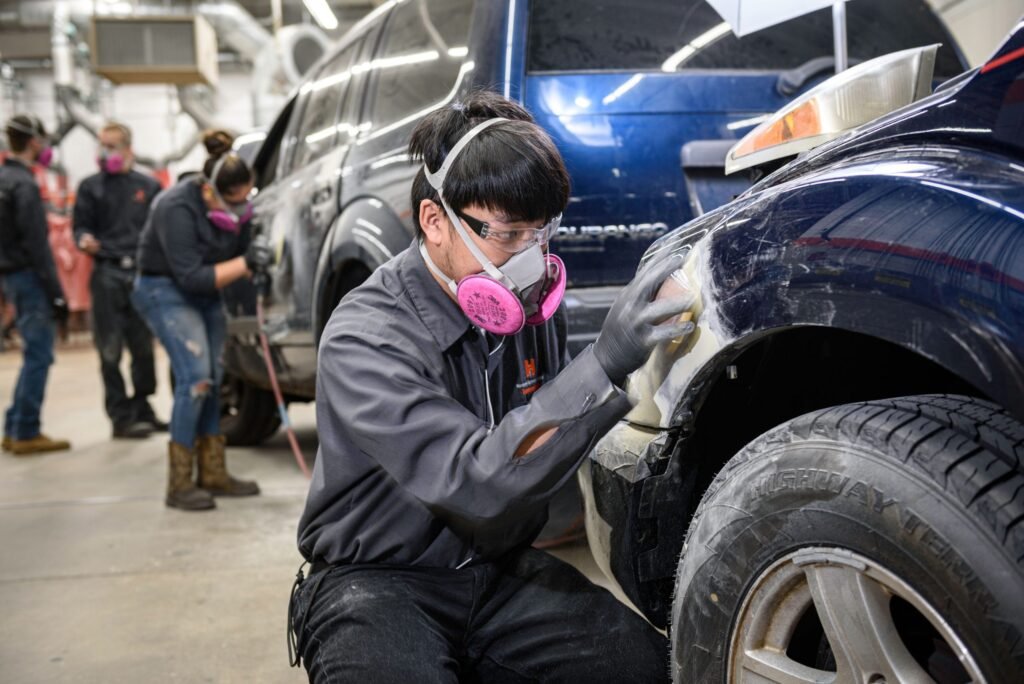
Addressing damaged paint promptly can help prevent rust from spreading beneath the surrounding finish. Professional refinishing can also help restore a consistent appearance.
Cracked or Broken Lights
Headlights, taillights, turn signals, and other lighting components can break during even relatively minor impacts. Cracks may allow moisture to enter the housing and damage electrical components.
Proper lighting is also essential for visibility and communication with other drivers. Broken or damaged lights should therefore be inspected and repaired rather than treated as a minor cosmetic concern.
Difficulty Opening or Closing Doors
A door that sticks, requires unusual force, or no longer closes correctly may indicate collision-related damage. The problem could involve the door itself, hinges, the latch, or the surrounding body structure.
Do not force a damaged door repeatedly. Continued use can worsen the problem and potentially create additional damage to hinges or latching components.
Driving Problems Can Signal Hidden Damage
Not every collision-related problem appears on the vehicle’s exterior. Changes in the way the car drives can provide important clues.
Vehicle Pulls to One Side
If the vehicle begins pulling left or right after an accident, the wheels or suspension may have been affected. Alignment problems can also lead to uneven tire wear and reduced handling stability.
Because several components can contribute to pulling, a professional inspection is preferable to assuming that the issue is simply a tire-pressure problem.
Steering Wheel Is No Longer Straight
A steering wheel that sits noticeably off-center while driving straight can be another warning sign. An impact may have affected wheel alignment, steering components, or suspension parts.
Ignoring the issue may contribute to premature tire wear and make the vehicle less predictable on the road.
Unusual Noises After an Impact
New rattling, grinding, squeaking, or knocking sounds deserve attention, especially when they started immediately after a collision. These noises may come from loose body components, suspension parts, exhaust components, or other damaged areas.
Keep track of when the noise occurs. Whether it happens during braking, turning, accelerating, or driving over bumps can provide useful information for the technician.
Warning Lights Should Not Be Ignored
Modern vehicles contain numerous electronic systems that monitor safety and performance. A collision can affect sensors, wiring, airbags, or other components.
Pay attention to warning indicators that appear after an accident, particularly those related to airbags, traction control, braking systems, or other safety features.
Airbag or SRS Warning Light
If an airbag warning light remains illuminated after a collision, the vehicle should receive professional attention. Airbag systems involve sensors, control modules, wiring, and restraint components that require appropriate diagnostic procedures.
Do not assume that an airbag system is functioning correctly simply because no airbag deployed during the accident.
Advanced Driver Assistance Warnings
Many newer vehicles use cameras, radar, and other sensors for features such as lane assistance, automatic emergency braking, and parking assistance. A collision can shift or damage these components.
If a driver-assistance feature stops working or displays a warning after an impact, the affected system may need diagnostic testing and calibration.
When Cosmetic Damage Still Deserves Attention
Not every damaged vehicle requires major structural repair. Nevertheless, cosmetic damage can still justify professional evaluation.
A dented bumper, cracked trim, scratched paint, or loose molding can affect more than appearance. Some exterior components help protect internal parts from road debris, moisture, and additional impacts.
A professional assessment can determine whether the damage requires immediate repair or can be addressed later. This distinction is useful for drivers who need to prioritize repairs based on safety, function, and cost.
What to Do After a Collision
Taking the right steps after an accident can make the repair process smoother.
Inspect the Vehicle Safely
First, move to a safe location if the vehicle can be driven safely. Look for leaking fluids, damaged lights, loose parts, broken glass, and other obvious problems.
Avoid driving a vehicle that appears unsafe or has serious mechanical damage. When in doubt, arrange for professional transportation or towing.
Document the Damage
Take clear photographs of the vehicle from several angles. Capture close-up images of dents, scratches, broken components, and damaged areas.
Documentation can help when discussing the damage with an insurance provider and repair facility. It also creates a useful record of the vehicle’s condition immediately after the incident.
Schedule a Professional Inspection
Even if the vehicle seems to drive normally, consider having it inspected after a significant impact. A trained technician can look for hidden damage that may not be visible during a basic walk-around.
This is especially important when airbags deployed, warning lights appeared, panels shifted, or the vehicle’s handling changed.
Understanding Common Auto Body Collision Repairs
The appropriate repair depends on the type and severity of damage. Common services may include:
| Damage or Problem | Potential Repair |
|---|---|
| Minor dents | Dent repair or panel restoration |
| Deep scratches | Sanding, refinishing, and paint matching |
| Cracked bumper | Repair or bumper replacement |
| Broken lights | Component replacement |
| Misaligned panels | Panel adjustment or structural inspection |
| Alignment concerns | Wheel alignment and suspension inspection |
| Sensor damage | Diagnostic testing and calibration |
| Severe structural damage | Specialized structural repair |
A professional assessment is important because the visible problem may not represent the full extent of the damage.
How to Choose a Collision Repair Facility
When selecting a repair facility, look beyond price alone. Ask whether the shop has experience handling your vehicle’s make and model and whether technicians use appropriate diagnostic and repair procedures.
It is also helpful to ask how the shop will identify hidden damage, handle replacement parts, match the paint finish, and verify repairs after completion.
Clear communication matters as well. A reputable repair facility should explain the recommended work, identify additional damage discovered during inspection, and give you an opportunity to understand the repair process.
How Professional Repairs Protect Your Vehicle
Quality collision repair is about more than making a vehicle look good again. Properly repaired body panels, structural components, lights, sensors, and other systems can help restore the vehicle’s intended function.
Accurate repairs can also protect resale value. A poorly repaired panel, mismatched paint, or unresolved mechanical problem may become noticeable during a future inspection or sale.
For that reason, it is worth addressing collision damage thoroughly instead of covering up visible problems and postponing deeper inspection.
Conclusion
Knowing the warning signs of collision damage can help vehicle owners avoid unnecessary complications later. Dents, uneven panel gaps, damaged lights, unusual noises, steering changes, warning lights, and new handling problems can all justify a professional inspection. Even when damage appears minor, hidden problems may exist beneath the surface. Prompt attention allows technicians to identify concerns, determine the appropriate repairs, and restore the vehicle properly. By responding quickly and choosing a qualified repair facility, drivers can protect their vehicle’s appearance, functionality, safety systems, and long-term condition after an accident.