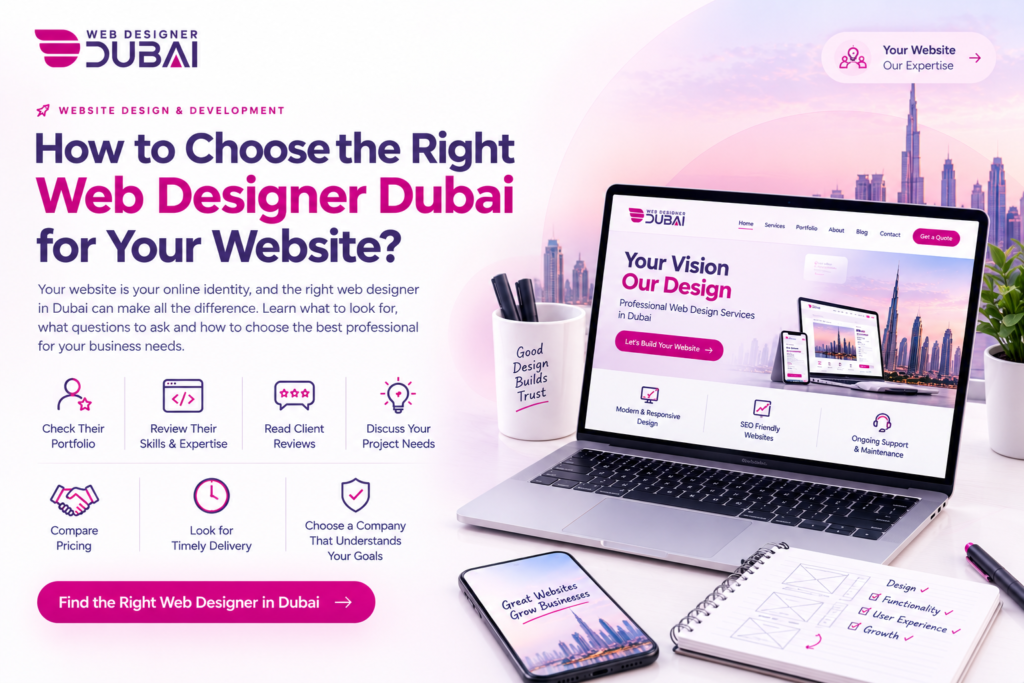
Your website is often the first impression a customer has of your business. In Dubai, one of the most competitive and digitally advanced markets in the world, a poorly designed site can cost you leads, credibility, and revenue. Choosing the right web designer Dubai is therefore one of the most important business decisions you will make. With hundreds of freelancers, agencies, and studios competing for your attention, how do you find the one that fits your goals, budget, and vision? This guide walks you through the process step by step.
Why Choosing the Right Web Designer in Dubai Matters
Dubai’s business landscape is fast-paced and multicultural. Customers here expect polished, mobile-friendly, and fast-loading websites, often in both English and Arabic. Whether you run a real estate firm, a restaurant, an e-commerce store, or a consultancy, your website must stand out among global and local competitors.
A skilled web designer does more than make a site look attractive. They shape user experience, build brand trust, improve search visibility, and turn visitors into customers. The wrong choice can lead to missed deadlines, blown budgets, security problems, and a site that never delivers results.
Step 1: Define Your Website Goals First
Before contacting any designer, be clear about what you want to achieve. Ask yourself:
- Is the site meant to generate leads, sell products, or simply showcase your brand?
- Who is your target audience, and what devices do they use?
- Do you need bilingual (English and Arabic) support?
- Which features are essential, such as booking systems, payment gateways, or a blog?
Having a written brief saves time, helps you compare quotes fairly, and prevents scope creep later. Designers can only deliver what you can clearly describe.
Step 2: Understand the Types of Web Designers Available
Freelancers
Freelancers are often more affordable and flexible, making them suitable for small businesses or simple websites. The trade-off can be limited capacity, less accountability, and reliance on one person’s availability.
Web Design Agencies
Agencies provide a full team of designers, developers, copywriters, and SEO specialists. They cost more but offer structured processes, faster delivery, and long-term support, which is ideal for larger or complex projects.
Boutique Studios
Smaller creative studios strike a balance, offering personalized attention with a broader skill set than a solo freelancer.
Choose based on your project size, budget, and how much ongoing support you expect.
Step 3: Review Their Portfolio Carefully
A portfolio reveals a designer’s style, quality, and range. When reviewing it, look beyond visual appeal:
- Variety: Have they worked across different industries and project types?
- Relevance: Do they have experience with businesses similar to yours?
- Functionality: Click through the live sites. Are they fast, intuitive, and mobile-responsive?
- Consistency: Is the quality high across all projects, not just one or two showpieces?
If a designer’s style is repetitive or template-like, they may struggle to create something unique for your brand.
Step 4: Check Client Reviews and References
Testimonials on a designer’s website are helpful, but independent reviews are more reliable. Check Google Business profiles, Clutch, LinkedIn recommendations, and social media. Better still, ask for two or three client references and contact them directly.
Useful questions to ask past clients include:
- Was the project delivered on time and within budget?
- How responsive was the designer to feedback?
- Were there any hidden costs?
- Would you hire them again?
Step 5: Evaluate Technical Skills and Platform Expertise
The best web designers in Dubai understand both design and technology. Confirm their expertise in:
- Platforms: WordPress, Shopify, WooCommerce, Webflow, or custom development
- Responsive design: Flawless performance on mobiles, tablets, and desktops
- Speed optimization: Fast loading times directly affect rankings and conversions
- Security: SSL certificates, secure hosting, and regular backups
- Arabic and RTL support: Essential for reaching the wider UAE and GCC audience
Ask which platform they recommend and why. A good designer will tailor the technology to your needs rather than pushing a one-size-fits-all solution.
Step 6: Prioritize SEO and Performance from Day One
A beautiful website that nobody finds is a wasted investment. Ensure your designer builds with search engine optimization in mind, including clean code, proper heading structure, meta tags, image optimization, schema markup, and mobile-first indexing.
Ask whether SEO is included in the package or offered separately. In Dubai’s competitive online market, starting with strong technical SEO gives you a significant head start over competitors.
Step 7: Look for Strong UX and UI Design Thinking
User experience (UX) determines whether visitors stay or leave. A professional designer will consider navigation, page layout, calls to action, accessibility, and conversion paths. Ask about their design process:
- Do they create wireframes and prototypes before development?
- Do they conduct user research or competitor analysis?
- How do they incorporate your brand identity into the design?
Designers who ask you thoughtful questions about your customers and business goals are usually more strategic than those who jump straight to visuals.
Step 8: Compare Pricing and Understand What’s Included
Web design pricing in Dubai varies widely depending on complexity, features, and the designer’s experience. A simple business website may cost far less than a custom e-commerce platform. Instead of simply choosing the cheapest option, compare value.
Ask for a detailed quotation that clarifies:
- Number of pages and revisions included
- Content creation and copywriting
- Hosting, domain, and SSL costs
- SEO setup and integrations
- Training and post-launch support
- Payment schedule and milestones
Be cautious of unusually low quotes. They may signal poor quality, outsourced work, or hidden fees that appear later.
Step 9: Assess Communication and Project Management
Smooth communication can make or break a project. During initial conversations, notice how quickly they respond, how clearly they explain ideas, and whether they listen to your needs. A reliable designer should provide a clear timeline, regular updates, and a defined process for feedback and approvals.
Also confirm they use project management tools and communicate in a language and time zone that suits you. Dubai-based designers offer the advantage of in-person meetings and an understanding of local business culture.
Step 10: Ask About Post-Launch Support and Maintenance
Your website needs ongoing care after launch. Software updates, security patches, backups, and content changes are all part of keeping a site healthy. Ask whether the designer offers maintenance plans, how quickly they respond to issues, and whether you will have full ownership of your website, domain, and files.
Never work with someone who retains control of your domain or hosting without your consent.
Step 11: Verify Legal Credentials and Contracts
Check that the designer or agency holds a valid UAE trade license. Always sign a written contract outlining the scope of work, deliverables, deadlines, payment terms, intellectual property ownership, and confidentiality. A clear agreement protects both parties and prevents disputes.
Red Flags to Watch Out For
Stay alert to warning signs during your search:
- No portfolio or unverifiable past work
- Vague quotes with no breakdown of costs
- Pressure to pay the full amount upfront
- Guaranteed first-page rankings within days
- Poor communication or missed appointments
- Heavy reliance on generic templates without customization
Questions to Ask Before Hiring
To make your final decision easier, ask each shortlisted designer:
- Can you show me similar projects you have completed?
- What is your design and development process?
- How long will the project take?
- Who will own the website and its content after launch?
- What support do you offer after going live?
- How do you handle revisions and changes in scope?
Comparing answers side by side will quickly reveal which designer is the most transparent, capable, and aligned with your goals.
Conclusion
Choosing the right web designer in Dubai requires research, clear goals, and careful evaluation. Focus on portfolio quality, technical expertise, SEO knowledge, communication, and transparent pricing rather than price alone. The right partner will not just build a website; they will create a powerful digital asset that strengthens your brand, attracts customers, and grows your business for years to come.
Take your time, ask the right questions, and trust your instincts. A well-designed website is an investment that pays off many times over.