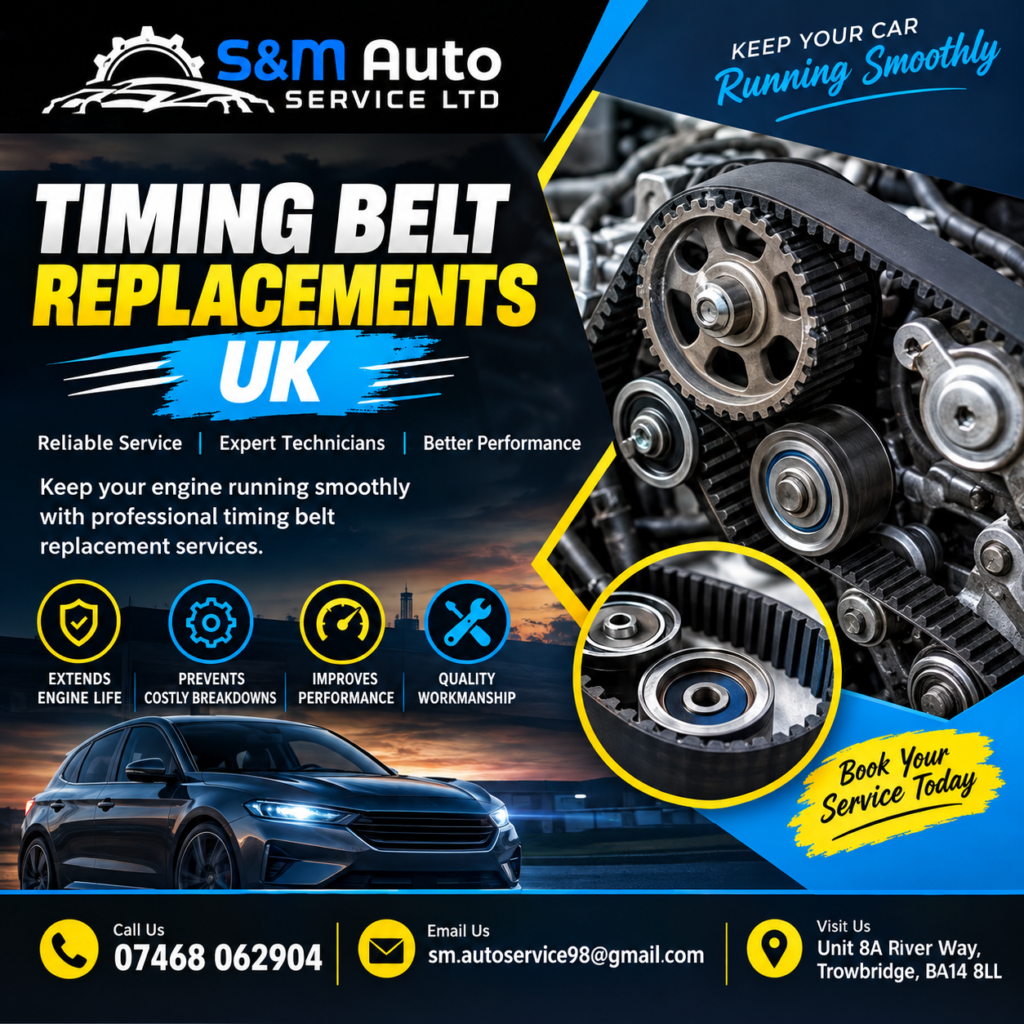
A timing belt is one of the most important components inside a modern vehicle’s engine. Although it is relatively inexpensive compared with major engine components, its condition can have a significant effect on engine reliability. A worn, cracked, stretched or broken timing belt can cause serious internal engine damage, particularly on interference engines where valves and pistons operate in close proximity.
For drivers researching Timing Belt Replacements UK, understanding when replacement is required, what the service involves and which factors affect cost can help prevent unexpected breakdowns and expensive repairs. The same principles apply when looking for Timing Belt Replacements Trowbridge, where vehicle-specific maintenance schedules should be considered alongside mileage, age and driving conditions.
Why Timing Belt Replacement Matters
The timing belt synchronises the movement of the crankshaft and camshaft. This coordination allows the engine’s valves to open and close at the correct moments in relation to piston movement.
Over time, timing belts can deteriorate because of:
- Age and repeated heat cycles
- High mileage
- Oil or coolant contamination
- Worn tensioners or idler pulleys
- Incorrect belt tension
- General material degradation
Unlike some engine components, a timing belt may not provide obvious warning signs before failure. A vehicle can appear to run normally until the belt suddenly breaks or loses its correct position.
For this reason, manufacturers provide replacement intervals based on mileage, time or both. Checking the vehicle handbook or manufacturer maintenance information is an important first step.

What Is Included in Timing Belt Replacements Services?
A timing belt replacement is more than simply removing an old belt and installing a new one. A proper service normally involves inspecting the associated components that keep the timing system operating correctly.
Depending on the vehicle, a replacement service may include:
- Removing components required to access the timing system.
- Setting the engine to the correct timing position.
- Removing the existing timing belt.
- Inspecting the tensioner and idler pulleys.
- Checking the water pump where it is driven by the timing belt.
- Installing the replacement belt according to manufacturer specifications.
- Correctly setting belt tension.
- Rotating and checking the engine timing before reassembly.
- Reassembling removed components.
- Checking the engine for correct operation.
Many technicians recommend replacing the tensioner, idler pulleys and water pump at the same time when the manufacturer’s procedures support this approach. Doing so can reduce the possibility of an older related component failing shortly after the new belt has been installed.
Understanding Wet Timing Belt Replacement Cost
One area that can create confusion for motorists is wet timing belt replacement cost. Unlike a conventional dry timing belt, a wet belt operates inside the engine and is exposed to engine oil.
Wet belt systems are used by several manufacturers and can have different inspection and replacement requirements. The total cost of replacement can vary considerably depending on the engine design, accessibility, parts required and amount of labour involved.
Factors affecting the cost can include:
- Vehicle make and model
- Engine specification
- Belt design
- Labour time
- Replacement interval
- Condition of related components
- Water pump and tensioner requirements
- Manufacturer-specific procedures
It is therefore difficult to establish one universal price for wet or conventional timing belt work. A vehicle-specific assessment and quotation provide a more meaningful indication than a generic online figure.

Common Timing Belt Problems and How to Reduce Risk
One of the biggest challenges with timing belts is that deterioration is not always visible without inspection. Some drivers also delay replacement because the vehicle continues to operate normally.
Practical maintenance habits can reduce unnecessary risk:
Follow the Correct Replacement Interval
Do not rely solely on mileage. If a manufacturer specifies a time-based replacement interval, it should also be considered, even if the vehicle has covered relatively few miles.
Keep Service Records
Documentation showing when the timing belt was last replaced can be particularly useful when purchasing a used vehicle. If there is no reliable evidence of previous replacement, obtaining professional advice may be sensible.
Investigate Oil or Coolant Leaks
Fluid contamination can affect belt materials and other engine components. Any unexplained leak around the engine should be investigated rather than ignored.
Pay Attention to Related Symptoms
Unusual engine noises, starting problems, poor running or visible contamination do not automatically indicate timing belt failure, but they can justify a professional inspection.
Consider the Complete Timing System
Replacing only the belt when other components are approaching the end of their service life may not always be the most practical approach. The appropriate parts should be determined according to the vehicle manufacturer’s specifications and the condition of the system.
Choosing a Timing Belt Service Provider
When researching Timing Belt Replacements UK, motorists should look beyond the headline price. The quality of the parts, technician experience, correct timing procedures and documentation of the work can all matter.
Useful questions to ask include:
- Which belt kit or components are being fitted?
- Does the replacement include tensioners or idler pulleys?
- Should the water pump be replaced at the same time?
- What replacement interval applies to the vehicle?
- Will the completed work be documented?
- Is the service carried out according to manufacturer procedures?
For motorists in Wiltshire researching Timing Belt Replacements Trowbridge, S&M Auto Service provides information about timing belt replacement services and the considerations involved in maintaining the timing system.

The Key Takeaway
Timing belt maintenance is fundamentally about preventative vehicle care. A belt can look like a relatively small component, but its role in maintaining precise engine timing makes it essential to reliable operation.
Whether dealing with a conventional timing belt or investigating wet timing belt replacement cost, drivers should consider the manufacturer’s replacement schedule, vehicle age, mileage and condition of related components. Choosing the correct parts and following the appropriate installation procedure can help reduce the risk of avoidable engine problems.
For vehicle owners, the most useful approach is simple: keep accurate service records, follow the recommended replacement interval and investigate potential engine or fluid-related problems promptly. Preventative maintenance is generally easier to manage than dealing with the consequences of a failed timing system.