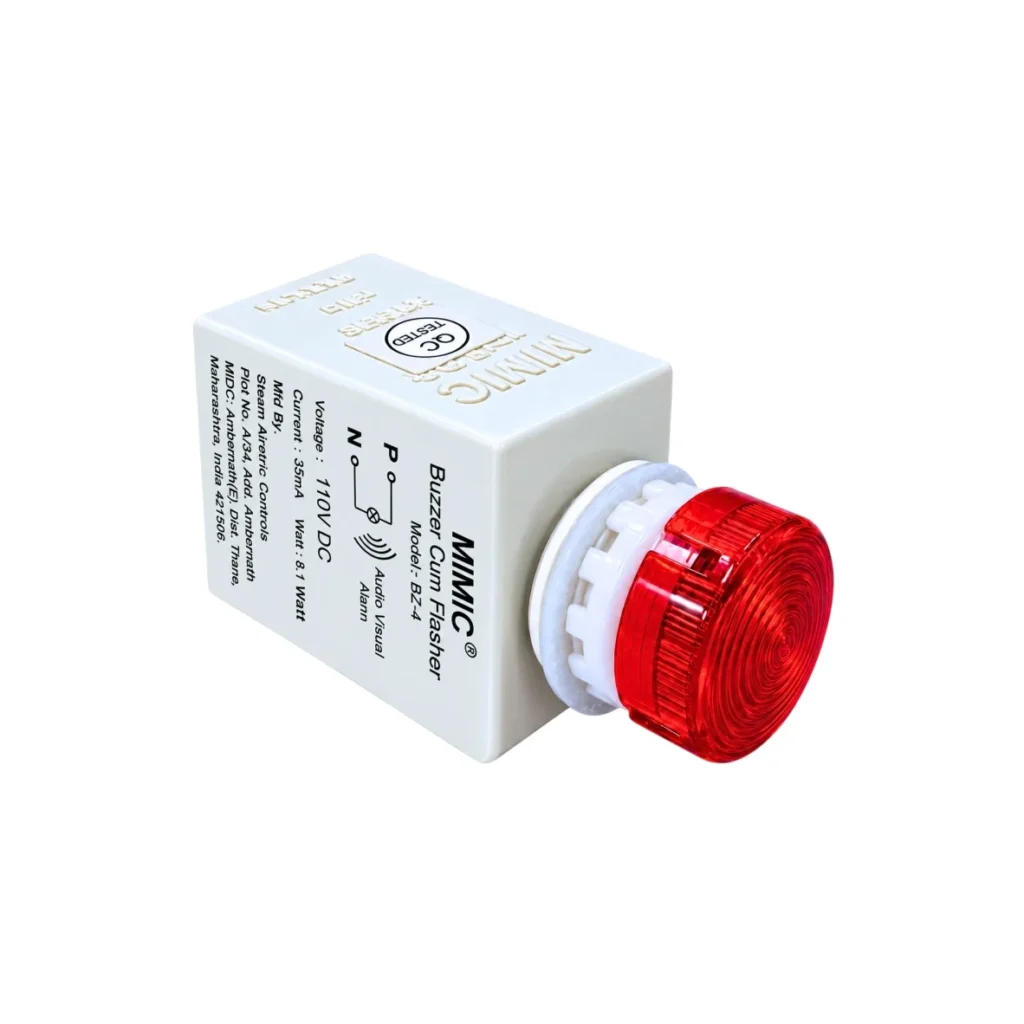
A control panel can tell an operator a lot about what is happening inside a machine or electrical system. Indicator lamps show status, switches provide control, and monitoring components help track different conditions. But when something needs immediate attention, a simple status indication may not be enough. This is where an Audio visual alarm can become a useful part of the warning arrangement.
Instead of relying on only a light or sound, this type of alarm brings both together. The audible signal attracts attention, while the flashing visual indication helps the operator recognize that a warning has been activated. For many industrial applications, this straightforward combination can make communication between equipment and operators easier.
What Is an Audio Visual Alarm?
An Audio visual alarm is a warning device that provides an audible signal and a visual flashing indication when its connected circuit is activated. It can be incorporated into suitable electrical control systems to notify operators that a particular condition requires attention.
The concept is simple. A signal from the control circuit activates the device, and the alarm produces sound and light at the same time. The exact operating characteristics depend on the model and its specifications.
Because it combines two types of indication, an Audio visual alarm can be considered for situations where a warning needs to be noticeable without depending entirely on the operator watching a panel.
Why Control Panels Need Clear Warning Indication
Industrial control panels can manage several operations at once. An operator may be monitoring multiple machines, checking production information, or working somewhere away from the main panel.
If an important condition occurs while nobody is looking at the indicator lights, the warning may take longer to notice. An Audio visual alarm provides another way of attracting attention.
The sound can notify someone that an alert has occurred, while the flashing light provides a visible confirmation when the operator looks toward the equipment. This makes the warning easier to recognize without requiring complicated operation.
Combining Sound With a Flashing Signal
Sound and light serve different purposes in a warning system. An audible signal is useful for attracting attention, while a visual signal helps communicate the presence of an active warning.
This is why an Audio visual alarm can be practical in industrial environments. If the surrounding area is relatively noisy, the visual indication remains useful. If an operator is looking away from the equipment, the audible signal can help attract attention.
The effectiveness of the alarm will still depend on factors such as installation position, ambient noise, visibility, and the specifications of the selected device.
Where Can It Be Used?
An Audio visual alarm can be considered for a range of electrical and industrial applications. It may be suitable for control panels, machinery, automation systems, and other equipment where combined warning indication is required.
Some possible applications include:
- Electrical control panels
- Industrial machinery
- Automation equipment
- Manufacturing systems
- Machine monitoring circuits
- Process control equipment
- Industrial warning arrangements
The actual application should always be checked against the manufacturer’s specifications. A device suitable for one environment may not necessarily be appropriate for another.
Selecting the Appropriate Electrical Rating
One of the most important points I would check before choosing an Audio visual alarm is the operating voltage. The voltage rating needs to match the electrical circuit where the device will be connected.
It is also important to check whether the application requires an AC or DC operating supply. Selecting the correct electrical specification helps avoid compatibility problems during installation.
Along with voltage, I would also review the physical size, mounting arrangement, wiring requirements, and other technical information provided for the particular model.
Installation Position Makes a Difference
The best warning device can become less useful if it is installed in a poor location. An Audio visual alarm should ideally be positioned where its visual signal can be seen by the intended operators.
The audible signal should also be suitable for the surrounding environment. In a large production area, for example, the location and background noise can affect how easily the sound is noticed.
For panel installations, available mounting space should be checked before fitting the device. Proper positioning can make the warning easier to notice during everyday operation.
Checking Environmental Conditions
Industrial environments can vary considerably. Some areas may be clean and enclosed, while others may experience dust, moisture, vibration, or temperature changes.
When selecting an Audio visual alarm, I would consider these conditions before making a final choice. The product’s stated environmental and protection specifications should be suitable for the location where it will operate.
This is particularly important when the alarm is installed close to machinery or in areas where environmental conditions can change during normal production.
Testing the Warning System
Once an Audio visual alarm has been installed, checking its operation is an important part of commissioning. Both the audible and visual functions should be tested to make sure the device responds correctly when the relevant control signal is applied.
Routine testing can also be included in an equipment maintenance schedule. Checking the wiring, mounting, sound output, and flashing indication can help identify problems before they become more inconvenient.
Testing procedures should follow the manufacturer’s instructions and the maintenance practices used for the particular electrical system.
A Simple Solution for Better Operator Awareness
The value of an Audio visual alarm comes from its straightforward approach. It does not require operators to learn a complicated interface. When the connected warning circuit is activated, the device provides sound and light to draw attention.
For industrial control panels and machinery, this can be a useful addition to an existing warning arrangement. It gives operators another indication that something requires checking.
However, an alarm should always be treated as part of a properly designed electrical and control system rather than as a replacement for appropriate safety measures or machine protection.
Final Thoughts
An Audio visual alarm can make warning communication more noticeable by combining audible and visual indications in one device. Its applications can range from electrical control panels to machinery and automation systems, depending on the product specifications.
When selecting one, I would look beyond the basic sound-and-light function. Operating voltage, installation method, environmental conditions, mounting space, and system compatibility all deserve attention.
With the right selection and installation, an Audio visual alarm can provide a simple and practical way to alert operators when a connected system requires attention. For busy industrial environments, that additional layer of warning communication can be a useful part of a well-planned control system.