Learning to drive is an important milestone, but choosing between an automatic and manual vehicle can make the process feel more complicated. For learners in Lancashire, automatic cars have become an increasingly practical option because they remove the need to operate a clutch pedal and manually change gears.
If you are researching automatic driving lessons Blackburn, it is useful to understand what automatic driving involves, how lessons work, what to look for in an instructor, and which habits can help you become a safer driver. Whether you are completely new to driving or switching from manual lessons, the following ten points can help you prepare.
1. Understand How an Automatic Car Works
The first step is becoming familiar with the vehicle itself. Unlike a manual car, an automatic normally handles gear changes without requiring the driver to operate a clutch pedal.
Most automatic vehicles have controls such as:
- P – Park
- R – Reverse
- N – Neutral
- D – Drive
Some modern vehicles also include additional driving modes or manual-selection features.
A learner should understand what each control does before driving in traffic. The accelerator and brake pedals also require careful use because automatic cars can respond differently from manual vehicles, particularly at low speeds.
Understanding the controls early can make lessons more comfortable and allow learners to concentrate on observation, positioning and road safety.

2. Automatic Lessons Can Simplify the Learning Process
One reason learners consider automatic vehicles is that there are fewer mechanical operations to coordinate.
With a manual vehicle, learners need to manage:
- Clutch control
- Gear selection
- Accelerator control
- Braking
- Steering
- Observation
An automatic vehicle removes clutch and manual gear-change tasks from this list. This does not mean that learning to drive becomes effortless. Learners still need to develop strong observation, judgement, anticipation and hazard-awareness skills.
For some people, reducing the number of vehicle-control tasks can make it easier to focus on the road environment.
3. Choosing the Right Driving Instructor Matters
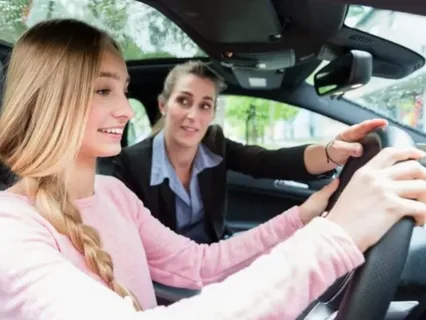
The instructor plays an important role in developing safe and independent driving habits. When comparing driving instructors Blackburn, learners should look beyond availability and consider the instructor’s teaching approach.
Useful questions include:
- Does the instructor teach in an automatic vehicle?
- Are lessons structured around the learner’s current ability?
- Does the instructor explain why particular techniques are used?
- Is progress reviewed regularly?
- Does the lesson include different road and traffic conditions?
- Are test-related skills balanced with general defensive driving?
A good lesson should not simply involve repeating the same route. Learners need exposure to different situations so they can gradually develop independent decision-making skills.
4. Know What to Expect From Your First Lessons
The first few lessons usually concentrate on basic vehicle control and road awareness rather than immediately tackling complex traffic situations.
Depending on the learner’s experience, an instructor may introduce:
- Vehicle controls and safety checks
- Moving away and stopping
- Steering techniques
- Mirror use
- Junctions
- Appropriate speed
- Road positioning
- Traffic signs and markings
- Pedestrian and cyclist awareness
- More complex traffic environments
Progress varies between individuals. Someone who has previously driven may require fewer lessons to become comfortable with vehicle controls, while a complete beginner may need more time.
5. Don’t Choose a Lesson Solely Because It Is Cheap
Searching for a cheap driving lesson near me is understandable when learning costs are an important consideration. However, the hourly price should not be the only factor used when comparing lessons.
A lower lesson price does not automatically mean lower overall learning costs, just as a higher price does not automatically indicate better teaching.
Learners should consider the complete picture, including:
- Lesson duration
- Instructor experience
- Vehicle suitability
- Location and travel arrangements
- Lesson structure
- Cancellation policies
- Progress monitoring
- Availability
The number of lessons required can vary significantly between learners, so a useful comparison considers learning value rather than simply the advertised hourly rate.
6. Practice Observation and Hazard Awareness
Passing a practical driving test requires more than controlling the vehicle. Learners must demonstrate that they can identify potential hazards and respond appropriately.
When taking automatic driving lessons Blackburn, students should practise looking well ahead and continually assessing what is happening around the vehicle.
Common hazards include:
- Pedestrians near crossings
- Cyclists and motorcyclists
- Parked vehicles
- Vehicles emerging from side roads
- Changing speed limits
- School and residential areas
- Bus stops
- Heavy traffic
- Poor weather conditions
Developing these habits early can help learners become more confident when they eventually drive without an instructor.
7. Learn Local Roads, but Don’t Memorise Routes
Local knowledge can be helpful, but learners should avoid becoming dependent on memorised routes.
A Blackburn driving school may introduce students to a range of roads and traffic environments around Blackburn and the wider Lancashire area. The objective should be to develop transferable skills rather than simply teach someone how to complete a familiar route.
For example, learners should understand how to approach:
- Roundabouts
- Multi-lane roads
- Residential streets
- Busy junctions
- Dual carriageways
- One-way systems
- Narrow roads
- Areas with parked vehicles
The ability to apply the correct technique to an unfamiliar road is an important part of becoming an independent driver.
8. Automatic Driving Still Requires Smooth Control
A common misconception is that automatic vehicles require very little skill because the transmission changes gears automatically.
In reality, smooth control remains important.
Learners should practise:
- Gentle acceleration
- Progressive braking
- Maintaining a safe following distance
- Smooth steering
- Appropriate speed selection
- Controlled movement in slow traffic
This becomes particularly important when driving through congested areas, approaching junctions or manoeuvring into parking spaces.
Automatic transmission reduces some mechanical workload, but it does not replace the driver’s responsibility for controlling the vehicle safely.
9. Prepare for the Practical Driving Test Gradually
Test preparation should be part of a broader learning process rather than the sole purpose of every lesson.
Learners should gradually become comfortable with the main areas assessed during practical driving, including vehicle control, observation, anticipation, road positioning and response to hazards.
It can also be useful to practise manoeuvres such as:
- Parallel parking
- Bay parking
- Pulling up on the right and reversing
- Controlled stops when required
- Independent driving
- Following directions safely
Before booking a test, learners should discuss their progress with their instructor and identify any recurring weaknesses.
10. Compare Driving Schools Before Starting
There are many driving schools in Blackburn, so learners may benefit from comparing several options before committing to lessons.
Important factors include teaching style, vehicle type, lesson availability, instructor communication and the learner’s personal circumstances.
For people specifically looking for automatic tuition, checking whether the school has an appropriate automatic vehicle and experienced automatic-driving instruction is particularly relevant.
Street Smart Driving School, for example, provides automatic driving tuition in Lancashire and can be considered as one local provider when learners are researching available options.
The most useful comparison is one based on practical requirements rather than marketing claims.
Common Challenges for Automatic Learners
Although automatic driving can reduce some of the mechanical complexity associated with learning to drive, learners can still experience difficulties.
Managing Speed
Without manual gear changes, learners may initially focus too much on steering and forget to monitor speed. Regular speed checks and awareness of changing limits are essential.
Busy Junctions
Complex junctions require observation, judgement and timing. Learners should approach them at an appropriate speed and avoid rushing decisions.
Parking
Automatic vehicles can make low-speed control feel different. Learners should practise parking in several locations rather than relying on one familiar space.
Confidence
Confidence generally develops through repeated exposure to different situations. A learner who is comfortable on quiet roads may need additional practice before handling busy urban traffic independently.
Automatic Driving and the Future of Motoring
The increasing availability of automatic vehicles is also connected with wider changes in the automotive industry. Many modern cars use advanced driver-assistance systems, electrified powertrains and increasingly sophisticated automatic transmissions.
Electric vehicles are particularly relevant because many battery-electric cars do not use conventional multi-speed transmissions. This means that learning in an automatic vehicle can also provide experience with a type of vehicle that is increasingly visible on modern roads.
However, technology does not remove the need for fundamental driving skills. Drivers still need to understand road rules, maintain appropriate observation, recognise hazards and make safe decisions.
Final Thoughts
Choosing automatic tuition is a personal decision based on driving preferences, vehicle requirements and learning circumstances. For people considering automatic driving in Blackburn, understanding the learning process before starting can make lessons more productive.
The key is to focus on developing genuine driving ability rather than simply completing a required number of lessons. Strong observation, hazard awareness, road positioning, speed control and independent decision-making remain essential regardless of transmission type.
When researching driving schools Blackburn and local instructors, learners should compare teaching methods, vehicle suitability, lesson structure and availability. With consistent practice and appropriate instruction, learners can gradually build the skills needed to drive safely and confidently on Blackburn’s roads and throughout Lancashire.
Read More: