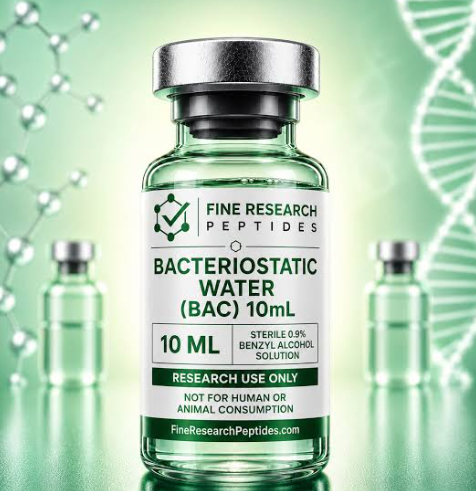
Bacteriostatic water for injection is a sterile water-based preparation containing a bacteriostatic preservative, commonly benzyl alcohol, that is used as a diluent for certain injectable medications when specifically permitted by the applicable product instructions. Unlike ordinary purified water, it is manufactured to meet defined requirements for sterile use. Understanding its composition, intended applications, storage requirements, and limitations is important because the appropriate diluent can vary considerably between medications and preparations.
The term “bacteriostatic” describes the preservative’s role in inhibiting microbial growth under appropriate conditions; it does not mean that the product can neutralize contamination or make an improperly handled preparation safe. Bacteriostatic water for injection should therefore be handled using appropriate aseptic practices and according to the labeling for the specific product. Choosing the correct diluent requires attention to compatibility, formulation, intended route of administration, and the instructions provided for the medication being prepared.
What Is Bacteriostatic Water for Injection?
Bacteriostatic water for injection is sterile water intended for use as a diluent in situations where a preservative-containing preparation is appropriate. The formulation generally includes a small concentration of a bacteriostatic agent, with benzyl alcohol being commonly used. The preservative distinguishes it from sterile water for injection, which does not contain a bacteriostatic preservative. This difference is clinically relevant because the two products are not automatically interchangeable. The appropriate choice depends on the medication, formulation, patient population, and manufacturer’s directions. Product labeling should always be reviewed before selecting a diluent because compatibility requirements can differ between injectable products.
How Is It Used as a Diluent?
When permitted by the instructions for a particular injectable medication, bacteriostatic water can be used to dissolve or dilute that medication before administration. The exact volume and preparation procedure are determined by the medication’s approved instructions rather than by the diluent alone. Factors such as the concentration required, stability after reconstitution, route of administration, and storage conditions may all influence the preparation process. Users should not assume that a standard amount of bacteriostatic water is appropriate for every medication. Following the specific preparation instructions helps maintain the intended concentration and reduces the risk of incompatibility or preparation errors.
Bacteriostatic Water vs. Sterile Water for Injection
Although both products provide sterile water, their formulations and intended uses differ. Bacteriostatic water contains a preservative, whereas sterile water for injection is preservative-free and is generally supplied as a single-dose preparation. The preservative in bacteriostatic water can be useful for specific multidose applications under labeled conditions, but it can also make the product unsuitable for certain medications or patients. Selecting between these preparations should therefore be based on the instructions associated with the medication or procedure rather than convenience. A sterile diluent should never be treated as universally interchangeable with another sterile diluent simply because both contain water.
Storage and Handling Requirements
Appropriate storage and handling help preserve the quality of sterile injectable preparations. Bacteriostatic water should be kept under the storage conditions specified on its product label and protected from conditions that could compromise container integrity or product quality. Before use, the container should be inspected for damage, leakage, unusual discoloration, or visible particles. Once a multidose container has been entered, the manufacturer’s instructions regarding storage and the appropriate discard period should be followed. The presence of a bacteriostatic preservative does not eliminate the need for aseptic technique. Contamination can still occur through inappropriate handling, and a contaminated preparation should not be assumed to be safe merely because it contains a preservative.
Safety and Compatibility Considerations
One of the most important considerations is whether the preservative is appropriate for the intended patient and medication. Benzyl alcohol can present particular concerns for neonates, and preservative-containing preparations may therefore be unsuitable for certain vulnerable populations. Compatibility must also be established before a medication is diluted with bacteriostatic water. Some formulations specify sterile water, another diluent, or a particular preparation method and should not be modified without appropriate professional guidance. For injectable medications, preparation and administration should be performed by appropriately trained personnel following applicable instructions and sterile procedures.
Why Product Quality and Labeling Matter
The quality of a sterile diluent depends not only on its basic ingredients but also on manufacturing controls, packaging, labeling, and traceability. When evaluating a product, users should check the stated formulation, preservative concentration, expiration date, lot or batch information, storage instructions, and manufacturer details. The container should remain sealed and intact until use, and any product with questionable packaging or unexplained changes should be evaluated according to applicable professional procedures. Clear labeling is particularly important when multiple sterile preparations are stored in the same environment because selecting the wrong diluent can affect the preparation being made. Reliable product documentation supports better inventory management and helps users verify that the selected preparation matches the requirements of the intended application.
Frequently Asked Questions About Bacteriostatic Water
A common question is whether bacteriostatic water can be used for any injectable medication. The answer is no; compatibility must be confirmed for the specific medication. Another common question concerns whether the preservative makes repeated access completely risk-free. It does not. A bacteriostatic preservative helps inhibit microbial growth under specified conditions, but it does not replace aseptic technique or appropriate storage and handling. Users may also wonder whether bacteriostatic water and sterile water are equivalent. They are not, because the presence of a preservative creates an important formulation difference. These distinctions demonstrate why product labeling and medication-specific instructions should guide the selection and handling of an injectable diluent.
Conclusion
Bacteriostatic water for injection is a specialized sterile diluent designed for applications where a preservative-containing preparation is appropriate. Its key characteristics include sterility, a bacteriostatic preservative, defined storage requirements, and compatibility considerations that vary according to the medication and intended use. Understanding the difference between bacteriostatic water and preservative-free sterile water is essential when selecting a diluent. Users should always follow the specific product labeling, medication instructions, applicable professional standards, and appropriate aseptic practices. Careful attention to formulation, compatibility, storage, and handling provides a more reliable foundation for the safe and appropriate use of sterile injectable preparations.