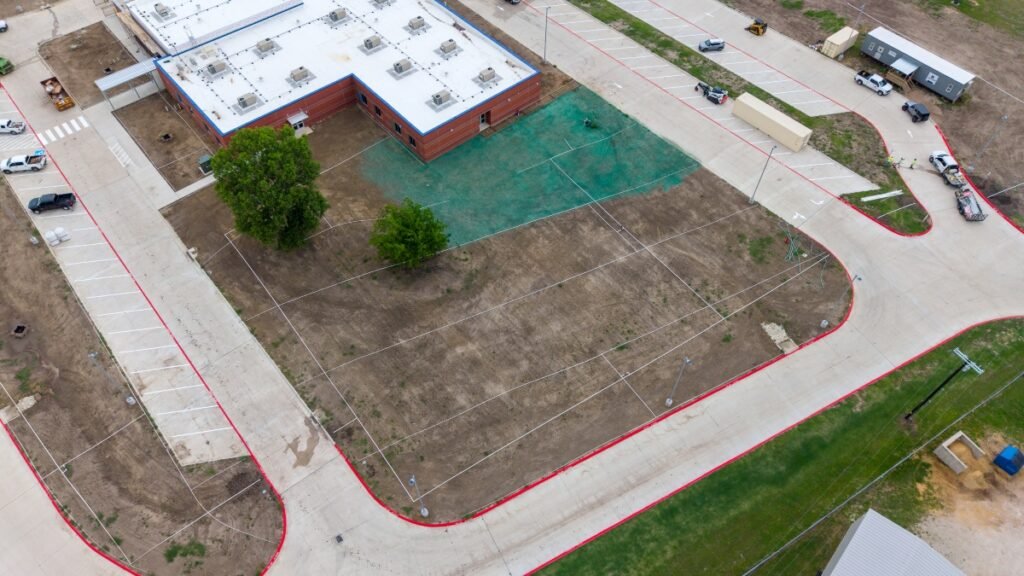
Hydromulch North Texas
North Texas is known for soil conditions that can make establishing healthy vegetation more complicated than simply spreading seed and watering it. In many areas, clay-heavy soil can become dense when compacted and sticky when wet, while drying conditions may leave the surface hard and difficult for young roots to penetrate. Construction activity can make these problems even more noticeable by disturbing natural soil structure. For property owners considering Hydromulch North Texas understanding how clay affects seed establishment is an important first step.
Clay soil is not necessarily a bad growing medium, but it requires thoughtful preparation and management. Its fine particles can hold water and nutrients, yet compacted clay may restrict air movement and make it difficult for seeds to maintain consistent contact with the soil surface. When seed sits loosely on top of a hard or uneven surface, germination can become inconsistent. Improving the relationship between seed, soil, moisture, and protective mulch can create a better environment for early plant development.
Why Seed-to-Soil Contact Matters
Successful germination depends on several conditions, including appropriate moisture, temperature, oxygen, and contact between the seed and surrounding soil. Good seed-to-soil contact allows the seed to absorb moisture more consistently and begin developing roots into the underlying growing medium. If seeds remain suspended above the soil or are washed into piles by rainfall, establishment can become uneven. This is particularly important on clay soils where surface conditions may change quickly after rain or prolonged heat.
Traditional broadcast seeding can sometimes leave gaps between individual seeds and the soil, especially when the surface is rough, compacted, or uneven. Wind and rainfall may further disturb exposed seed before germination begins. Hydromulch addresses part of this challenge by combining seed with a water-based mulch slurry that can be distributed evenly across the prepared surface. The mulch helps keep seed in position while creating a more consistent layer over the soil.
How Hydromulch Works With Clay Soil
Hydromulch is applied hydraulically as a mixture that can contain seed, mulch, water, and selected amendments or tackifying materials. Rather than leaving seed exposed on the soil surface, the application creates a protective covering that helps hold the seed where it was placed. This can be especially useful on properties where clay soil is vulnerable to crusting, wind displacement, or surface runoff. The approach does not change the fundamental properties of clay, but it can improve the conditions surrounding newly applied seed.
The mulch layer can also help moderate the immediate environment around the seed. By providing surface coverage, it can reduce direct exposure to sunlight and help limit rapid moisture loss from the treated surface. This does not eliminate the need for irrigation, particularly during hot North Texas weather. Instead, it supports a more stable establishment environment while the seed begins germinating and developing roots. Proper application remains essential because excessive mulch or poor site preparation can create problems of its own.
Preparing Clay Soil Before Hydromulching
Hydromulch works best when it is applied to properly prepared soil. If clay has been heavily compacted by construction equipment or repeated traffic, simply applying seed and mulch may not address the underlying problem. Depending on site conditions, preparation may involve loosening compacted areas, correcting grades, removing debris, incorporating appropriate soil amendments, or improving drainage. The exact approach should be based on the property’s existing conditions rather than applying the same preparation method everywhere.
Soil preparation should also consider how water moves across the property. Clay can become difficult to manage when water collects in low areas or runs rapidly across a slope. Excessive runoff can carry soil and seed away before vegetation becomes established. Correct grading and appropriate drainage can reduce these risks and give the hydroseed mixture a more stable surface. A professional evaluation is especially valuable when the property has recently undergone construction or contains significant changes in elevation.
Benefits of Hydromulch for North Texas Landscapes
One of the major advantages of Hydromulch North Texas applications is the ability to distribute seed and protective mulch across a broad area in a relatively uniform manner. Hydraulic equipment can reach irregular sections, slopes, and larger properties where conventional hand seeding may be labor-intensive. The resulting coverage can help reduce exposed patches and keep seed closer to the intended planting area. This makes hydromulching useful for residential lawns, commercial landscapes, construction sites, and other disturbed areas.
The mulch also provides temporary protection while vegetation becomes established. It can help shield seed from direct weather exposure and reduce the impact of rainfall hitting bare soil. As grass begins to grow, roots gradually become the more important factor in long-term soil stabilization. However, property owners should understand that hydromulch is not a substitute for proper grading, irrigation, or soil improvement. Its effectiveness depends on how well the complete establishment process is planned and maintained.
Choosing a Hydroseeding Professional for Clay Soil
When searching for a hydroseeding company near me, homeowners should ask how the contractor approaches clay-heavy soil rather than simply requesting a standard hydroseeding price. A knowledgeable provider should inspect the site and discuss compaction, drainage, sunlight, existing vegetation, soil condition, and the intended use of the landscape. These factors influence both seed selection and preparation requirements. A contractor who takes time to evaluate the property is better positioned to recommend an appropriate application strategy.
It is also useful to ask what is included in the hydroseeding mixture and whether soil preparation is part of the project. Contractors should be able to explain the selected seed, mulch, fertilizer or amendments when applicable, and any tackifying products being used. Homeowners should also receive realistic guidance about watering and establishment because weather conditions can significantly influence results. Avoid providers who promise guaranteed results without considering soil, climate, irrigation, and seasonal variables.
Aftercare Is Essential for Successful Establishment
Applying hydromulch is only the beginning of the process. Newly seeded clay soil needs appropriate moisture management while seeds are germinating and young roots are developing. Irrigation should generally keep the surface adequately moist without producing excessive runoff or standing water. During hot and windy periods, the surface may dry faster than expected, so homeowners should monitor the treated area instead of relying exclusively on a fixed watering schedule.
Traffic should also be limited while the new grass is becoming established. Walking, equipment movement, and other disturbances can displace developing plants and damage fragile soil surfaces. As the grass develops, maintenance can gradually transition toward appropriate mowing, irrigation, and seasonal care. If bare patches or erosion channels appear, they should be investigated promptly to determine whether the cause is poor drainage, compaction, inadequate moisture, weather, or another site-specific issue.
Creating Better Seed Establishment in North Texas Clay
Clay soil presents real challenges, but those challenges can be managed with the right preparation and application strategy. Hydromulch can improve seed-to-soil contact by distributing seed and protective materials together, helping keep seed positioned against the prepared surface. The mulch layer can also support moisture retention and provide temporary protection from weather while germination begins. These advantages make it a practical option for many North Texas properties when the treatment is properly designed.
For homeowners planning Hydromulch North Texas projects, the strongest results come from treating soil preparation, seed selection, application, irrigation, and aftercare as parts of the same process. When looking for a hydroseeding company near me, prioritize professionals who evaluate the actual site and explain their recommendations clearly. Properly managed clay can support healthy vegetation, and a carefully planned hydromulching application can give new grass a stronger start. The objective is not simply to cover the soil with seed, but to create conditions where that seed can germinate, root, and develop into durable ground cover.