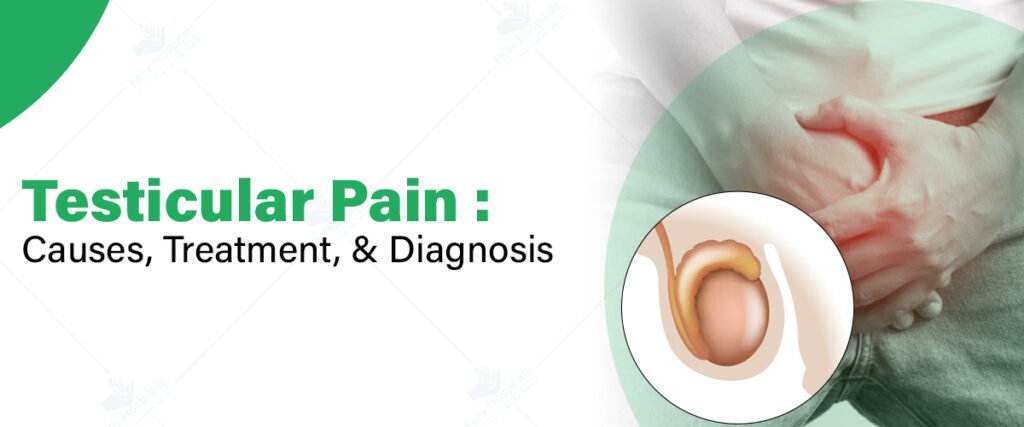
That dull ache you’ve been ignoring for 3 days? It’s rarely “nothing,” and it’s rarely the one thing you’re afraid it might be.
Testicular pain causes span a much wider range than most men expect — from minor muscle strain to conditions that need attention within hours, not weeks. The tricky part is that severity and pain level don’t always match. A minor issue can throb for days, while a genuine emergency sometimes announces itself with pain so sudden it drops a grown man to his knees.
Here are 7 causes that don’t get talked about enough, and what they actually mean for you.
- Epididymitis — The Most Common Culprit Nobody Names
Epididymitis is inflammation of the epididymis, the coiled tube sitting behind each testicle that stores and transports sperm. It’s the single most frequent reason men under 40 show up at a clinic with testicular pain.
- Usually starts gradually, over a day or 2
- Often paired with swelling, redness, or a heavy, dragging sensation
- Frequently linked to a urinary tract infection or an untreated STI
Left alone, it can spread and cause lasting damage to fertility. This is one of the clearer cases where testicular pain treatment is straightforward: a course of antibiotics, rest, and supportive underwear to reduce movement.
- Testicular Torsion — The One You Cannot Wait Out
This is the emergency everyone should know by name. Testicular torsion happens when the spermatic cord twists on itself, cutting off blood supply to the testicle entirely.
- Pain hits suddenly and intensely — often described as the worst pain a person has felt
- Frequently comes with nausea or vomiting
- One testicle may sit higher than the other or look visibly swollen
There’s a narrow window here. Doctors generally count on 6 hours from onset to save the testicle through surgery; after 12 hours, the odds drop sharply. If pain is sudden and severe, skip the “wait and see” approach and get to an emergency room immediately.
- Varicocele — The Slow-Building Ache
Think of a varicocele as varicose veins, but inside the scrotum. Enlarged veins in the spermatic cord create a dull, dragging discomfort that tends to worsen as the day goes on and ease when lying down.
- Often described as a “bag of worms” texture on exam
- More common on the left side due to vein anatomy
- Can affect sperm production and fertility over time if untreated
Mild cases need nothing more than supportive wear and monitoring. More significant ones may call for a minor surgical procedure to reroute blood flow — one of the more overlooked paths in testicular pain treatment conversations.
- Inguinal Hernia — When It’s Not the Testicle at All
Sometimes the pain isn’t coming from the testicle itself. An inguinal hernia occurs when tissue pushes through a weak spot in the abdominal wall, and it can radiate straight down into the scrotum.
- A visible or palpable bulge near the groin, especially when standing or straining
- Pain that worsens with coughing, lifting, or prolonged standing
- May come with a pulling sensation rather than sharp pain
This one is a mechanical problem, and it typically needs a surgical fix rather than medication. Ignoring it risks the hernia becoming strangulated, which turns a manageable issue into an urgent one.
- Orchitis — The Infection That Isn’t Always Bacterial
Orchitis is inflammation of the testicle itself, and it doesn’t always come from a bacterial infection. Viral causes, including mumps, are a well-known trigger, especially in men who weren’t vaccinated as children.
- Swelling and tenderness in one or both testicles
- Fever and general body aches often accompany it
- Can occur alongside epididymitis, making the two hard to tell apart without an exam
Bacterial orchitis responds to antibiotics. Viral orchitis is managed with rest, pain relief, and time — there’s no shortcut around it, but most cases resolve fully within a couple of weeks.
- Trauma or Muscle Strain — The Cause Everyone Overlooks
Not every ache has a medical name attached. A direct hit during sport, an awkward movement during a workout, or straining a groin muscle can all cause pain that mimics something more serious.
- Pain that’s localized and doesn’t worsen over time
- Often improves noticeably with rest and ice within 48 hours
- No accompanying fever, swelling, or nausea
If the pain is easing rather than building, that’s a reassuring sign. Still, any pain that lasts beyond a few days deserves a professional look rather than a guess.
- Referred Pain From Kidney Stones
This is the reason table nobody expects. Kidney stones, particularly ones sitting low in the ureter, can refer pain down into the testicle on the same side, thanks to shared nerve pathways.
- Pain that comes in waves rather than staying constant
- Often paired with lower back or flank pain
- May include blood in the urine or a burning sensation while urinating
Treating the stone resolves the testicular pain, since the testicle itself was never actually the problem.
When to See a Doctor — No Guesswork Required
Use this as a quick gut check:
- Sudden, severe pain → Emergency room, immediately. Assume torsion until proven otherwise.
- Gradual pain with swelling or fever → Same-day appointment. Likely epididymitis or orchitis.
- Dull, dragging ache that builds through the day → Book within the week. Possibly a varicocele.
- Pain with a visible bulge → Schedule promptly. Could be a hernia.
- Mild pain after activity, improving with rest → Monitor for 48 hours before seeking care.
The Bottom Line
Testicular pain causes range from a strained muscle to a surgical emergency, and the only way to know which one you’re dealing with is a proper exam. Guessing costs time, and with conditions like torsion, time is the one thing you can’t get back.
Effective testicular pain treatment always starts with an accurate diagnosis, not a home remedy pulled from a forum thread. If something feels off, don’t sit on it — get it checked, get an answer, and get back to normal without the nagging worry in the back of your mind.