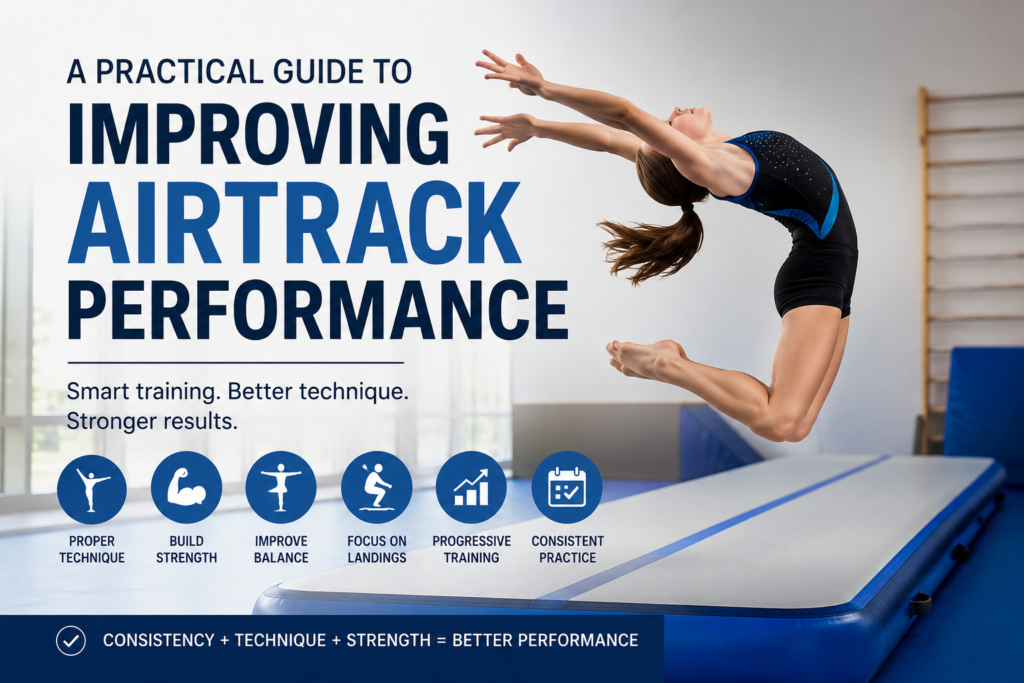
Improving performance during gymnastics, tumbling, or home-based training requires more than simply repeating the same movements. Athletes need consistency, proper technique, controlled landings, flexibility, strength, and a suitable training environment. The right equipment can make practice more comfortable while helping users focus on movement quality and confidence.
An Airtrack can provide a supportive surface for repeated practice, particularly when athletes are working on jumps, rolls, tumbling combinations, and landing techniques. However, equipment alone does not guarantee improvement. Effective results come from combining suitable equipment with structured training habits and attention to technique.
Start With Proper Body Position
Good body positioning is one of the foundations of effective gymnastics and tumbling practice. Before attempting more advanced movements, athletes should understand how to maintain control through their shoulders, hips, knees, and ankles.
A stable starting position can make movements more predictable. Beginners should practice basic positions slowly before increasing speed or difficulty. Keeping the core engaged and maintaining awareness of body alignment can also help reduce unnecessary movement.
During jumping exercises, athletes should focus on controlled takeoffs and balanced landings. Rather than trying to achieve maximum height immediately, the priority should be consistency. Once basic movements become comfortable, intensity can gradually increase.
Build Strength Alongside Skill
Strength plays an important role in performance. Even technically correct movements can become difficult when the muscles involved lack sufficient conditioning.
A balanced training routine can include exercises such as squats, lunges, planks, calf raises, push-ups, and controlled jumps. These movements can help develop lower-body strength, core stability, and upper-body control.
Strength training does not always require complicated equipment. Bodyweight exercises can be incorporated into warm-ups or separate conditioning sessions. Athletes should select exercises according to their age, experience, and training objectives.
The goal is not simply to become stronger but to develop strength that supports movement control. Better physical conditioning can make it easier to repeat skills without losing technique.
Improve Balance and Coordination
Balance and coordination are essential for movements involving jumps, turns, and landings. Athletes can improve these abilities by introducing simple drills into regular practice sessions.
For example, single-leg balance exercises can help develop stability, while controlled jumps can encourage better awareness of body position. Repeating movements at a slower pace can also help athletes understand where their body should be at different stages of a skill.
Coordination improves through repetition, but repetition should be purposeful. Performing a movement incorrectly many times can reinforce poor habits. Coaches, instructors, or experienced training partners can provide useful feedback when available.
Focus on Landing Technique
Landing technique deserves particular attention because controlled landings are an important part of many gymnastics and tumbling skills. Athletes should learn to land with appropriate knee and hip control rather than relying entirely on stiff legs.
A well-controlled landing generally involves absorbing force gradually while maintaining balance. Beginners can start with low-impact jumps and practice landing quietly and steadily before progressing to more demanding skills.
The training surface can also influence how comfortable athletes feel while practicing. A properly inflated Airtrack can provide a resilient practice surface, but users should still follow appropriate safety procedures and avoid attempting skills beyond their current ability.
Use Progressive Training
One of the most effective ways to improve performance is to follow a gradual progression. Athletes should avoid moving directly from basic exercises to advanced skills without developing the necessary foundations.
A practical progression might begin with:
- Basic jumps and controlled landings
- Balance and coordination drills
- Forward and backward rolls
- Simple movement combinations
- Low-level tumbling skills
- More advanced combinations after sufficient preparation
Each stage should be practiced until the movement can be performed consistently. Progression should depend on skill quality rather than simply the amount of time spent training.
Create a Consistent Practice Routine
Irregular training can make progress difficult to measure. A consistent routine allows athletes to identify weaknesses and track improvements over time.
A training session can be divided into several sections. The first part can focus on warming up and mobility. The middle section can concentrate on technical skills, while the final portion can include conditioning and stretching.
Even short sessions can be productive when they have a clear purpose. For example, one session may focus on landing control while another emphasizes jumps, balance, or flexibility.
Keeping a simple training record can also help. Athletes can note which skills were practiced, which movements felt difficult, and what improvements were noticed. Over time, this information can help shape future sessions.
Make Flexibility Part of Training
Flexibility supports many gymnastics and tumbling movements. Limited mobility can affect body positions and make certain techniques more difficult.
Dynamic movements are often useful during warm-ups because they prepare the body for activity without requiring prolonged static stretching. Gentle stretching can then be included toward the end of a session.
Flexibility should be developed gradually. Forcing a stretch beyond a comfortable range can create unnecessary strain. Consistent, controlled practice is generally more useful than trying to achieve rapid results.
Check Equipment Before Practice
Equipment condition should never be overlooked. Before each session, users should inspect the surface for visible damage and ensure that inflation is appropriate for the intended activity.
The surrounding training area should also be free from sharp objects, clutter, furniture, or other hazards. Adequate space is especially important when practicing movements that involve travel.
Brands such as AirTumble provide equipment designed for gymnastics and home training environments, but users should still follow the relevant product instructions and safety recommendations.
Avoid Common Training Mistakes
Several habits can slow progress. Trying advanced skills too early is one common mistake. Another is focusing entirely on speed instead of technique.
Skipping warm-ups, training while excessively fatigued, and ignoring recurring discomfort can also affect training quality. Rest is an important part of development because the body needs time to recover between demanding sessions.
Another mistake is comparing personal progress with someone else’s. Athletes develop at different rates. A training approach that works for one person may not be suitable for another.
Review Progress Regularly
Performance improvement becomes easier when athletes periodically review their development. Video recording, when appropriate and safe, can help identify issues with body position, timing, or landing technique.
Feedback from a qualified coach can be even more valuable. An experienced observer may notice technical details that are difficult to recognize independently.
Progress should be measured through consistency, control, confidence, and technique rather than simply the difficulty of a skill. Successfully repeating a basic movement with improved form can represent meaningful progress.
Connecting Home Training With Family Fitness
For families interested in creating an active home environment, the earlier article “Why Families Are Choosing an Airtrack for Home Fitness” offers a useful starting point for understanding why inflatable training equipment can be incorporated into household fitness routines.
The article can complement this guide by focusing on the broader appeal of home-based activity, while this guide concentrates more specifically on improving training quality, technique, consistency, and performance.
Final Thoughts
Improving gymnastics and tumbling performance is a gradual process built around technique, physical preparation, consistency, and safe progression. The right equipment can provide a useful training environment, but meaningful development depends on how that equipment is used.
By combining structured practice with strength work, flexibility exercises, balance drills, controlled landings, and regular progress reviews, athletes can create a more effective training routine. Most importantly, improvement should remain gradual and enjoyable, allowing skills to develop without unnecessary pressure.
Frequently Asked Questions
1. How often should athletes practice?
The ideal frequency depends on age, skill level, training goals, and recovery needs. Consistent sessions with adequate rest are generally more useful than excessive training.
2. Is an Airtrack suitable for beginners?
Yes, it can be useful for beginners when appropriate exercises are selected and safety guidelines are followed. Beginners should start with basic movements before progressing to advanced skills.
3. Can strength training improve gymnastics performance?
Strength training can support better control, stability, and power. Exercises should be selected according to the athlete’s experience and physical needs.
4. Why is landing technique important?
Controlled landings help athletes maintain balance and manage impact more effectively. Learning proper landing mechanics can also provide a stronger foundation for more advanced skills.
5. How can athletes track their improvement?
Athletes can maintain training notes, record appropriate practice sessions, and seek feedback from qualified coaches. Tracking consistency and technique can provide a clearer picture of progress than focusing only on advanced skills.