custom jar labels
The cannabis retail space is hyper-competitive. Walk into any modern dispensary, and you are immediately greeted by a massive array of options, colors, and form factors. Because cannabis flower is a sensory, organic product, the way it is presented on the sales floor matters immensely.
For a long time, dispensaries relied on simple glass jars with handwritten tape or basic labels to showcase their bulk flower. While this functional approach worked in the early days of legalization, it no longer satisfies today’s sophisticated consumer.
Modern retailers are discovering that custom jar labels are a small but incredibly powerful tool. They bridge the gap between back-of-house inventory data, compliance laws, and clean in-store visual merchandising. Here is how upgrading your display jar labels transforms your retail aesthetics, empowers your budtenders, and boosts consumer trust.
The Visual Merchandising Problem: Cluttered Jars vs. Premium Presentation
When a customer arrives at the dispensing counter, their eyes naturally gravitate toward the display jars. They want to examine the trichomes, see the colors of the bud, and understand the product’s unique properties.
However, standard or poorly designed labels often create a counter-productive retail environment:
-
Blocking the View: Overly large, clumsy paper labels wrapped carelessly around a jar block the customer’s view of the actual flower.
-
Inconsistent Branding: Jars from different growers often feature conflicting label sizes, fonts, and designs, making the display shelves look messy and unorganized.
-
Illegible Data: When critical statistics like THC metrics, terpene levels, or strain types are scribbled or printed in tiny text, customers struggle to read them, leading to retail friction.
Moving to carefully designed, consistent jar labels fixes these visual pain points, creating a professional showroom aesthetic that mirrors high-end cosmetic or boutique retail.
1. Enhancing the In-Store Customer Journey
A thoughtful jar label does much more than meet compliance regulations—it guides the customer’s purchase decision while they interact with your staff.
Clear Visual Cues and Color-Coding
Instead of forcing customers to read fine print on every jar to figure out what they are looking at, optimized labels use consistent color-coding systems. For example, a crisp blue border for Indicas, bright red or yellow for Sativas, and green for Hybrids allows customers to scan the display shelves and instantly find the product type they prefer.
Showcasing Cannabinoid and Terpene Integrity
Today’s cannabis consumer is highly educated and selective. They aren’t just hunting for the highest THC percentage anymore; they want a detailed breakdown of CBD ratios and prominent terpene profiles. Labels built with designated blocks for total terpenes and expanded cannabinoid data help deliver this information clearly and cleanly at a single glance.
Clean, Minimalist Layouts That Prioritize the Product
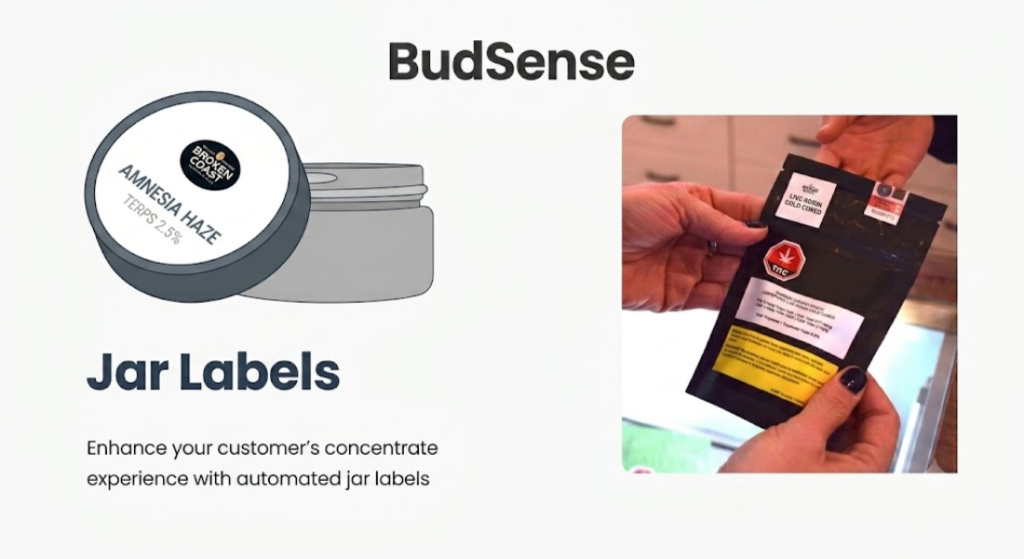
The best labels are engineered to fit perfectly on specific display glass, utilizing clear or perfectly proportioned borders. This keeps the technical details organized on one part of the jar while leaving the rest of the glass unobstructed, allowing the natural look and quality of your flower to take center stage.
2. Simplifying Daily Dispensary Operations
While the front-of-house presentation looks seamless to your guests, custom label setups solve major operational headaches for your inventory managers and sales staff.
Keeping Pace with Fast-Moving Batches
Cannabis inventory changes fast. A new harvest batch of the exact same strain can feature completely different THC, CBD, and terpene testing percentages than the last one. If your display labels are hard to print or update, your shelves can quickly become inaccurate. Modern label solutions allow teams to generate and print clean, uniform designs on demand whenever a new batch hits the floor.
Eliminating Budtender Mental Strain
When store shelves are organized with clear, professional labels, budtenders don’t have to keep a mental catalog of every strain’s profile or squint at faded text to answer a question. They can read the exact batch metrics directly off the jar while holding it up for the customer. This builds immediate credibility with shoppers and keeps the counter line moving efficiently.
Aligning In-Store Assets with Digital Menus
Consistency across touchpoints is essential for modern cannabis retail branding. The information displayed on your wall TVs, tablets, paper menus, and your physical display jars needs to match perfectly. Implementing a structured formatting system for your physical jar labels ensures that your physical assets mirror your digital platforms precisely.
3. Building Consumer Trust and Professionalism
In any retail market, packaging and presentation dictate perceived value. A premium product displayed with cheap or disorganized labeling sub-consciously signals to the consumer that the product inside might lack quality control.
Conversely, when a dispensary invests in uniform, clean, and highly detailed jar labels, it sends a strong message of professionalism, safety, and operational excellence. It tells the customer that your business pays attention to details, takes compliance seriously, and respects the product enough to showcase it elegantly.
Conclusion
Maximizing the impact of your physical showroom requires treating every single touchpoint as a marketing asset. From the massive display monitors on your walls down to the small jars sitting on your dispensing counters, every visual element dictates how customers perceive your brand. Upgrading to clear, structured, and informative display layouts ensures your store looks sharp, organized, and inviting. To truly streamline your retail merchandising and gain complete control over your store’s physical presentation, partnering with an all-in-one platform like BudSense allows you to seamlessly design, update, and manage your custom jar labels alongside your digital menus, keeping your entire dispensary experience flawlessly connected.
Frequently Asked Questions
1. Why should we use custom jar labels instead of standard supplier labels?
Standard supplier labels come in various shapes, sizes, colors, and fonts, which can make your display cases look messy and inconsistent. Creating custom labels ensures that every jar on your shelf matches your dispensary’s unique branding, font structure, and layout style, resulting in a clean, unified aesthetic.
2. How do custom labels help display complex data like terpene profiles?
Well-designed custom labels include dedicated, structured sections specifically built to hold expanded cannabinoid support and total terpene percentages. This ensures that complex data looks neat and is easy for customers to read through the glass, rather than crowding the label with messy text.
3. Is it difficult to update the labels when a new product batch arrives?
Not if you use a centralized design platform. When a new batch arrives with updated lab results or testing data, you can update the information directly in your dashboard and quickly generate a new, matching label to ensure your sales floor remains compliant and completely accurate.
4. What is the best way to handle color-coding for strain types on jar labels?
A highly effective method is using colored badges, headers, or borders on the label template itself. Assigning consistent colors for Sativas, Indicas, Hybrids, and CBD-dominant strains allows both your customers and budtenders to scan your display shelves and identify product categories in seconds.
5. Do custom jar labels work well alongside digital dispensary menus?
Yes, they work hand-in-hand. When you use a unified design framework, your physical jar labels will feature the exact same terminology, layout style, data points, and badges as your digital menus, providing your customers with a smooth and cohesive shopping experience from the moment they look at the wall to the moment they stand at the counter.