Choosing the right cabinet material plays a major role in the strength, appearance, and lifespan of kitchen cabinets. Many homeowners prefer ready-to-assemble cabinets because they offer practical value without sacrificing quality. Premium RTA Cabinets are available in different materials, each designed to meet specific budgets, design preferences, and performance needs. Knowing these materials helps buyers make informed decisions that suit both daily use and long-term expectations.
The Main Materials Used in RTA Cabinets
Manufacturers use several engineered and natural wood products to produce RTA cabinets. Each material offers different levels of durability, moisture resistance, and appearance. Plywood, medium-density fiberboard (MDF), particleboard, hardwood, and plywood veneers remain the most common choices. Cabinet makers often combine these materials within a single cabinet to balance cost and performance. Door frames, cabinet boxes, shelves, and drawer fronts may all use different materials depending on the intended strength and finish required for the final product.
Plywood as a Popular Cabinet Material
Plywood remains one of the most trusted materials for cabinet boxes because it offers excellent strength and stability. It consists of multiple thin wood layers bonded together with alternating grain directions, reducing the chance of warping over time. This construction provides reliable support for heavy cookware, dishes, and kitchen supplies. Plywood also accepts screws well, making assembly easier and stronger. Moisture-resistant grades provide added protection, making plywood an excellent option for kitchens where humidity levels often change throughout the year.
MDF and Particleboard in Cabinet Manufacturing
Medium-density fiberboard and particleboard are engineered wood products widely used in RTA cabinet production. MDF has a smooth surface that works well for painted finishes because it produces clean edges without visible wood grain. Particleboard offers an affordable solution for cabinet interiors and shelving where heavy structural strength is less critical. Modern manufacturing methods have improved both materials, making them more durable than earlier versions. Protective laminate or veneer finishes also help reduce moisture exposure and improve the overall appearance.
The Role of Hardwood Components
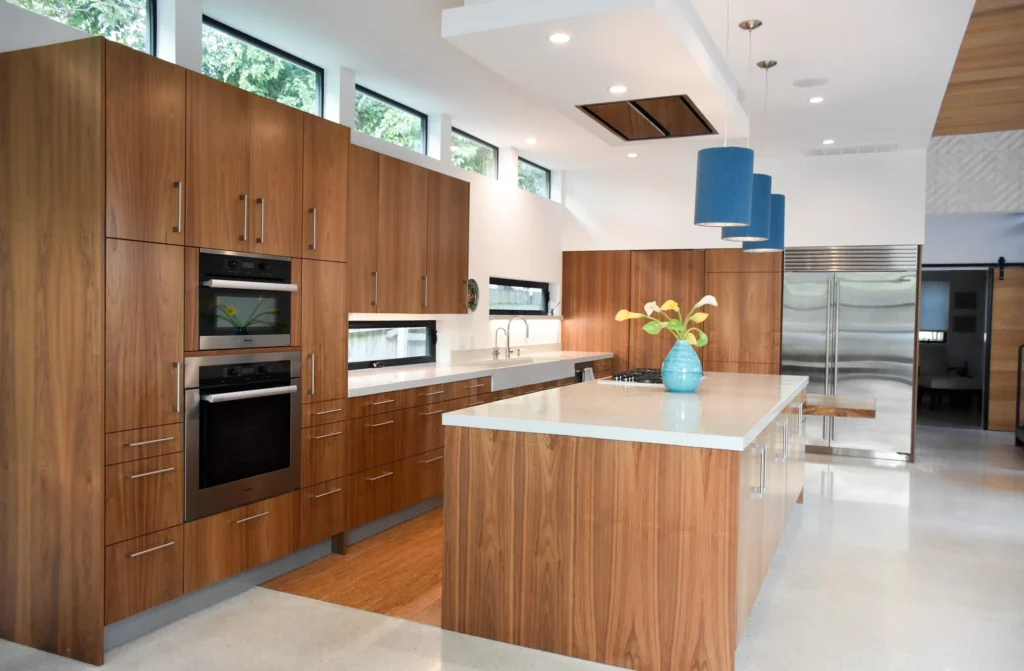
Hardwood is commonly used for cabinet doors, face frames, and decorative trim because it provides excellent durability and a natural appearance. Popular hardwood species include maple, oak, birch, cherry, and hickory. Each wood type has its own grain pattern and color, allowing homeowners to match different interior styles. Hardwood accepts stains and protective coatings very well, making it suitable for long-term use. Although solid wood generally costs more than engineered materials, its strength and timeless look continue to make it a preferred option.
Surface Finishes and Protective Layers
Cabinet surfaces receive protective finishes that improve appearance and extend service life. Wood veneers create the look of solid wood while keeping costs manageable. Laminate coatings resist scratches, stains, and everyday wear, making them suitable for busy kitchens. Thermofoil finishes use heat to bond vinyl layers over MDF, producing smooth and easy-to-clean surfaces. Paints, stains, and clear protective coatings also help prevent moisture damage while giving homeowners many design choices. Quality finishes contribute greatly to both cabinet durability and overall visual appeal.
How to Choose the Right Cabinet Material
Selecting cabinet materials becomes easier by following a simple evaluation process.
- Identify your available budget before comparing options.
- Consider the humidity and moisture levels in your kitchen.
- Choose materials based on expected daily use.
- Compare finish options that match your interior style.
- Review warranty information and manufacturer reputation.
- Check shelf strength and cabinet box construction.
- Balance appearance, durability, and maintenance requirements before purchasing.
Careful planning helps homeowners select cabinets that remain attractive and functional for many years.
Common Quality Standards in RTA Cabinet Manufacturing
Reliable manufacturers follow strict quality control procedures throughout production. Precision cutting equipment creates accurate panels that fit together correctly during assembly. Strong adhesives, durable hardware, and reinforced joints contribute to cabinet stability. Many companies also test finishes for scratch resistance, moisture protection, and color consistency. Soft-close hinges and full-extension drawer slides further improve daily performance. Reviewing construction details rather than focusing only on appearance allows buyers to compare products more effectively and choose cabinets that deliver dependable long-term value.
Conclusion
Material selection has a direct impact on cabinet performance, maintenance, and overall value. Plywood offers dependable structural strength, MDF provides smooth painted finishes, particleboard supports affordable construction, and hardwood adds lasting beauty. Protective surface finishes further improve durability and appearance. Understanding how these materials work together allows homeowners to compare products with greater confidence. Careful evaluation of quality, budget, and intended use helps ensure RTA cabinets provide reliable storage, attractive style, and years of dependable service in any kitchen.