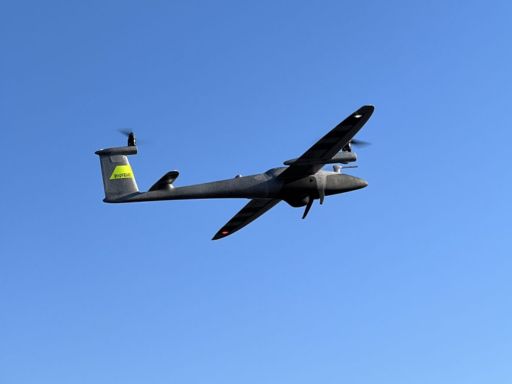
Security used to mean guards, cameras, maybe a patrol truck rolling around the lot every hour. That worked… sort of. But the gaps were obvious. Blind corners. Slow response times. Human fatigue. Now Security Drones are stepping into that space, and honestly, it makes sense. A small autonomous aircraft can check a perimeter in minutes instead of twenty. It doesn’t get bored. It doesn’t look at its phone.
And the technology isn’t sci-fi anymore. Modern drone systems tie directly into mapping and data services, real-time video feeds, and automated alert systems. Something moves where it shouldn’t? The drone launches, checks it out, sends video. Simple idea. Powerful result.
The Real Shift: Autonomous Security in the Air
What’s different today isn’t just drones flying around with cameras. We’ve had that for years. The real shift is autonomy. Smarter flight systems. Better obstacle avoidance. Machines that don’t crash every time a tree branch appears.
That’s where companies like Skydio Drones come into the conversation. Their systems are built around AI navigation. The drone sees the environment, calculates paths, and keeps flying even in messy places—industrial yards, warehouses, construction zones.
For security teams, that changes everything. Instead of a pilot manually flying patrol routes, the drone handles it. Scheduled flights. Triggered responses. Night patrols. Rain or dust or clutter… it still works. Well, most of the time.
Where Security Drones Are Actually Being Used
People hear “security drones” and imagine military bases or secret facilities. But the reality is more practical than dramatic.
Large warehouses use them for perimeter checks. Energy sites use them to monitor pipelines and equipment yards. Construction companies deploy drones for both security monitoring and mapping and data services at the same time. One flight, two jobs.
Universities are experimenting too. Same with logistics hubs. Anywhere there’s a large area and limited staff, Security Drones start looking like a pretty good deal. Not perfect. But useful.
Skydio Drones and the Rise of Smarter Patrol Systems
The reason Skydio Drones keep showing up in conversations is pretty simple: autonomy actually works. Their systems rely heavily on onboard processing, meaning the drone doesn’t depend on perfect GPS or constant manual control.
It can follow a guard. Circle a building. Track a moving subject. And it avoids obstacles in ways older drones simply couldn’t. Trees, power lines, cranes—stuff that normally ends flights quickly.
Security teams like that reliability. Because a drone crashing during a patrol kinda defeats the purpose. With modern UAS Hardware, stability and sensor quality have improved enough that these systems are becoming routine tools, not experimental gadgets.
Security Drones and Real-Time Response
Here’s where things get interesting. Traditional security systems record incidents. Drones respond to them.
Imagine a motion sensor triggering at the edge of a facility. Instead of waiting for a guard to drive over, a drone launches automatically. Within seconds it’s overhead, streaming live video back to the control room.
That immediate visibility changes decisions. Security staff can verify threats quickly. False alarms get dismissed faster. Actual problems—trespassing, theft attempts, equipment tampering—get handled before they escalate.
This is why Security Drones are gaining traction. Not because they look cool. Because they compress response time dramatically.
Data Collection Is Quietly Becoming the Bigger Value
Funny thing. Many companies adopt drones for security… and end up loving the data more.
Every patrol flight gathers visual information about the site. Infrastructure condition. Equipment layout. Vehicle activity patterns. Over time, that footage feeds into mapping and data services that help with planning, maintenance, and operational analysis.
So the drone isn’t just a guard in the sky. It becomes a flying sensor platform. Security teams get surveillance. Operations teams get insight. Leadership gets better visibility across the whole site.
That’s where advanced UAS Hardware and AI processing really start paying off.
Challenges That Still Haven’t Disappeared
Let’s not pretend the system is flawless. It isn’t.
Battery life is still a limiting factor. Regulations vary depending on location. Weather can ground flights, especially heavy rain or high winds. And yes, people still worry about privacy when drones start flying around properties.
There’s also the integration issue. A drone alone isn’t enough. It needs to connect with existing cameras, alarms, software platforms, and sometimes access control systems.
But despite those hurdles, adoption keeps growing. Especially with platforms like Skydio Drones, where autonomy reduces the need for dedicated pilots.
The Future of Security Drones
The direction seems pretty obvious. More automation. Smarter AI. Better sensors.
Security drones will eventually patrol on schedules, respond to alerts, analyze footage automatically, and send summaries before a human even asks for them. Some systems already hint at this future.
And as UAS Hardware continues improving—longer flight times, better thermal cameras, stronger onboard computing—the role of Security Drones will expand beyond patrol. Inspection, analytics, and operational monitoring will blend together.
In other words, the drone stops being just a flying camera. It becomes part of the infrastructure.
Conclusion
Security is changing. Slowly in some places, fast in others. But the shift toward aerial monitoring is real. Security Drones offer speed, coverage, and visibility that traditional systems simply can’t match.
Platforms like Skydio Drones are pushing that change forward with smarter autonomy and more reliable navigation. Add in powerful mapping and data services and evolving UAS Hardware, and the value goes well beyond surveillance.
It’s not about replacing human security teams. Not really. It’s about giving them better tools. Faster eyes. Wider coverage. And sometimes… a little breathing room when the perimeter gets big.