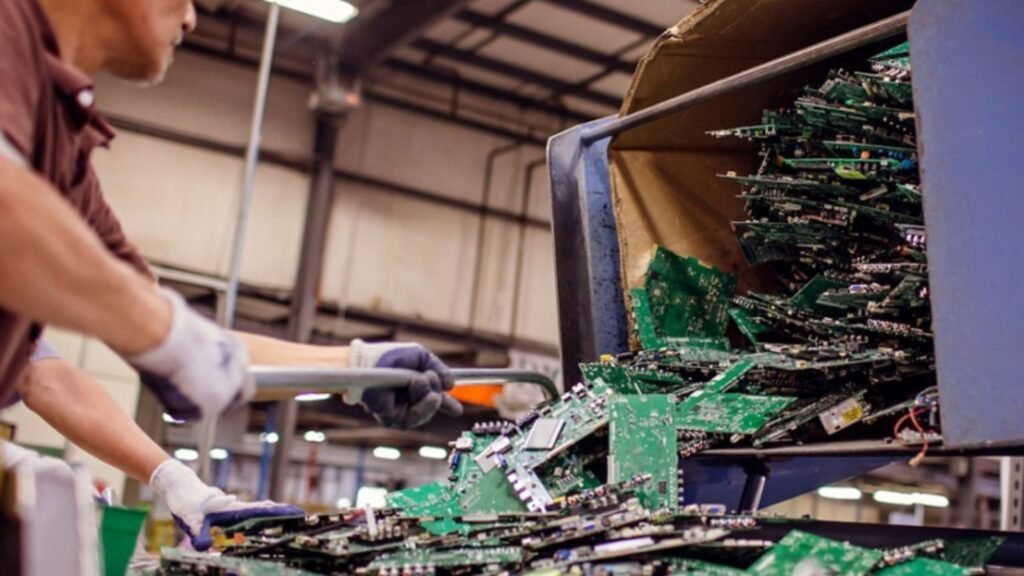
E-waste recycling helps businesses manage old electronics in a safer and more useful way. It can reduce landfill waste, recover valuable materials, protect sensitive information, and support environmental goals. A proper recycling process also gives businesses a clear way to handle outdated computers, servers, phones, printers, and other equipment. Instead of treating old devices as ordinary waste, businesses can send them through a process that includes collection, sorting, data removal, dismantling, and material recovery. This matters even more when large volumes of equipment are replaced during office upgrades, business closures, or technology refreshes.
What Are the Main Benefits of E-Waste Recycling?
The value goes beyond simply getting rid of old electronics. A well-planned process can help businesses manage waste, information, resources, and compliance at the same time.
- It Keeps Electronics Out of Landfills
Electronic devices contain many materials that should not simply end up in regular waste streams. Some components can contain substances that may create environmental concerns when handled incorrectly.
Proper recycling sends old equipment to a controlled process. Items are sorted, dismantled, and processed so useful materials can be recovered instead of being lost in landfill waste.
For a business replacing hundreds of computers, this can make a major difference in the amount of electronic waste it sends for disposal.
- It Recovers Valuable Materials
Old electronics are not made only of plastic and glass. They can contain useful metals and other materials.
During professional recycling, materials such as copper, gold, silver, palladium, steel, plastics, and glass can be separated and sent for further processing.
This gives old equipment another purpose. It also reduces the need to rely only on newly extracted raw materials.
- It Helps Protect Sensitive Business Information
Old devices can hold more information than many businesses realize. Computers, servers, phones, storage drives, and other equipment may contain customer details, employee records, financial data, passwords, or internal files.
Simply deleting a file does not always provide enough protection. Storage media may need secure handling before the equipment enters the recycling process.
This is where professional data destruction services can become important. Physical destruction or other approved methods can help prevent sensitive information from remaining accessible after equipment leaves a business.
- It Supports Better Business Waste Management
Managing electronic waste internally can become difficult when equipment piles up in storage rooms, offices, or warehouses.
A structured recycling program provides a clearer path from collection to final processing. Businesses can arrange collection, transportation, sorting, destruction, and material recovery through an organized system.
This can be useful during office moves, technology upgrades, mergers, closures, or large equipment replacement projects.
- It Supports Environmental Goals
Many businesses now track their environmental performance. Responsible electronics disposal can support those efforts.
Recycling helps recover resources and reduces the amount of electronic material sent to landfills. It also supports the wider idea of a circular economy, where materials are recovered and used again rather than treated as waste after one use.
For companies with sustainability targets, responsible electronics management can become one practical part of a broader environmental plan.
- It Provides Better Records and Accountability
Businesses often need to know what happened to equipment after it left their facility. This becomes especially important when devices contain confidential information.
A professional recycling provider can offer documentation related to collection, destruction, and recycling. Certificates of Destruction can provide written evidence that specified products or storage devices went through the required destruction process.
This creates a clearer record for internal teams and can make it easier to track retired equipment.
- It Gives Businesses Access to Specialized Expertise
Electronics recycling is not simply a matter of putting devices into separate bins. Different products contain different materials and may require different handling.
Re Source Recycling has more than 25 years of experience working with commercial, industrial, institutional, and government organizations across Canada. Its electronic recycling process covers collection, transportation, sorting, inventory, secure data destruction, dismantling, and material recovery.
The company also provides solutions for computers, servers, mobile devices, televisions, printers, networking equipment, and other electronics. Its service approach can help businesses manage large or complex volumes without treating every device as ordinary waste.
What Should a Business Do Before Recycling Electronics?
Before sending equipment away, businesses should identify what they have and what information the devices may contain. Storage devices should receive appropriate data handling before they move into the recycling stream.
It is also useful to keep basic inventory records. These can include equipment types, quantities, serial numbers, and the date items were removed from service.
Most importantly, businesses should use a recycling process that provides clear documentation and responsible downstream handling.
Conclusion
E-waste recycling can help businesses do more than clear unwanted equipment from their facilities. It can reduce landfill waste, recover useful materials, support data security, improve recordkeeping, and strengthen environmental practices.
With secure processing and responsible material recovery, old electronics can become a managed resource instead of an unmanaged waste problem. Re Source Recycling provides businesses across Canada with structured electronics recycling, secure data destruction, product destruction, collection, transportation, and material recovery solutions.