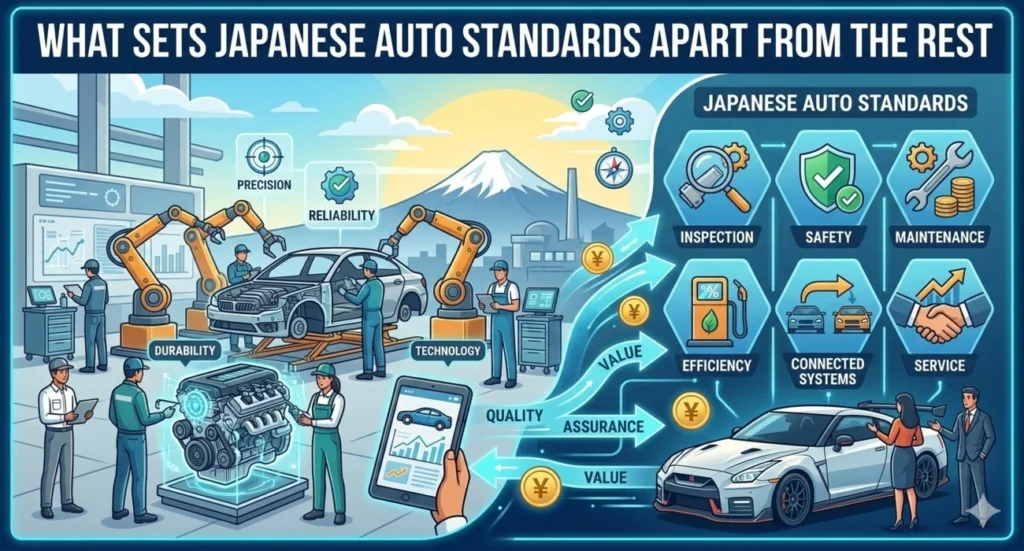
Japanese cars have earned a global reputation for being reliable, efficient, and technologically advanced. From the bustling streets of Tokyo to the expansive highways of the United Arab Emirates, these vehicles are a common sight. This ubiquity is not accidental; it is the result of rigorous engineering and strict quality control.
The automotive industry in Japan operates under a unique philosophy that prioritizes perfection and longevity. Japanese automotive standards are often considered a benchmark for manufacturers worldwide. This commitment to excellence ensures that every vehicle leaving the assembly line meets high expectations.
For car buyers in Dubai and Sharjah, understanding these standards provides valuable insight into vehicle value. It explains why Japanese brands consistently top reliability charts and hold their resale value. Let’s explore the specific elements that set these vehicles apart from the competition.
Understanding Japanese Automotive Standards
The foundation of Japan’s automotive success lies in its holistic approach to manufacturing. It is not just about meeting minimum requirements but exceeding them through continuous improvement. This philosophy, known as “Kaizen,” drives every aspect of production.
Japanese standards encompass everything from material selection to final safety checks. They are designed to ensure that vehicles perform consistently in diverse environments. This reliability is a key factor for drivers in the harsh climate of the UAE.
International compliance is also a significant part of these standards. Japanese cars are built to meet or surpass regulations in major markets like Europe and North America. This global readiness ensures that safety and environmental targets are always met.
Reliability and Durability in Japanese Cars
Reliability is perhaps the most defining characteristic of Japanese automobiles. Brands like Toyota, Honda, and Nissan have built their legacies on cars that simply keep running. This durability reduces the frequency of repairs and lowers the total cost of ownership.
In the UAE, where heat and dust can strain mechanical components, this resilience is crucial. Japanese engines are designed to operate efficiently under stress, minimizing the risk of overheating. This makes them ideal for daily commuting and long-distance travel.
The focus on durability extends to the interior and electronics as well. Switches, buttons, and upholstery are tested to withstand years of use without failure. This attention to detail ensures the car feels solid even after high mileage.
Precision Engineering and Manufacturing Techniques
Precision is at the heart of Japanese manufacturing. Advanced robotics and automated systems work alongside skilled technicians to assemble vehicles with incredible accuracy. This minimizes human error and ensures consistency across thousands of units.
Quality control is integrated into every step of the process. If a defect is detected, the production line stops until the issue is resolved. This “zero-defect” mentality prevents substandard vehicles from reaching the consumer.
Component testing is equally rigorous. Parts are subjected to extreme conditions to verify their performance. This ensures that brakes, suspension, and drivetrains can handle real-world challenges without compromise.
Safety Standards That Make Japanese Cars Stand Out
Safety is a non-negotiable priority in the Japanese auto industry. Regulations in Japan are among the strictest in the world, pushing manufacturers to innovate constantly. This results in vehicles that offer superior protection for occupants and pedestrians.
Crash testing protocols in Japan are comprehensive, covering various impact scenarios. These tests influence vehicle design, leading to stronger chassis structures and better energy absorption. For families in the UAE, this safety focus provides peace of mind.
Beyond structural safety, Japanese cars are often early adopters of electronic safety aids. These technologies work to prevent accidents before they happen. They are standard features on many models, democratizing safety for all drivers.
Crashworthiness and Passive Safety Features
Japanese engineers design vehicles to sacrifice themselves to save the passengers. Crumple zones are carefully calculated to absorb impact energy, directing it away from the cabin. This structural integrity is a key component of crashworthiness.
Airbag systems are advanced and strategically placed. They work in tandem with seatbelt pretensioners to secure occupants during a collision. These passive safety features are the final line of defense in an accident.
The chassis itself is built using high-strength steel. This provides a rigid safety cell that resists deformation. It ensures that doors can still open after a crash, facilitating rescue and exit.
Active Safety and Driver Assistance Technologies
Active safety systems are designed to help drivers avoid collisions entirely. Japanese manufacturers have pioneered many of these technologies, such as autonomous emergency braking. This system detects obstacles and applies brakes if the driver fails to react.
Lane-keeping assist and blind-spot monitoring are also common. These features reduce the risk of accidents caused by distraction or fatigue. In the busy traffic of Dubai and Sharjah, these aids are invaluable.
Electronic stability control is another critical feature. It helps maintain vehicle control during sudden maneuvers or on slippery surfaces. This technology significantly reduces the risk of skidding and rollovers.
Components and Materials: Focus on Quality
A car is only as good as the sum of its parts. Japanese standards dictate that every component, no matter how small, must meet strict quality criteria. This ensures that the entire vehicle functions harmoniously and reliably.
Suppliers are held to the same high standards as the manufacturers themselves. This supply chain integrity guarantees that replacement parts maintain the vehicle’s original performance. It is a commitment to quality that extends throughout the vehicle’s lifespan.
Engine and Transmission Reliability
The engine and transmission are the heart of any vehicle. Japanese powertrains are renowned for their smooth operation and longevity. Precision machining reduces internal friction, improving efficiency and reducing wear.
Transmissions are designed to shift smoothly and handle engine power without strain. Whether it is a traditional automatic or a modern CVT, reliability is the primary goal. This robustness ensures the car remains drivable for years without major drivetrain issues.
Regular maintenance is straightforward, thanks to logical engineering layouts. This reduces labor costs and encourages owners to keep their vehicles in top condition.
Tyres, Brakes, and Other Critical Components
Critical safety components like brakes and tyres are subject to intense scrutiny. Braking systems must provide consistent stopping power without fading. High-quality pads and rotors are standard, ensuring safety in emergency situations.
Tyres are the only contact point between the car and the road. Japanese manufacturers often partner with leading tyre brands to ensure optimal performance. For instance, yokohama tyres are frequently chosen as original equipment due to their exceptional grip and durability, which aligns perfectly with Japanese quality standards.
Using premium tyres enhances handling and fuel efficiency. It ensures that the vehicle’s safety systems can operate effectively. Maintaining these components is essential for preserving the driving experience intended by the engineers.
Japanese Cars in the UAE Context
The UAE market has a strong affinity for Japanese vehicles. Their reputation for reliability makes them a top choice for both residents and locals. They are well-suited to the unique driving conditions of the region.
Import regulations in the UAE ensure that vehicles meet GCC specifications. Japanese manufacturers produce specific models that are optimized for hot climates. This includes upgraded cooling systems and air conditioning units.
The resale value of Japanese cars in the UAE is exceptionally high. Brands like Toyota and Nissan hold their value better than many European counterparts. This makes them a smart financial investment for car buyers.
Why Japanese Cars Remain Popular in UAE
The popularity of Japanese cars is driven by trust. Drivers know that these vehicles will not let them down in the middle of a desert summer. The air conditioning is powerful enough to cool the cabin quickly, a vital feature in the UAE.
Parts availability is another significant factor. With so many Japanese cars on the road, spare parts are easy to find and affordable. This network of support makes ownership hassle-free.
Mechanics across Dubai and Sharjah are well-versed in servicing these vehicles. This accessibility ensures that maintenance is never a logistical challenge. It reinforces the practicality of owning a Japanese car.
Maintenance and Cost Considerations
Cost efficiency is a major draw for Japanese car owners. The combination of fuel efficiency and low maintenance costs keeps running expenses down. This is particularly important for daily commuters who cover long distances.
Preventive maintenance is straightforward and cost-effective. Following the manufacturer’s schedule prevents major failures. This proactive approach aligns with the Japanese automotive standards of longevity and care.
Compared to luxury European brands, the cost of parts and labor is significantly lower. This affordability allows owners to maintain their vehicles properly without financial strain. It is a pragmatic choice for budget-conscious drivers.
Conclusion
The success of the Japanese automotive industry is built on a foundation of unwavering standards. By prioritizing reliability, safety, and precision, they have created vehicles that earn the trust of drivers worldwide. Japanese automotive standards are a promise of quality that delivers value over time.
For car owners in the UAE, these vehicles offer a perfect blend of durability and practicality. They handle the heat, the traffic, and the distances with ease. Choosing a Japanese car is an investment in peace of mind.
Whether you are buying new or used, the engineering excellence remains consistent. It ensures that your vehicle is safe, efficient, and reliable for every journey. Embrace the standard that has defined modern motoring.
FAQ Section
Are Japanese cars more reliable than others?
Yes, they are known for low maintenance and high durability.
Do Japanese safety standards exceed global norms?
Yes, they often surpass minimum international safety requirements.
Are Japanese cars suitable for UAE roads?
Yes, they perform well in desert heat and urban traffic conditions.
Does component quality affect long-term costs?
Absolutely, premium materials reduce maintenance expenses.
Are tyres important for Japanese car performance?
Yes, tyres like yokohama tyres ensure grip, safety, and efficiency.