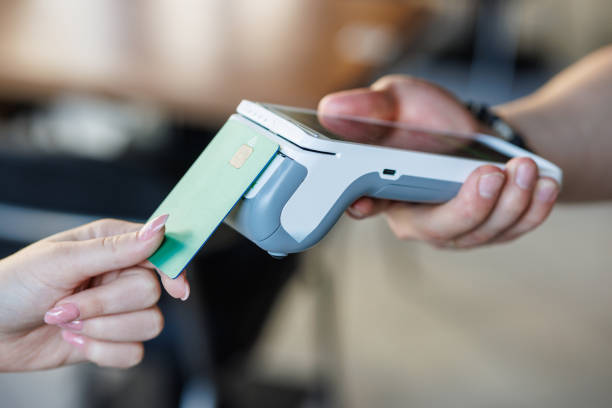
Customer paying with credit card using POS machine indoors, closeup, Customer Uses Debit Card to Pay Through Bank Terminal
Picture this: You’re at a bustling conference, and someone hands you a sleek business card. You tap it against your phone, and instantly—without typing a single letter—their contact information, portfolio, social media profiles, and website populate on your screen. No more lost cards in jacket pockets or outdated information. Welcome to the world of NFC business cards.
While traditional paper cards have served professionals for centuries, Near Field Communication (NFC) technology is revolutionizing how we network in the digital age. These smart cards use electromagnetic fields to transfer data between devices with a simple tap, eliminating the friction of manual contact entry. But here’s the interesting part: not all industries benefit equally from this technology. Some sectors are experiencing dramatic transformations in how they connect with clients, while others are discovering unexpected advantages that go far beyond simple contact sharing.
If you’re wondering whether NFC business cards make sense for your industry, you’re in the right place. Let’s explore which sectors are leading the charge and why this technology is becoming indispensable for forward-thinking professionals.
Real Estate Agents and Property Professionals
Real estate professionals live and die by their network. Every open house, property showing, and chance encounter represents a potential client worth hundreds of thousands in commission. Traditional business cards often get tossed aside, but NFC cards create an entirely different experience.
When a real estate agent hands over an NFC card at an open house, potential buyers can instantly access virtual property tours, mortgage calculators, recently sold listings, and market analysis reports. The card becomes a gateway to the agent’s entire digital ecosystem. Keller Williams and RE/MAX agents who’ve adopted this technology report significantly higher follow-up rates because clients can immediately explore properties on their phones while excitement is still fresh.
Beyond convenience, NFC cards solve a critical pain point in real estate: keeping information current. When an agent’s phone number or brokerage changes, traditional cards become expensive paperweights. With NFC technology, the digital profile updates automatically across all previously shared cards. This means no more apologetic texts about new contact details.
Technology and Software Companies
Tech companies adopting NFC business cards isn’t just logical—it’s almost expected. These organizations understand that first impressions matter, and showing up to a pitch meeting with outdated paper cards sends the wrong message about innovation.
Software developers, app designers, and IT consultants use NFC cards to showcase their work instantly. A mobile app developer can link their card directly to their portfolio in the App Store. A UX designer can display their Behance or Dribbble profile with interactive case studies. Cloud computing specialists can route contacts to white papers, demo videos, or free trial sign-ups.
Companies like Microsoft, IBM, and countless startups have embraced this technology for their sales and business development teams. The environmental angle resonates particularly well in tech circles, where sustainability initiatives are increasingly important. Eliminating thousands of printed cards annually aligns with corporate responsibility goals while providing measurable ROI through better lead tracking and conversion analytics.
Healthcare and Medical Practitioners
Doctors, dentists, therapists, and other healthcare providers face unique networking challenges. Patient privacy regulations like HIPAA mean they can’t casually collect information on paper that might be lost or mishandled. NFC cards offer a more secure, professional alternative.
A cosmetic dentist can program their card to link to before-and-after galleries, patient testimonials, and office tour videos. Mental health counselors can direct potential clients to intake forms, insurance information, and online scheduling systems. Pharmaceutical sales representatives visiting medical offices can share detailed product information, clinical trial data, and continuing education resources—all accessible with a single tap.
Medical conferences are particularly well-suited for NFC technology. When hundreds of professionals gather, traditional card exchanges become overwhelming. NFC cards streamline connections and can be programmed to share different information based on context—one profile for potential patients, another for professional collaborators or research partners.
Creative Professionals and Artists
Photographers, graphic designers, videographers, and artists have perhaps the most compelling use case for NFC business cards. Their work is inherently visual, and traditional paper cards simply can’t do it justice.
A wedding photographer can link their NFC card to a stunning portfolio gallery that updates seasonally with their latest work. When couples are deciding between vendors, being able to immediately swipe through recent weddings on their phone creates emotional resonance that a paper card never could. Graphic designers can showcase motion graphics, branding projects, and client testimonials in interactive formats.
Musicians and performing artists use NFC cards to share Spotify profiles, YouTube channels, upcoming show schedules, and ticket purchasing links. Street artists and muralists can direct people to Instagram feeds, NFT marketplaces, or commission inquiry forms. The immediacy transforms a casual encounter into an engaged follower or potential client.
Freelance creative professionals particularly appreciate the cost-effectiveness. Instead of printing multiple versions of cards for different services—photography, videography, editing—one programmable NFC card can present different portfolios based on what the situation calls for.
Sales and Marketing Professionals
Sales representatives and marketing consultants are professional networkers. Their income depends directly on the quality and quantity of connections they make, which makes NFC cards an invaluable tool in their arsenal.
These cards enable sales professionals to track exactly when prospects view their information, which links they click, and how engaged they are. This data transforms a simple business card exchange into actionable intelligence. Marketing agencies use analytics from their team’s NFC cards to refine messaging, identify high-performing content, and understand which touchpoints drive conversions.
Trade shows and industry conferences see the highest adoption rates. When a sales professional attends an event with hundreds of booths, collecting and organizing contacts becomes nightmarish with traditional cards. NFC cards sync directly to CRM systems like Salesforce, HubSpot, or Zoho, automating data entry and triggering follow-up sequences.
The ability to update campaigns in real-time is revolutionary. If a company launches a new promotion, every distributed NFC card can instantly reflect the updated offer without reprinting a single card.
Hospitality and Event Management
Hotels, restaurants, event planners, and catering companies thrive on creating memorable experiences. NFC business cards extend that philosophy to every client interaction.
Event coordinators can program cards to showcase venue virtual tours, capacity layouts, catering menus, and availability calendars. Restaurant owners can link to reservation systems, current menus with photos, chef profiles, and customer reviews. Wedding planners create cards that display complete packages, real wedding galleries organized by season or theme, and vendor recommendation networks.
The hospitality sector particularly values the sustainable aspect. High-end hotels and eco-conscious venues use NFC cards as part of broader green initiatives, appealing to environmentally aware clientele. When your business model centers on experiences and atmosphere, every detail matters—including how you share your contact information.
Networking at industry events like conference expos or wedding showcases becomes significantly more efficient. Couples planning weddings can tap cards from a dozen vendors in an afternoon and review everyone’s offerings later from the comfort of home.
Financial Services and Insurance
Bankers, financial advisors, accountants, and insurance agents deal with sensitive information and complex products that require significant explanation. NFC cards help them navigate these challenges elegantly.
A financial planner can link their card to educational resources, retirement calculators, market commentary videos, and secure client portal access. Insurance agents can provide instant policy quotes, coverage comparison tools, and claims procedures. Accountants can share tax planning guides, deduction checklists, and appointment scheduling for the upcoming tax season.
Trust is paramount in financial services, and professionalism matters. Showing up with cutting-edge technology positions advisors as forward-thinking and competent. The ability to share secure, encrypted links to sensitive documents also addresses privacy concerns that make traditional business cards problematic in this industry.
Financial conferences, networking mixers, and community events become more productive when advisors can instantly share personalized resources rather than generic contact information. The follow-up rate improves dramatically when prospects have immediate access to value-added content.
Fitness and Wellness Industry
Personal trainers, yoga instructors, nutritionists, and wellness coaches have embraced NFC cards as natural extensions of their tech-forward, health-conscious brands.
A personal trainer can program their card to share workout videos, success story transformations, class schedules, and new client special offers. Yoga studios can link to online class bookings, instructor bios, meditation app recommendations, and wellness blog content. Nutritionists can provide meal planning templates, recipe collections, and grocery shopping guides.
The fitness industry’s demographic tends to be mobile-first, making NFC technology particularly effective. Gym members pulling out their phones to tap a card feels far more natural than fumbling for a pen to write down a website. Health coaches working with clients in person can share progress tracking apps, supplement recommendations, and motivational content instantly.
Wellness retreats and fitness expos are ideal environments for NFC cards. When attendees are sampling multiple classes and meeting various instructors, being able to tap and save information for later review eliminates the chaos of managing dozens of paper cards.
Construction and Contracting
Contractors, architects, interior designers, and construction companies might not seem like obvious candidates for digital business cards, but this industry benefits tremendously from the technology.
General contractors can link NFC cards to project portfolios with before-and-after photos, client testimonials, licensing and insurance information, and free estimate request forms. Architects can showcase 3D renderings, completed project galleries, and sustainability certifications. Interior designers can display room transformations, product sourcing capabilities, and design consultation booking calendars.
The construction industry suffers from a reputation problem—concerns about reliability, quality, and professionalism. Showing up with modern technology helps combat these stereotypes. Homeowners researching contractors can immediately access reviews, portfolio work, and credentials, building trust before the first conversation ends.
Project management becomes easier when subcontractors, suppliers, and clients can access updated project timelines, blueprints, and contact hierarchies through a tapped card. The ability to share different information with different stakeholders—homeowners versus permitting officials—adds valuable flexibility.
Education and Professional Training
Teachers, tutors, corporate trainers, and educational consultants use NFC business cards to streamline enrollment, demonstrate expertise, and share resources.
A language tutor can link their card to student testimonials, sample lesson videos, pricing packages, and scheduling systems. Corporate training consultants can share course catalogs, certification information, client case studies, and ROI calculators. Educational technology companies can provide product demos, integration guides, and free trial access.
Academic conferences and professional development events see high NFC card adoption. When educators attend workshops and seminars, they collect numerous contacts. NFC technology ensures those connections include immediate access to promised resources, recommended readings, and collaboration opportunities.
The ability to share syllabi, reading lists, assignment templates, and educational resources digitally aligns perfectly with the modern classroom’s direction. Educators demonstrating technological fluency attract more engaged students and clients.
E-commerce and Retail
Online retailers, dropshipping entrepreneurs, boutique owners, and e-commerce consultants leverage NFC cards to bridge the gap between physical and digital shopping experiences.
Boutique owners at pop-up markets can share cards that link directly to their online stores, current sales, new arrival notifications, and loyalty programs. E-commerce consultants can provide portfolio stores, revenue growth case studies, and service packages. Dropshipping entrepreneurs can showcase product catalogs and supplier partnerships.
Retail networking events, vendor markets, and trade shows become vastly more effective. A customer who loves a product at a craft fair can tap the vendor’s card and immediately bookmark the online shop for future purchases. The friction between discovery and purchase drops dramatically.
Social media integration works beautifully for retail. Cards can link to Instagram shops, TikTok storefronts, Facebook marketplaces, and Pinterest boards—meeting customers where they already spend time online.
Consulting and Professional Services
Management consultants, HR specialists, legal professionals, and business coaches rely heavily on networking, making NFC cards particularly valuable.
Consultants can program cards to showcase thought leadership content, published articles, speaking engagement videos, and methodology frameworks. HR specialists can share recruitment services, company culture assessments, and compliance checklists. Business coaches can provide free resource libraries, assessment tools, and discovery call booking links.
Professional credibility matters intensely in consulting. The ability to instantly share certifications, client testimonials, industry recognition, and case study results helps establish authority immediately. Legal professionals, while bound by advertising restrictions, can share practice area information, articles, and educational seminars within ethical guidelines.
Consulting conferences and mastermind groups see particularly high engagement with NFC technology. When professionals gather to exchange ideas, seamless information sharing enhances collaboration and follow-through on potential partnerships.
FAQ Section
What exactly is an NFC business card?
An NFC business card is a physical card embedded with a Near Field Communication chip that wirelessly transmits your contact information and digital content to smartphones when tapped against them. Unlike QR codes that require camera scanning, NFC works through proximity alone, creating a faster, more seamless experience. The cards can link to websites, social profiles, portfolios, or any digital content you choose.
Do NFC business cards work with all smartphones?
Most modern smartphones support NFC technology. All iPhones from iPhone 7 and newer work with NFC cards, as do the vast majority of Android devices manufactured after 2015. The technology works without requiring any special apps—users simply tap the card to the back of their phone and the content automatically appears. This near-universal compatibility makes NFC cards practical for professional networking.
How much do NFC business cards typically cost?
NFC business cards generally range from $2 to $15 per card, depending on design quality, materials, and order quantity. While this is more expensive than traditional paper cards that cost pennies each, the investment pays off through reusability and better engagement rates. One NFC card can last years and be reprogrammed unlimited times, whereas paper cards become outdated and require constant reprinting.
Can I update the information on my NFC business card after giving it to someone?
Yes, this is one of the biggest advantages of NFC cards. The card itself contains a link to your digital profile, which you control and can update anytime through your provider’s platform. When you change jobs, update your phone number, or refresh your portfolio, everyone who received your card automatically sees the updated information when they tap it again—no need to redistribute new cards.
Are NFC business cards environmentally friendly?
NFC business cards are significantly more sustainable than traditional paper cards. One reusable NFC card replaces hundreds or thousands of paper cards over its lifetime, reducing paper waste, printing chemicals, and shipping emissions. For professionals who previously printed 500 cards annually, switching to NFC eliminates substantial environmental impact while also saving money on repeated printing costs.
What information should I include on my NFC business card profile?
Your NFC profile should include essential contact information—name, title, company, phone, email—plus links to your website, LinkedIn profile, and any portfolios or social media relevant to your industry. Many professionals add calendar scheduling links, company videos, product catalogs, or downloadable resources. The key is providing value without overwhelming recipients—prioritize what’s most likely to convert interest into business relationships.
How do NFC business cards compare to QR code business cards?
While both are digital solutions, NFC cards offer superior user experience. NFC requires only a tap, while QR codes need camera access, proper lighting, and steady hands to scan. NFC feels more premium and professional, works faster, and has higher success rates. However, QR codes work with older devices and can be printed on existing cards, making them a budget-friendly alternative if NFC investment isn’t feasible yet.
Can I track who taps my NFC business card?
Many NFC card providers offer analytics showing when your card was tapped, which links were clicked, geographic locations, and devices used. This data helps you understand engagement levels and follow up strategically with hot prospects. However, privacy-conscious platforms may limit tracking to aggregate statistics rather than identifying specific individuals, balancing business intelligence with privacy concerns.