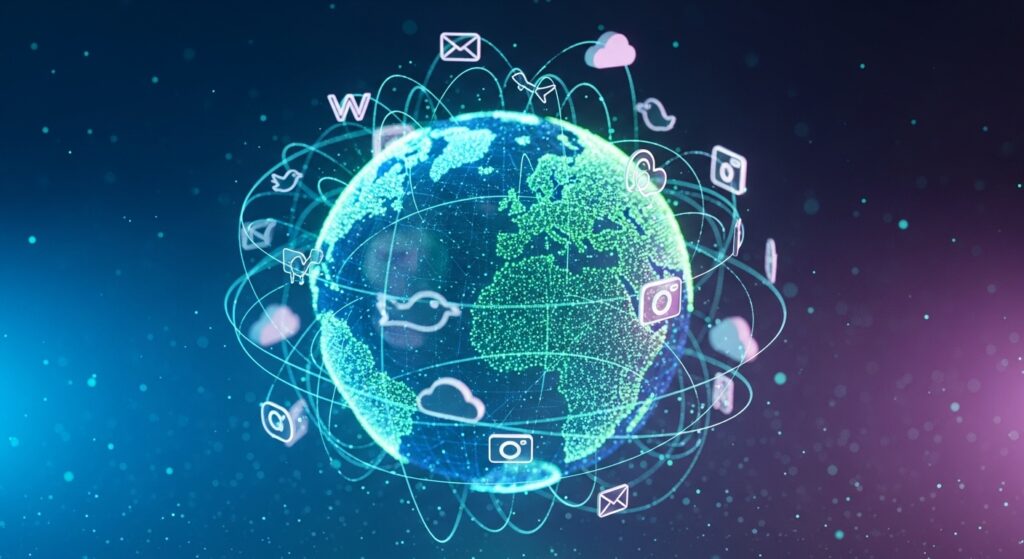
The World Wide Web (WWW) is one of the most transformative inventions of the modern era. It connects people, information, and services from every corner of the globe, creating a virtual space where knowledge, communication, and commerce thrive.
What is the World Wide Web?
The World Wide Web is a system of interlinked hypertext documents and multimedia content accessible over the internet. Unlike the internet, which is the infrastructure of networks, the Web is a service built on top of it that allows users to access websites, online services, and digital content through web browsers like Chrome, Firefox, and Edge.
Tim Berners-Lee, a British scientist, invented the World Wide Web in 1989 while working at CERN. His vision was to create a system that made sharing information easier across different computers and networks.
How Does the World Wide Web Work?
The Web operates using the Hypertext Transfer Protocol (HTTP) and Uniform Resource Locators (URLs), which help locate and transfer web pages from servers to users’ devices. Web pages are written in HTML (HyperText Markup Language) and may include text, images, videos, and interactive elements.
When a user enters a URL in a browser, the request is sent to a server where the website is hosted. The server responds by sending back the requested data, which the browser displays as a web page.
The Impact of the World Wide Web
The WWW has transformed nearly every aspect of human life:
- Communication: Email, social media, and instant messaging make it easy to stay connected across continents.
- Education: Online courses, tutorials, and digital libraries provide access to learning resources for millions worldwide.
- Business: E-commerce platforms allow businesses to reach global markets without physical stores.
- Entertainment: Streaming services, online gaming, and multimedia content provide endless entertainment.
- Research and Innovation: Scientists and researchers can collaborate and share information instantly.
The Evolution of the Web
The Web has evolved in phases:
- Web 1.0: The early web was mostly static pages with limited interaction.
- Web 2.0: Introduced dynamic content, social media, and interactive applications.
- Web 3.0: Focuses on decentralized platforms, AI integration, and a more personalized web experience.
Challenges of the World Wide Web
While the Web brings immense benefits, it also poses challenges such as cybercrime, privacy concerns, misinformation, and digital addiction. Users need to be cautious and practice safe online behavior.
Conclusion
The World Wide Web is more than just a technology—it is a platform that connects humanity. From education to commerce, communication to entertainment, the Web continues to shape the way we live, work, and interact. As it evolves, it will likely become even more integrated into daily life, creating new opportunities and challenges for future generations.