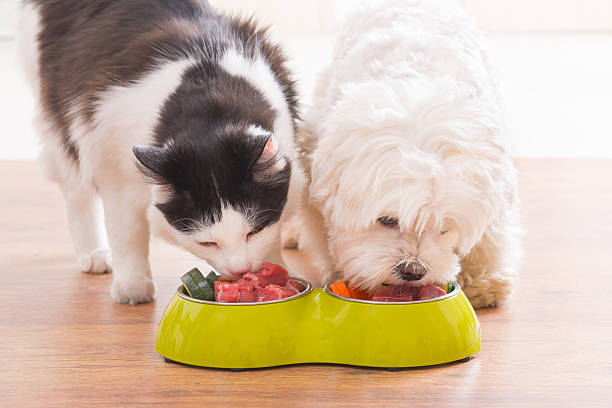
If you’ve ever stood in the pet food aisle staring at rows of brightly colored bags with words like “natural,” “premium,” or “grain-free,”—you’re not alone. Honestly, most of us have been there, scratching our heads while our pets wait at home, completely unaware of the nutritional dilemma we’re facing. The truth is, pet food labels can be confusing—intentionally so, sometimes. But once you know what to look for, you’ll start to see past the marketing fluff and focus on what really matters: your pet’s health. Even vets in Virginia Beach emphasize on being mindful when picking food for our pets.
Call us here for your pet ✆ : (757) 355-5694
The First Ingredient Rule (and Why It Matters)
The first ingredient listed on a pet food label tells you a lot. Ingredients are listed by weight, from most to least. So if the first item is chicken, beef, or salmon—that’s a good start. It means the formula is protein-focused.
But here’s the catch: fresh meat contains a lot of water. Once that’s cooked out, the actual protein content may not be as high as it looks. So if you see “chicken meal” or “fish meal” next, don’t panic—it’s actually a concentrated source of protein and can be very nutritious.
If, however, the first ingredients are things like corn meal, wheat gluten, or soy flour, that’s a red flag. It means the food is more filler than nutrition, and your pet might not be getting the high-quality protein they need to thrive.
Understanding “By-Products” (Not Always the Villain)
The term “by-product” often freaks people out—and understandably so. It sounds like leftovers or waste. But in truth, “by-products” can include organ meats like liver, heart, and kidney, which are actually rich in nutrients.
The problem isn’t with all by-products—it’s with low-quality ones. Some cheap brands use by-products that aren’t as digestible or nutritious. So instead of writing off a brand entirely, look for ones that specify “organ meats” or “named by-products” (like “chicken by-product meal,” not just “meat by-product”). Transparency matters.
The Buzzwords: What They Actually Mean
- “Natural” – This one’s tricky. It usually means the ingredients don’t contain synthetic additives, but it doesn’t automatically mean healthy. Sugar and salt are natural too!
- “Grain-free” – Popular, but not always necessary. Unless your vet has diagnosed a grain allergy, grains like rice or barley can be good sources of fiber and energy.
- “Human-grade” – Now this term does carry weight. It means the food is made with ingredients legally suitable for human consumption.
- “Organic” – Certified organic pet foods must follow USDA standards—no synthetic pesticides or GMOs. But organic doesn’t always equal balanced nutrition.
Basically, don’t let buzzwords be your only guide. Flip the bag over and read what’s actually in it.
Decoding the Guaranteed Analysis Section
This is where you’ll see numbers for protein, fat, fiber, and moisture. It looks scientific, but here’s a simple way to read it:
- Protein: Dogs need at least 18%; cats need around 26% or higher.
- Fat: Provides energy. Around 10–20% for dogs is normal, and 9–15% for cats.
- Fiber: Helps digestion. Around 2–5% is good, depending on your pet’s needs.
Keep in mind that if the food has higher moisture (like canned food), the percentages will look lower—but that doesn’t mean it’s less nutritious.
The Ingredient “Splitting” Trick
Ever notice how you might see corn listed several times, like corn, corn gluten meal, corn flour? That’s called ingredient splitting. It’s a sneaky way to make a formula appear more balanced than it is. By splitting one ingredient into several smaller parts, the manufacturer pushes it lower down the list, even if it makes up a large percentage of the food.
So if you spot that trick, it’s a clue that the formula might not be as meat-heavy as it claims.
Additives, Preservatives & Colors
Artificial colors and preservatives are a big no-no. They don’t add any nutritional value, and some can even trigger allergies or sensitivities. Veterinary hospital vets suggest to look for natural preservatives like vitamin E (tocopherols) or vitamin C (ascorbic acid) instead.
And honestly, your pet doesn’t care if their kibble is bright red or golden brown—so skip the rainbow-colored brands.
Don’t Forget About the Feeding Guidelines
You’d think the back of the bag would make this simple, but feeding charts can be misleading. They often overestimate how much your pet should eat, especially for indoor cats or low-activity dogs. Always treat those numbers as a starting point. Your pet’s ideal portion depends on their age, weight, activity level, and health condition.
When in doubt, talk to your vet—they’ll help you figure out the right amount.
Transitioning to a New Food (Without the Upset Belly)
If you decide to switch foods, do it gradually. Mix the new food with the old one over the course of a week—start with 25% new and 75% old, then slowly shift the balance. A sudden change can upset your pet’s stomach (and your carpets).
Final Thoughts
Pet food labels can feel like a secret code, but once you understand the basics, you’ll start to see patterns. Look for named proteins, avoid vague ingredients, and don’t fall for fancy buzzwords. Your goal isn’t to buy the most expensive bag—it’s to buy the right one for your pet’s specific needs.
If there’s one takeaway, it’s this: Read labels like you’re shopping for yourself. Because at the end of the day, our pets depend on us to make the best choices for them.
FAQs
- Is grain-free food better for my pet?
Not necessarily. Most pets don’t have grain allergies. Grain-free diets can be helpful for certain sensitivities, but for many pets, grains are a healthy source of energy and nutrients. - Should I feed my pet dry or wet food?
It depends on your pet’s needs. Wet food is great for hydration (especially for cats), while dry food helps with dental health and is often more convenient. Many owners use a mix of both. - What’s the best protein source for pets?
There’s no one-size-fits-all. Chicken, beef, fish, and lamb are all good—just make sure it’s a named source (like “chicken meal,” not “meat meal”). - How can I tell if my pet food is high quality?
Look for clear labeling, high-quality protein as the first ingredient, no artificial additives, and a statement from AAFCO (Association of American Feed Control Officials) confirming nutritional adequacy.