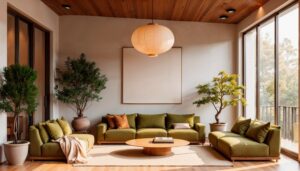
Living in a studio apartment often means dealing with noise traveling everywhere, cooking smells across the room, visible clutter, less privacy, and trouble focusing on work. But with a few innovative ideas, you can easily manage these problems.
For example, you can put a vertical shelf between your work and sleep areas, hang a curtain made from sound-absorbing fabric like acoustic fabric, or use multi-purpose furniture. Here’s how these ideas can help you create separate spaces in an open layout.
How Can Rugs Help Separate Areas In A Studio Apartment?
With a careful selection of rugs and flooring, you can easily partition your studio apartment, making it more comfortable, elegant, and tidy. The secret is to experiment with textures and colors.
Place a soft rug under your bed to create a cozy sleeping zone, and a big rug where large tables and sofas belong to indicate the living room. A rug with a contrasting texture and sound-absorbing material, such as acoustic fabric, at your work desk will help minimize nuisances, allowing you to stay focused.
How Does Flooring Material Define the Function of Each Area In A Studio Apartment?
Flooring is also helpful in structuring the studio layout. Living rooms often feature furniture such as coffee tables, television units, and bookshelves; in this case, wood flooring pairs nicely with the furniture, bringing warmth and charm to the space.
The kitchen is prone to spills and stains; therefore, tiles are the ideal choice because they are easy to clean. Vinyl is also a viable option for it because it is water-resistant. Since the bedroom is a place to relax, choose carpet tiles for their noise-curbing properties.
How Should You Arrange Furniture To Create Different Spaces?
Put your bed in the corner and pair it with a small wardrobe or storage unit to create a bedroom area. Place the sofa with its back towards the kitchen, or use a console table to separate the living and kitchen area. Consider bookshelves, open shelves, or tall cabinets to divide the bedroom and living room.
Work settings require privacy to focus, hence invest in a foldable screen to isolate them from other areas. You can further use the folding screen in the kitchen, which not only defines it but also prevents lingering cooking smells throughout the apartment.
Because studio apartments are often compact, it can be tricky to create different zones without feeling cramped. Consider multi-purpose furniture, such as a folding desk, which can serve as both a dining and work space as needed. Or an ottoman with custom coves that doubles as storage and a dividing element between the living room and the rest of the zones.
How Do Colors And Decor Help Divide A Studio Apartment?
Bright, soft throw pillows on the sofa identify the lounging room, while a specialized trapezoid dining chair cushions clearly mark the dining area. Use lightweight curtains for privacy in your bedroom, or acoustic fabric curtains to help reduce noise in both the bedroom and the workspace.
Use plants to create softer divisions, with large ones between the sofa and the bed pointing to sleeping and lounging spaces, and little ones for dining, work, or study areas. Painting your studio in the same color but with different shades naturally separates it, making it appear connected, yet each area has its own function. Consider brighter shades in the living area, while soft, muted ones are appropriate for the bedroom.
Living in an open-plan space means having a single area for all your needs: dining, sitting, cooking, and working. But with these strategic ideas, you can define various zones in a way that makes your apartment functional rather than cramped or disorganized. Remember, the key is to implement it correctly; if it seamlessly supports your daily routine, then you’ve done a great job.