Peripheral Nerve Repair: Restoring Connection, Function, and Quality of Life After Nerve Injury
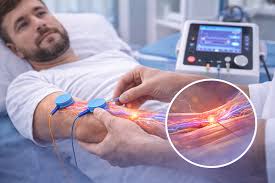
peripheral nerve repair.
Peripheral nerve repair is a rapidly advancing field of medicine focused on restoring function after damage to the nerves outside the brain and spinal cord. These peripheral nerves control movement, sensation, and autonomic functions such as sweating and blood flow. When they are injured, the consequences can range from mild numbness to complete loss of motor control in a limb.
Unlike many tissues in the body, nerves have a limited but real ability to regenerate. However, this process is slow, often incomplete, and highly dependent on the severity and type of injury. That is why peripheral nerve repair techniques both surgical and non-surgical play a crucial role in helping patients regain function and improve quality of life.
This article explores what peripheral nerve injury is, how repair works, current treatment options, emerging technologies, and what recovery typically looks like. You can check this also manual therapy in Dubai
Understanding Peripheral Nerve Injury
Peripheral nerves can be damaged in many ways, including trauma, compression, stretching, or disease. Common causes include car accidents, deep cuts, fractures, sports injuries, repetitive strain, or surgical complications. Conditions like diabetes can also cause chronic nerve damage (neuropathy), although this is usually treated differently than acute injuries.
Nerve injuries are generally classified into three main types:
- Neuropraxia: The mildest form, where the nerve is intact but temporarily unable to transmit signals. Recovery is often complete.
- Axonotmesis: The axon (nerve fiber) is damaged, but the surrounding connective tissue remains intact. Regeneration is possible but slow.
- Neurotmesis: The most severe form, where both the nerve and connective tissue are completely severed. Surgical intervention is usually required.
The severity of injury determines whether the nerve can heal on its own or requires surgical repair. You can check this also tendonitis treatment Dubai
Why Peripheral Nerve Repair Is Challenging
Peripheral nerves are complex biological structures composed of axons, myelin sheaths, and supporting cells called Schwann cells. After injury, the body initiates a repair process known as Wallerian degeneration, where the damaged portion of the nerve is broken down and cleared away.
However, regeneration is not guaranteed. Several factors make peripheral nerve repair difficult:
- Slow regrowth rate: Nerves typically regenerate at about 1–3 millimeters per day.
- Muscle atrophy risk: If reinnervation takes too long, muscles may permanently lose function.
- Scar tissue formation: This can block or misdirect regrowing nerve fibers.
- Misrouting of axons: Regenerating nerves may reconnect incorrectly, leading to poor functional recovery.
Because of these challenges, timely and appropriate treatment is essential.
Surgical Techniques for Peripheral Nerve Repair
When a nerve is completely severed or significantly damaged, surgery is often required. The goal is to reconnect nerve ends or bridge gaps to allow regrowth.
1. Direct Nerve Repair (End-to-End Neurorrhaphy)
If the nerve ends can be brought together without tension, surgeons directly suture them. This is the preferred method because it preserves natural alignment and provides the best outcomes.
2. Nerve Grafting
When a gap exists between nerve ends, a nerve graft is used. This involves taking a donor nerve from another part of the body (often a sensory nerve with minimal functional loss) and using it as a bridge.
While effective, grafting has limitations such as donor site morbidity and limited graft length.
3. Nerve Conduits
Synthetic or biological tubes can be used to guide nerve regeneration across small gaps. These conduits act as scaffolds that support axonal growth while preventing scar tissue invasion.
Materials used include collagen, polyglycolic acid, and other biocompatible polymers.
4. Nerve Transfers
In cases where the original nerve cannot be repaired, surgeons may reroute a nearby functioning nerve to restore critical movement. This technique is especially useful in brachial plexus injuries.
Non-Surgical and Supportive Treatments
Not all nerve injuries require surgery. Many patients benefit from conservative approaches, especially in mild to moderate cases.
Physical Therapy
Rehabilitation is essential in peripheral nerve repair. Physical therapy helps maintain muscle strength, prevent joint stiffness, and encourage functional recovery as nerves regenerate.
Electrical Stimulation
Some studies suggest that controlled electrical stimulation may enhance nerve regeneration by activating growth pathways and improving axonal sprouting.
Medications
Pain management is often necessary, especially in cases involving neuropathic pain. Medications may include anti-inflammatory drugs, anticonvulsants, or antidepressants that modulate nerve pain signals.
Nutritional Support
Certain vitamins, particularly B-complex vitamins (B1, B6, B12), are important for nerve health and may support recovery.
Emerging Technologies in Peripheral Nerve Repair
The field of nerve repair is evolving rapidly, with new technologies offering hope for improved outcomes.
Tissue Engineering and Biomaterials
Scientists are developing advanced nerve conduits infused with growth factors, stem cells, and bioactive molecules to accelerate regeneration.
Stem Cell Therapy
Stem cells may help repair nerve damage by differentiating into Schwann-like cells or releasing regenerative signals that promote axon growth.
Gene Therapy
Experimental approaches aim to modify gene expression to enhance nerve regeneration capacity or reduce inhibitory factors in the injury environment.
Neuroprosthetics and Bionic Interfaces
In severe cases where full recovery is not possible, neuroprosthetic devices can restore function by directly interfacing with remaining nerves or muscles.
Recovery Timeline and Expectations
Recovery after peripheral nerve repair is highly variable and depends on several factors:
- Location and severity of injury
- Patient age and overall health
- Time between injury and surgical repair
- Quality of rehabilitation
In general, patients may begin to see early signs of recovery within a few months, but full recovery can take 6 months to 2 years or longer. Sensory nerves tend to recover better than motor nerves.
It is also important to set realistic expectations. While modern techniques significantly improve outcomes, complete recovery is not always possible, especially in severe injuries.
Complications and Risks
Like any medical procedure, peripheral nerve repair carries risks. These may include:
- Infection at the surgical site
- Incomplete recovery of function
- Chronic pain or neuropathic pain
- Loss of sensation in donor nerve sites (in grafting procedures)
- Formation of neuromas (painful nerve growths)
Proper surgical technique and postoperative care significantly reduce these risks.
The Future of Peripheral Nerve Repair
The future of peripheral nerve repair is promising. Researchers are working toward solutions that not only repair nerves but also accelerate regeneration beyond natural limits. Combining surgical precision with biotechnology, regenerative medicine, and bioengineering may eventually allow for near-complete restoration of nerve function even after severe injuries.
Artificial intelligence is also being used to improve surgical planning and predict recovery outcomes, while wearable rehabilitation devices are making therapy more personalized and effective.
Conclusion
Peripheral nerve repair is a critical area of medicine that directly impacts mobility, sensation, and quality of life. While nerve injuries can be devastating, advances in surgical techniques, regenerative medicine, and rehabilitation have significantly improved outcomes.
Early diagnosis, timely intervention, and consistent rehabilitation remain the cornerstone of successful recovery. As science continues to evolve, the future holds even greater promise for restoring nerve function and helping patients return to normal life after injury.


.png)