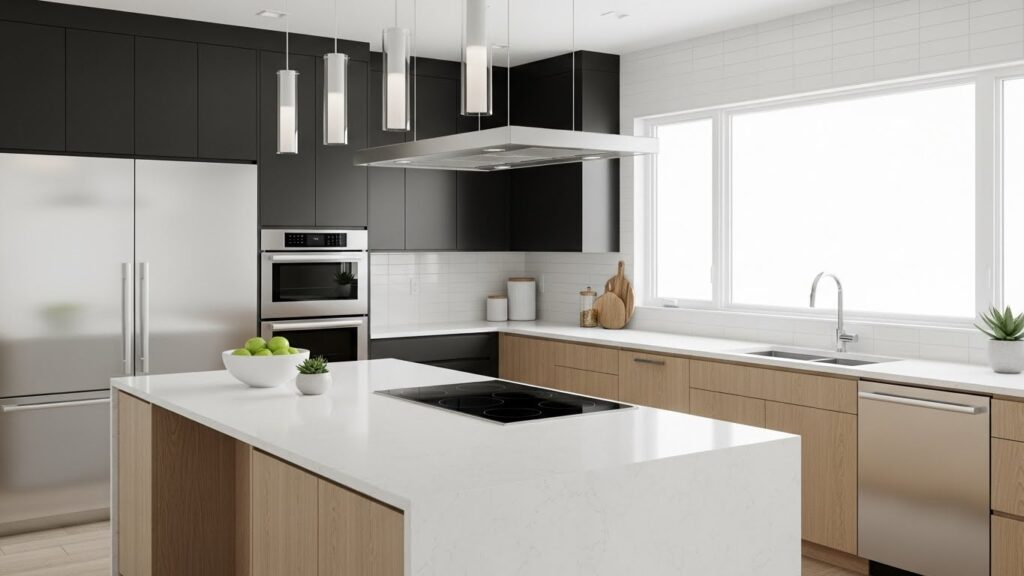
Kitchen door wrapping is a refurbishment method where installers apply a high-quality architectural vinyl over existing cabinet doors. Instead of removing or replacing units, the process refreshes surfaces using heat-activated adhesive films designed for interiors. These vinyls replicate finishes such as wood grain, matte colours, high-gloss lacquer, concrete, or stone.
Homeowners often choose this option when cabinet structures remain solid but appear outdated or worn. The wrapping process typically involves removing doors, cleaning and preparing surfaces, applying vinyl with heat, and refitting hardware. When done correctly, the result looks close to factory-finished doors.
Kitchen door wrapping has gained popularity across the UK due to rising renovation costs and increased demand for low-disruption upgrades. It allows homeowners to modernise kitchens without the noise, dust, and waste associated with full replacements.
Average Kitchen Door Wrapping Cost
Cost per Door
On average, kitchen door wrapping costs range between £60 and £120 per door in the UK. This price usually includes materials, surface preparation, vinyl application, and reinstallation. Premium finishes such as high-gloss or textured woodgrain tend to sit at the higher end of the range.
Flat slab doors typically cost less to wrap because installers can apply vinyl more efficiently. Shaker or routed doors require more labour, which increases the price.
Full Kitchen Cost
For a standard UK kitchen with 15 to 20 doors, the total kitchen door wrapping cost usually falls between £1,200 and £2,500. Larger kitchens or those with additional panels, plinths, and side units may exceed this range.
Compared to full cabinet replacement, which often costs £6,000 to £15,000, wrapping offers significant savings.
Key Factors That Affect Kitchen Door Wrapping Cost
Number of Doors and Panels
The most direct cost driver is the number of doors and visible panels. Installers often price per unit, so larger kitchens naturally cost more. End panels, corner posts, and integrated appliances can add to the final figure if they also require wrapping.
Vinyl Material Quality
Not all vinyl films are equal. Professional-grade architectural vinyls offer higher durability, heat resistance, and colour stability. These materials cost more than decorative vinyls but last significantly longer.
Premium vinyls often carry manufacturer warranties of 5 to 10 years and meet interior fire safety and hygiene standards, which adds credibility and long-term value.
Door Style and Condition
Flat MDF doors cost less to wrap than detailed shaker or raised-panel doors. Grooves, edges, and profiles require more time and precision, increasing labour costs.
Damaged or swollen doors may need repair or replacement before wrapping. Installers usually assess this during surveys, as wrapping over poor surfaces reduces lifespan and finish quality.
Labour and Location
Labour rates vary across the UK. London and the South East typically have higher installation costs than other regions. Experienced installers with specialist tools and certifications may charge more, but their work often delivers cleaner edges and longer-lasting results.
Kitchen Door Wrapping vs Replacing Cabinets
Replacing kitchen cabinets involves removing old units, adjusting plumbing or electrics, installing new carcasses, and fitting doors. This process increases labour time, waste disposal costs, and household disruption.
Kitchen door wrapping avoids structural changes entirely. Installers work with existing units, which reduces project timelines and keeps kitchens usable during refurbishment.
From a cost perspective, wrapping usually saves 60–70% compared to replacement. It also aligns with sustainability goals by reducing landfill waste and lowering material consumption.
In terms of appearance, professionally wrapped doors can closely match new kitchens, especially when combined with updated handles, hinges, and worktops.
Is Kitchen Door Wrapping Worth the Cost?
For homeowners with structurally sound cabinets, kitchen door wrapping offers strong value. The cost sits comfortably between cosmetic upgrades and full renovation, making it accessible for a wide range of budgets.
The lifespan of wrapped doors typically ranges from 7 to 10 years when installed correctly and maintained properly. This duration compares well with mid-range factory-finished cabinets.
Property investors and landlords also use wrapping to refresh kitchens quickly between tenancies. The improved appearance can increase rental appeal without heavy capital investment.
Wrapping may not suit kitchens with severe water damage, warped doors, or outdated layouts. In such cases, replacement offers better long-term value.
Real-World Example: Budget Kitchen Makeover
A three-bedroom semi-detached home in Manchester featured a 12-year-old kitchen with solid MDF cabinets but faded laminate doors. The homeowner considered replacement but opted for wrapping instead.
-
18 doors and 6 panels wrapped in matte charcoal vinyl
-
Total cost: £1,650
-
Project duration: 2 days
-
No appliance removal or plumbing changes
The updated kitchen achieved a modern look similar to newly installed units. The homeowner allocated saved budget toward upgraded lighting and new handles, enhancing the overall finish.
How to Reduce Kitchen Door Wrapping Costs
Homeowners can manage kitchen door wrapping cost with a few strategic choices:
-
Choose flat slab doors instead of routed styles
-
Select mid-range vinyl finishes rather than premium textures
-
Limit wrapping to doors and visible panels only
-
Combine projects with neighbours for potential installer discounts
-
Retain existing handles if they complement the new finish
Requesting detailed quotes and inspecting previous installer work helps avoid unexpected charges later.
Common Mistakes That Increase Wrapping Costs
Some decisions unintentionally raise project costs. Wrapping over damaged doors often leads to early failure, requiring rework or replacement. Choosing inexperienced installers may result in bubbling, lifting edges, or visible seams.
Low-quality vinyl films fade or peel faster, increasing long-term expenses. Skipping site surveys can also lead to inaccurate pricing once work begins.
Investing in professional assessment and certified materials usually reduces overall cost across the lifespan of the kitchen.
Frequently Asked Questions
How long does kitchen door wrapping last?
High-quality architectural vinyls typically last 7 to 10 years with proper care and professional installation.
Can wrapped kitchen doors handle heat and moisture?
Yes, premium interior vinyls are heat-resistant and moisture-tolerant when installed correctly, making them suitable for kitchens.
Is kitchen door wrapping cheaper than painting?
Wrapping often costs more upfront than painting but delivers better durability, consistency, and finish quality.
Can any kitchen door be wrapped?
Most MDF and laminate doors can be wrapped, but heavily damaged or solid wood doors may require assessment first.
Does wrapping damage existing cabinets?
No, professional wrapping preserves cabinet structures and can usually be removed without damage if needed.
How long does the installation take?
Most kitchens are completed within 1 to 3 days, depending on size and complexity.