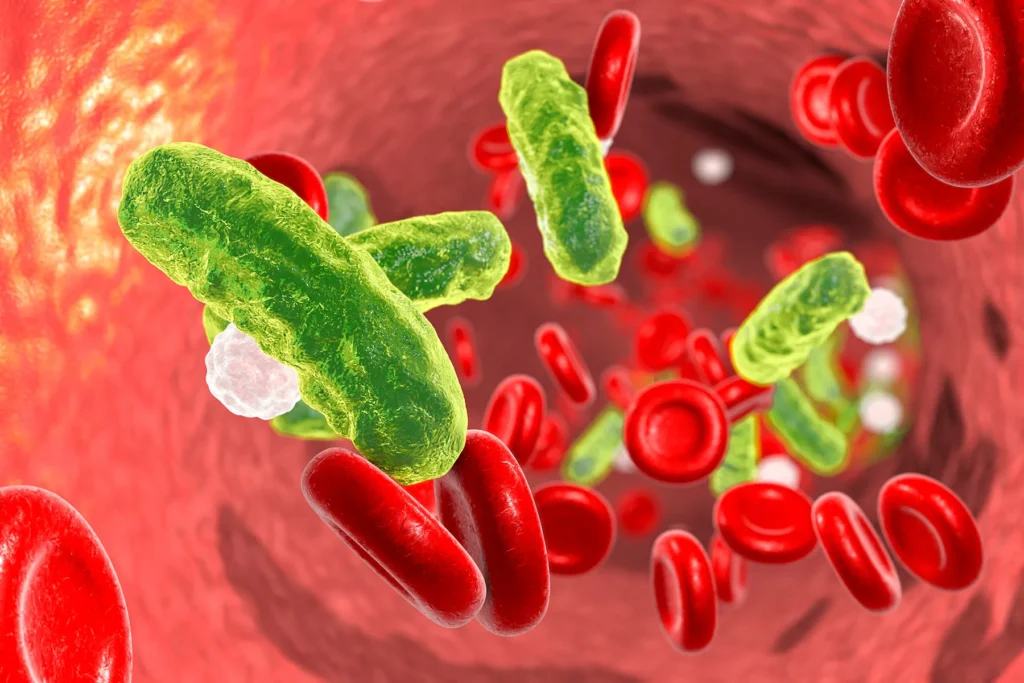
Bloodstream infections (BSIs), also known as septicemia when associated with systemic illness, are serious medical conditions caused by the presence of pathogenic microorganisms in the blood. These infections can rapidly progress to sepsis, septic shock, and multi-organ failure if not diagnosed and treated promptly. Accurate and timely diagnosis is therefore critical in reducing morbidity and mortality.
1. Clinical Assessment and Initial Suspicion
The diagnostic process begins with clinical suspicion. Bloodstream infections are often suspected in patients presenting with:
- Fever or hypothermia
- Chills and rigors
- Tachycardia
- Hypotension
- Altered mental status
- Elevated respiratory rate
In severe cases, clinicians assess for sepsis using criteria such as the Sequential Organ Failure Assessment (SOFA) score or quick SOFA (qSOFA). Patients at higher risk include:
- Immunocompromised individuals
- Patients with indwelling catheters
- Recent surgical patients
- Intensive care unit (ICU) patients
- Individuals with chronic illnesses such as diabetes or malignancy
Clinical evaluation alone cannot confirm a bloodstream infection, but it determines the urgency and directs laboratory testing.
2. Blood Cultures: The Gold Standard
What Are Blood Cultures?
Blood cultures remain the gold standard for diagnosing bloodstream infections. This laboratory test detects viable microorganisms circulating in the blood.
Procedure
- Two or more sets of blood cultures are collected from separate venipuncture sites.
- Each set includes aerobic and anaerobic bottles.
- Ideally collected before starting antibiotic therapy.
- Proper aseptic technique is critical to avoid contamination.
Laboratory Processing
Once collected, blood culture bottles are incubated in automated systems that detect microbial growth through carbon dioxide production or other metabolic indicators. If growth is detected:
- Gram staining is performed.
- Subculture onto agar plates identifies the organism.
- Biochemical or molecular tests confirm species.
- Antimicrobial susceptibility testing (AST) determines effective antibiotics.
Common causative organisms include:
- Staphylococcus aureus
- Escherichia coli
- Klebsiella pneumoniae
- Streptococcus pneumoniae
- Candida species
The identification of the pathogen allows clinicians to tailor antibiotic therapy precisely.
3. Molecular Diagnostic Techniques
While blood cultures are standard, they may take 24–72 hours for definitive results. To reduce diagnostic delays, molecular techniques are increasingly used.
Polymerase Chain Reaction (PCR)
PCR-based assays detect microbial DNA directly from blood samples. These tests:
- Provide rapid results (within hours)
- Detect resistant genes (e.g., mecA for MRSA)
- Identify pathogens even after antibiotic initiation
Multiplex Panels
Multiplex PCR panels can detect multiple bacterial, viral, and fungal pathogens simultaneously. These are particularly useful in critically ill patients where time-sensitive decision-making is essential.
Limitations
- Higher cost
- May not provide full antimicrobial susceptibility
- False positives if contamination occurs
Molecular diagnostics complement, but do not replace, traditional blood cultures.
4. Biomarkers and Laboratory Markers
In addition to identifying microorganisms, clinicians use laboratory markers to support the diagnosis and assess severity.
Complete Blood Count (CBC)
- Leukocytosis (elevated white blood cells)
- Leukopenia in severe infections
- Thrombocytopenia in advanced sepsis
C-Reactive Protein (CRP)
An acute-phase reactant that increases in inflammatory states, including infection.
Procalcitonin (PCT)
Procalcitonin is particularly useful in differentiating bacterial infections from viral causes. Elevated levels strongly suggest bacterial bloodstream infection and can guide antibiotic stewardship.
Lactate Levels
Elevated serum lactate indicates tissue hypoperfusion and is associated with septic shock.
5. Imaging Studies
Imaging is not used to directly diagnose bloodstream infections but helps identify the primary source.
Common imaging modalities include:
- Chest X-ray (for pneumonia)
- Abdominal ultrasound or CT scan (for intra-abdominal infection)
- Echocardiography (for infective endocarditis)
For example, transesophageal echocardiography is critical when infective endocarditis is suspected, particularly with persistent bacteremia caused by Staphylococcus aureus.
6. Source Identification
A key aspect of diagnosing bloodstream infections is identifying the origin. Sources may include:
- Urinary tract
- Respiratory tract
- Gastrointestinal tract
- Skin and soft tissue
- Intravascular devices
Cultures from suspected sites (urine, sputum, wound swabs, catheter tips) are often collected simultaneously with blood cultures.
Identifying the source ensures both appropriate antimicrobial therapy and source control, such as catheter removal or abscess drainage.
7. Antimicrobial Susceptibility Testing
Once a pathogen is identified, antimicrobial susceptibility testing determines which antibiotics will effectively treat the infection.
This step is critical due to rising antimicrobial resistance. Multidrug-resistant organisms (MDROs) such as MRSA, ESBL-producing Enterobacteriaceae, and carbapenem-resistant strains complicate management.
Empiric broad-spectrum antibiotics are typically started immediately after blood cultures are drawn. Once susceptibility data are available, therapy is de-escalated to targeted treatment.
For example, ceftriaxone is commonly used in the treatment of community-acquired bloodstream infections due to its broad-spectrum activity against many Gram-negative and some Gram-positive bacteria. Healthcare institutions often work closely with a reliable ceftriaxone injection supplier to ensure consistent availability of this essential third-generation cephalosporin, especially in high-burden settings where timely treatment significantly impacts patient outcomes.
8. Special Considerations
Pediatric Patients
In neonates and infants, symptoms may be subtle. Smaller blood volumes are collected, which can affect sensitivity.
Immunocompromised Patients
Patients undergoing chemotherapy or organ transplantation may present atypically. Fungal bloodstream infections are more common in these populations.
Hospital-Acquired vs. Community-Acquired
Hospital-acquired bloodstream infections often involve more resistant organisms and require broader empiric therapy.
9. Emerging Technologies
Recent advances aim to improve speed and accuracy:
- MALDI-TOF mass spectrometry for rapid organism identification
- Next-generation sequencing (NGS)
- Rapid phenotypic susceptibility platforms
These technologies reduce time-to-result and improve antimicrobial stewardship, though availability may be limited in resource-constrained settings.
10. Importance of Early Diagnosis
Early diagnosis of bloodstream infections significantly improves survival rates. Delays in appropriate antibiotic therapy are strongly associated with increased mortality.
Clinical protocols emphasize:
- Immediate blood culture collection
- Rapid empiric antibiotic initiation
- Close monitoring in high-risk patients
- Reassessment once laboratory results are available
Integrated diagnostic approaches combining clinical evaluation, laboratory data, and advanced molecular tools represent the current best practice.
Conclusion
Bloodstream infections are medical emergencies requiring rapid and precise diagnosis. The process involves careful clinical assessment, blood cultures as the gold standard, molecular diagnostic tools for rapid detection, laboratory biomarkers for severity assessment, imaging for source identification, and antimicrobial susceptibility testing for targeted therapy.
Advancements in diagnostic technologies continue to shorten the time between suspicion and definitive treatment, improving patient outcomes. At the same time, ensuring access to essential antibiotics through dependable pharmaceutical manufacturing and distribution networks, including a reliable ceftriaxone injection supplier remains a critical component of effective bloodstream infection management worldwide.
Accurate diagnosis, prompt treatment, and coordinated healthcare systems together form the foundation of successful management of bloodstream infections.