Global Pharmaceutical Packaging Market Size and Forecast 2025–2033
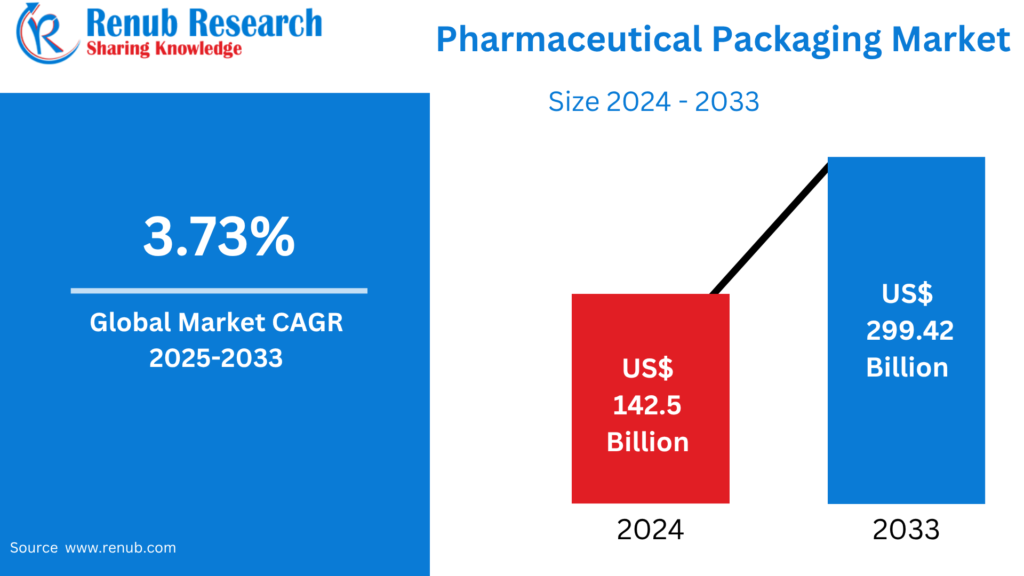
According to Renub Research Global Pharmaceutical Packaging Market is set to experience strong and sustained growth, driven by rising global drug demand, aging populations, increasing prevalence of chronic diseases, and continuous innovation in drug delivery and packaging technologies. The market was valued at US$ 142.5 billion in 2024 and is expected to reach US$ 299.42 billion by 2033, expanding at a compound annual growth rate (CAGR) of 8.60% from 2025 to 2033.
Key growth drivers include expanding access to healthcare in emerging markets, increased adoption of biologics and specialty drugs, stringent regulatory requirements for drug safety and traceability, and the growing use of sustainable and smart packaging solutions. Pharmaceutical packaging has become a critical component of the healthcare supply chain, directly influencing drug stability, patient compliance, and overall treatment outcomes.
Pharmaceutical Packaging Market Overview
Pharmaceutical packaging refers to the materials and systems used to enclose, protect, store, transport, and dispense pharmaceutical products. Common packaging formats include bottles, blister packs, vials, ampoules, pre-filled syringes, inhalers, and pouches. The primary objectives of pharmaceutical packaging are to maintain drug integrity, prevent contamination and counterfeiting, ensure accurate dosing, and provide essential product information to patients and healthcare professionals.
Modern pharmaceutical packaging must comply with strict regulatory standards related to safety, labeling, tamper evidence, and serialization. In addition to protection and compliance, packaging is increasingly designed to enhance functionality through features such as child-resistant closures, senior-friendly designs, smart tracking systems, and eco-friendly materials. As a result, pharmaceutical packaging plays a vital role in ensuring patient safety, regulatory adherence, and efficiency across global healthcare supply chains.
Request a free sample copy of the report:https://www.renub.com/request-sample-page.php?gturl=pharmaceutical-packaging-market-p.php
Global Pharmaceutical Packaging Industry Overview
The pharmaceutical packaging industry is evolving rapidly in response to changes in drug formulations, patient needs, and regulatory frameworks. The growing use of biologics, injectable therapies, and personalized medicine has increased demand for advanced packaging solutions that offer superior protection against temperature, moisture, oxygen, and light.
At the same time, pharmaceutical manufacturers are prioritizing sustainability by adopting recyclable, lightweight, and bio-based materials. Smart packaging technologies—such as RFID tags, QR codes, and track-and-trace systems—are gaining traction as tools to combat counterfeiting and improve supply chain transparency.
Emerging markets in Asia Pacific, Latin America, and the Middle East & Africa are contributing significantly to global growth due to rising healthcare expenditure, expanding pharmaceutical manufacturing, and increasing drug consumption. Meanwhile, developed markets continue to focus on innovation, compliance, and premium packaging solutions.
Growth Drivers for the Pharmaceutical Packaging Market
Increasing Global Drug Demand
Rising global consumption of pharmaceutical products is a major driver of market growth. Factors such as population growth, improved healthcare access, and increased awareness of preventive and chronic disease management are boosting demand for prescription and over-the-counter medicines.
As pharmaceutical production volumes increase, the need for reliable, high-performance packaging solutions also rises. Packaging innovations that improve shelf life, protect sensitive formulations, and enhance patient safety are essential to meet this growing demand. Advanced blister packs, vials, and barrier materials are increasingly used to ensure drug stability during storage and transportation.
Aging Population and Chronic Disease Burden
The global aging population is significantly influencing pharmaceutical packaging demand. Older adults typically require multiple medications for chronic conditions such as diabetes, cardiovascular diseases, arthritis, and neurological disorders. This increases the volume of drugs consumed and heightens the need for packaging solutions that support medication adherence.
Senior-friendly packaging features—such as easy-open designs, clear labeling, and unit-dose packaging—are gaining importance. At the same time, child-resistant and tamper-evident features remain critical to ensure safety. These evolving requirements are driving innovation in packaging design and materials.
Technological Innovations in Packaging
Technological advancements are transforming the pharmaceutical packaging market by improving safety, traceability, and sustainability. Smart packaging solutions incorporating RFID, sensors, and QR codes enable real-time tracking, authentication, and patient engagement. These technologies help reduce counterfeiting risks and improve supply chain visibility.
Innovations in drug delivery packaging—such as pre-filled syringes, auto-injectors, and inhalers—are enhancing dosing accuracy and patient convenience. Sustainability is another major focus, with manufacturers increasingly adopting recyclable materials, lightweight designs, and reduced plastic content to meet environmental goals.
Challenges in the Pharmaceutical Packaging Market
Strict Regulatory Compliance Requirements
Regulatory compliance is one of the most significant challenges in the pharmaceutical packaging market. Packaging must adhere to stringent regulations related to labeling, serialization, tamper evidence, child resistance, and material compatibility set by authorities such as the FDA and EMA.
Keeping pace with evolving regulations requires continuous investment in technology, quality control, and documentation. Non-compliance can result in product recalls, financial penalties, and reputational damage. For multinational pharmaceutical companies, maintaining consistent compliance across different regions adds further complexity.
Complexity of Biologics and Specialty Drugs
The growing use of biologics and specialty drugs presents additional challenges for packaging providers. These drugs are highly sensitive to environmental factors and often require cold chain storage and specialized packaging formats such as vials, syringes, and auto-injectors.
Ensuring sterility, stability, and ease of administration increases design complexity and production costs. Limited material options and strict regulatory requirements further constrain packaging innovation, making this segment particularly demanding.
United States Pharmaceutical Packaging Market
The United States pharmaceutical packaging market is experiencing steady growth driven by high pharmaceutical production, stringent regulatory standards, and strong demand for advanced packaging solutions. The market emphasizes child-resistant, tamper-evident, and smart packaging to ensure patient safety and regulatory compliance.
Investments in sustainable materials and digital packaging technologies are also shaping market trends. Expansion initiatives by packaging companies highlight the country’s strong growth potential and innovation-driven landscape.
Germany Pharmaceutical Packaging Market
Germany represents a key European market, characterized by a strong focus on sustainability, innovation, and regulatory compliance. Demand for eco-friendly and cost-efficient packaging solutions is driving investments in advanced materials and technologies.
The country’s emphasis on reducing environmental impact while maintaining product safety aligns with broader European trends toward sustainable pharmaceutical packaging and efficient supply chain solutions.
India Pharmaceutical Packaging Market
India’s pharmaceutical packaging market is growing rapidly due to increasing drug production, expanding exports, and the country’s role as a global pharmaceutical manufacturing hub. Demand for affordable, high-quality, and compliant packaging solutions is rising across domestic and international markets.
Investments and partnerships within the packaging sector are strengthening India’s capabilities in producing advanced packaging for medicines and vaccines, supporting long-term market growth.
Saudi Arabia Pharmaceutical Packaging Market
Saudi Arabia’s pharmaceutical packaging market is expanding alongside growing healthcare investments and regulatory focus on safety and sustainability. The adoption of innovative packaging solutions is improving drug stability, patient compliance, and supply chain efficiency.
Collaborations between pharmaceutical companies and regional distributors are also encouraging the use of environmentally responsible packaging practices, aligning with global sustainability trends.
Pharmaceutical Packaging Market Segmentation
By Material
- Plastics & Polymers
- Paper & Paperboard
- Glass
- Aluminum Foil
- Others
By Product
- Bottles
- Caps & Closures
- Pre-Filled Syringes
- Vials & Ampoules
- Jars & Canisters
- Blister Packs
- Pre-Filled Inhalers
- Cartridges
- Bags & Pouches
- Others
By Geography
- North America
- Europe
- Asia Pacific
- Latin America
- Middle East & Africa
Competitive Landscape and Key Players Analysis
The global pharmaceutical packaging market is highly competitive, with companies focusing on innovation, sustainability, regulatory compliance, and geographic expansion. Leading players invest heavily in R&D to develop advanced, smart, and eco-friendly packaging solutions.