As industries increasingly demand accuracy, efficiency, and sustainability, drone technology has evolved to deliver more than standardized aerial applications. Custom drone treatments represent the next level of precision, offering tailored aerial solutions designed around specific field conditions, crop requirements, and operational objectives. Rather than relying on one-size-fits-all approaches, custom drone treatments adapt technology, application methods, and data workflows to deliver targeted and measurable results.
Custom drone treatments are particularly valuable in agriculture, environmental management, and industrial operations where variability across land, assets, or conditions requires flexible and intelligent application strategies.
What Are Custom Drone Treatments?
Custom drone treatments refer to drone-based application services that are specifically designed to meet the unique needs of a given site, crop, or project. These treatments may involve spraying, seeding, nutrient application, or other targeted inputs, adjusted based on real-time data, field variability, and client objectives.
Unlike standard drone services, custom treatments are developed through careful planning and analysis, ensuring that every application aligns with precise operational goals.
Why Customization Matters in Drone Applications
No two fields, sites, or projects are identical. Variations in soil composition, crop health, topography, moisture levels, and environmental conditions all influence treatment effectiveness.
Customization allows drone treatments to:
Address site-specific challenges
Optimize input usage
Improve treatment effectiveness
Reduce waste and environmental impact
By tailoring applications to actual conditions, custom drone treatments deliver superior outcomes compared to uniform approaches.
How Custom Drone Treatments Are Developed
Custom drone treatments follow a structured, data-driven process.
Initial Assessment and Planning
The process begins with an evaluation of the site and project objectives. This may include reviewing crop history, soil data, terrain features, and environmental considerations.
Key planning elements include:
Identifying treatment goals
Selecting appropriate inputs
Determining application timing
Establishing coverage areas
Data Collection and Analysis
Aerial scouting, mapping, or sensor-based analysis is used to identify variability within the site. This data provides the foundation for customized treatment strategies.
Collected data may highlight:
Stress zones
Pest or weed infestations
Nutrient deficiencies
Terrain-related challenges
Prescription Development
Based on collected data, customized treatment plans or prescription maps are created. These plans define where, when, and how inputs will be applied.
Prescription development ensures:
Accurate targeting
Consistent application rates
Efficient resource use
Precision Drone Application
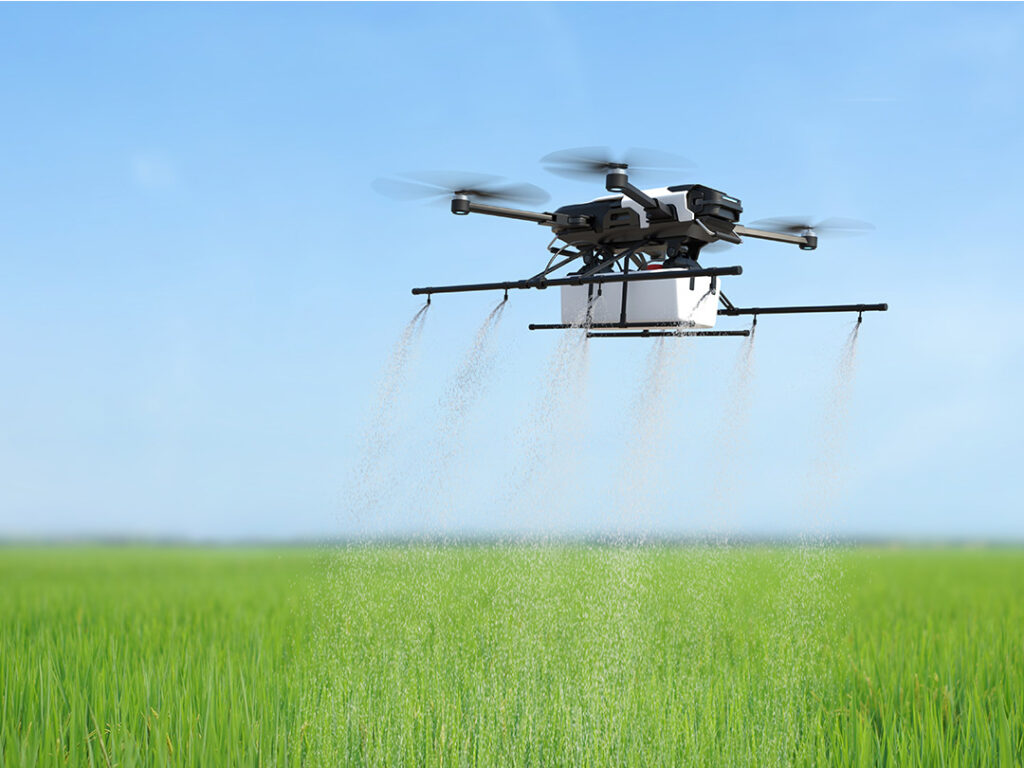
Drones equipped with specialized payloads apply treatments according to the custom plan. Advanced flight control and application systems ensure precise execution.
Post-Treatment Evaluation
After application, results are reviewed through follow-up scouting or monitoring to assess effectiveness and inform future treatments.
Applications of Custom Drone Treatments
Custom drone treatments are used across a wide range of applications.
Precision Agriculture
In agriculture, custom drone treatments support site-specific crop management.
Common applications include:
Targeted herbicide and pesticide treatments
Variable-rate nutrient applications
Disease and stress mitigation
Spot treatments in irregular fields
These treatments improve crop health while reducing unnecessary input use.
Specialty Crops and Sensitive Areas
High-value or sensitive crops often require precise and gentle treatment methods. Custom drone treatments allow controlled application without physical contact or soil compaction.
Environmental Management
Custom drone treatments are used in environmental projects for targeted vegetation management, invasive species control, and restoration efforts.
Industrial and Infrastructure Applications
In industrial settings, custom drone treatments may include targeted application of protective coatings, cleaning agents, or treatment materials in hard-to-reach areas.
Technology Behind Custom Drone Treatments
Custom drone treatments rely on advanced and adaptable technology.
Flexible Drone Platforms
Professional drones are capable of carrying different payloads and adjusting flight parameters to suit specific tasks.
Smart Application Systems
Advanced spraying and distribution systems regulate flow rates, droplet size, and coverage patterns to match treatment requirements.
Precision Navigation and Control
High-accuracy navigation systems ensure consistent flight paths and repeatable application, even in complex terrain.
Data Integration
Custom treatments integrate aerial data with farm management or operational systems, supporting informed decision-making.
Benefits of Custom Drone Treatments
Organizations choose custom drone treatments for their operational and economic advantages.
Increased Effectiveness
Targeted application ensures treatments address the actual problem areas, improving overall effectiveness.
Reduced Input Costs
By applying inputs only where needed, custom treatments lower chemical, fertilizer, and material costs.
Environmental Responsibility
Reduced over-application minimizes runoff, drift, and environmental impact.
Operational Flexibility
Custom drone treatments can be adapted to changing conditions, allowing rapid response to emerging issues.
Improved Safety
Drone-based application reduces the need for personnel to work in hazardous or hard-to-access areas.
Custom Drone Treatments vs Standard Applications
Standard applications often apply uniform treatments across entire areas, regardless of variability. While simple, this approach can be inefficient and costly.
Custom drone treatments provide:
Precision targeting
Data-driven decision-making
Better resource efficiency
Improved long-term outcomes
Role in Sustainable and Precision Operations
Custom drone treatments align closely with sustainability and precision management goals. By optimizing input use and reducing waste, these treatments support responsible land stewardship and regulatory compliance.
Challenges and Best Practices
Implementing custom drone treatments requires expertise, accurate data, and proper planning.
Best practices include:
Using high-quality data sources
Selecting appropriate sensors and payloads
Timing treatments correctly
Monitoring results consistently
Professional service providers help manage these challenges and deliver reliable outcomes.
Future of Custom Drone Treatments
As drone technology and data analytics continue to advance, custom drone treatments will become even more refined. Automation, artificial intelligence, and real-time data integration will further improve treatment accuracy and scalability.
Custom drone treatments are expected to play a key role in the future of precision agriculture and specialized drone services.
Conclusion
Custom drone treatments offer a powerful, flexible, and efficient approach to aerial application. By tailoring treatments to specific conditions and objectives, these services improve effectiveness, reduce costs, and support sustainable operations.
For agriculture, environmental management, and industrial applications, custom drone treatments provide a modern solution that aligns technology with real-world needs. As industries continue to adopt precision-driven strategies, custom drone treatments will remain a critical component of advanced aerial service offerings.