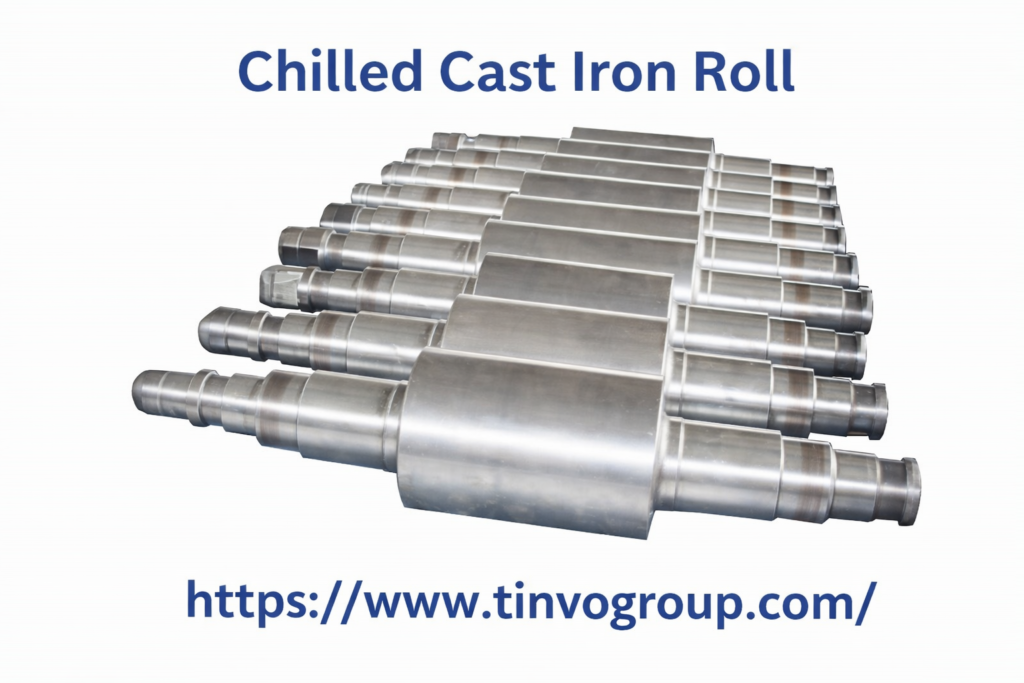
Metal and steel industries require precision, endurance and constant performance from their rolling mills’ components. In these components, rolls are crucial when it comes to shaping and securing metal products. A popular option used in the modern-day rolling mills is Chilled cast iron roll. It is well-known for its outstanding wear resistance and its superior quality of finish. In addition, the Cast steel roll has been gaining popularity because of its strength and adaptability to high-end operations.
This article gives an in-depth review of Chilled Cast Iron Roll solutions as well as their manufacturing process and benefits, as well as their applications and how they differ from Cast steel rolls in the metal and steel industries.
Understanding Chilled Cast Iron Roll Technology
A Chilled Cast Iron Roll is produced using the controlled chilling process used during casting. The working surface of the outside is rapidly chilled to form an extremely durable, wear-resistant layer. Meanwhile, the core is remarkably strong and flexible. This unique design lets the roll withstand the highest pressures of rolling while retaining an outstanding surface finish for metal products.
However, a cast steel roll is made with steel alloys, which offer superior toughness and resistance against thermal fatigue. Both types of roll serve different functions, however chilled cast iron remains the popular choice for intermediate and finishing stands.
Manufacturing Process of Chilled Cast Iron Roll
The manufacturing process for an Chilled Cast Iron Roll involves sophisticated metallurgical control
- The finest molten iron is poured into specially-designed molds
- Rapid cooling results in an outer layer of hard-colding
- Controlled solidification provides a strong inner core
- Precision machining delivers accurate dimensions
This procedure provides Chilled Cast Iron Roll the unique toughness and wear resistance, making it the ideal choice for rolling at high speeds.
Key Benefits of Chilled Cast Iron Roll
Popularity of Chilled cast iron roll in the steel and metal industries is due to its many advantages:
- Extraordinary surface hardness
- Abrasion resistance that is high and resistant to wear
- Superb surface finish for rolled items
- Service life is longer than traditional rolls
- Minimized maintenance and downtime
While a cast steel roll is a great choice for durability to impact, chilled cast iron rolls stand out in terms of surface quality and uniformity.
Applications in Steel and Metal Industries
A chilled cast Iron Roll is extensively used in a variety of milling operations, such as:
- Hot rolling mills
- Cold rolling mills
- Section rolling
- Mills for wire rods and bar mills
- Stands for strip and sheet finishing
For heavy-load and roughing applications For heavy-load and roughing, a cast iron roll is usually the preferred choice. For final areas where precision is important, chilled cast iron rolls produce outstanding results.
Performance in Modern Rolling Mills
Modern steel plants require the sameness and efficiency. Chilled Cast Iron Roll guarantees the least amount of surface imperfections as well as uniform thickness and a higher quality product. The ability to keep its durability even after extended use makes it a secure choice for continuous roll.
However the cast steel roll is extremely efficient under the most extreme stress of mechanical and temperature fluctuations. When used in conjunction both types of roll improve the efficiency of the entire mill.
Maintenance and Operational Advantages
Utilizing the Chilled Cast Iron Roll reduces frequent rolling changes because of its high wear resistance. This can lead to:
- Lower operating costs
- Reducing downtime for production
- Mill efficiency improved
- Consistent product dimensions
In comparison to a Cast steel roll that is chilled, cast iron roll requires less surface regrinding during finalizing operations, resulting in longer-term cost savings.
Choosing the Right Roll Solution
The right roll to choose depends on a variety of aspects:
- The type of metal that is rolling
- Speed of roll and temperature
- Pressure and load conditions
- Desired surface quality
A chilled cast Iron Roll is the best choice when the finish of the surface and resistance to wear are the top priority, while a Cast steel roll is ideal for high-impact or extremely heavy-load conditions.
Future of Roll Technology in Steel Industry
Through advancements in metallurgy as well as casting techniques The effectiveness for Chilled Cast Iron Roll solutions is constantly improving. Optimized alloy compositions and chilling techniques are increasing the life of the roll and increasing its efficiency.
In the same way, advancements in the production of Cast steel rolls have increased the toughness and thermal stability of the roll and allowed steel plants to meet the demands of production more efficiently.
Conclusion
Metal and steel industries depend heavily on the latest rolling technologies to meet increasing requirements for production and quality. The Chilled Cast Iron Roll remains an essential component of intermediate and finishing rolling because of its superior durability, wear resistance and superior surface quality. When used in conjunction with an iron roll made of Cast steel for rough applications, producers can create a well-balanced, efficient, cost-effective, and effective rolling mill configuration.
Through understanding the strengths and benefits of each type of roll, steel producers can increase their productivity, decrease downtime, and provide premium metal products to the marketplace.