Australia Vegan Food Market Analysis
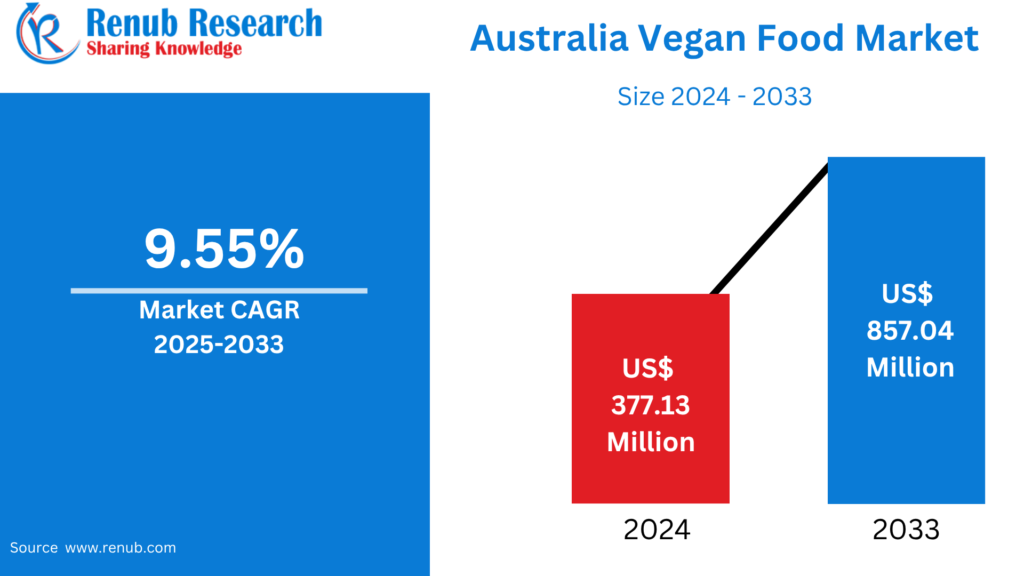
According to Renub Research Australia Vegan Food Market was valued at US$ 377.13 million in 2024 and is projected to reach US$ 857.04 million by 2033, expanding at a compound annual growth rate (CAGR) of 9.55% from 2025 to 2033. This robust growth is driven by rising adoption of plant-based diets among millennials and Generation Z, increasing ethical concerns regarding animal welfare, heightened awareness of environmental sustainability, and continuous innovation in vegan product offerings. Strong penetration of organized retail, coupled with the rapid growth of online distribution channels, is further accelerating market expansion across Australia.
Australia Vegan Food Market Overview
Vegan food refers to food products that exclude all animal-derived ingredients, including meat, dairy, eggs, and honey, relying exclusively on plant-based sources such as fruits, vegetables, grains, legumes, nuts, and seeds. These products are widely recognized for their nutritional benefits, including high fiber content, essential vitamins, antioxidants, and lower levels of saturated fats. Beyond nutrition, vegan food consumption aligns with ethical, environmental, and sustainability objectives by reducing greenhouse gas emissions, conserving water, and minimizing animal exploitation.
In Australia, vegan food has transitioned from a niche lifestyle choice to a mainstream dietary preference. Supermarkets, restaurants, cafés, and quick-service food chains increasingly offer plant-based menus to cater to evolving consumer expectations. Continuous product innovation—ranging from dairy-free milk and cheese alternatives to highly realistic plant-based meat substitutes—has significantly improved taste, texture, and nutritional profiles, strengthening consumer acceptance.
Request a free sample copy of the report:https://www.renub.com/request-sample-page.php?gturl=australia-vegan-food-market-p.php
Key Growth Drivers of the Australia Vegan Food Market
Rising Health Consciousness
Health awareness remains one of the most influential drivers of the vegan food market in Australia. A growing proportion of Australians are reducing meat consumption to manage lifestyle-related conditions such as cardiovascular diseases, obesity, and diabetes. Plant-based diets are associated with improved gut health, lower cholesterol levels, and reduced risk of chronic illnesses. The increasing popularity of flexitarian diets—where consumers predominantly eat plant-based foods while occasionally consuming meat—has further boosted demand for vegan alternatives. As a result, food manufacturers are investing heavily in nutrient-dense, fortified vegan products to attract health-conscious consumers.
Environmental Sustainability Awareness
Environmental concerns surrounding livestock farming—including deforestation, water scarcity, and greenhouse gas emissions—are influencing dietary choices, particularly among younger consumers. Vegan food is widely perceived as a more sustainable alternative due to its lower environmental footprint. In response, food brands and retailers are emphasizing sustainability messaging, eco-friendly packaging, and carbon-neutral production processes. This alignment with environmental values has strengthened brand loyalty and accelerated market growth.
Ethical Concerns and Animal Welfare
Ethical considerations related to animal welfare are significantly shaping consumer behavior in Australia. Increased transparency in food production and widespread media coverage of animal cruelty incidents have heightened public awareness. Many consumers are consciously choosing vegan food to align with cruelty-free and ethical consumption values. This moral shift has contributed to sustained demand growth across both packaged vegan foods and foodservice channels.
Challenges in the Australia Vegan Food Market
High Product Cost
One of the primary challenges facing the Australian vegan food market is the relatively high price of plant-based products compared to conventional animal-based foods. Higher production costs, specialized ingredients, limited economies of scale, and import dependencies contribute to elevated retail prices. This cost barrier restricts adoption among price-sensitive consumers. To address this challenge, market players are increasingly investing in local manufacturing, supply chain optimization, and scalable production technologies to improve affordability.
Taste and Texture Limitations
Despite significant advancements, some consumers still perceive vegan food as inferior in taste and texture compared to traditional meat and dairy products. Achieving consistent sensory quality remains a technical challenge, particularly for meat substitutes. However, ongoing research in food science, fermentation technology, and protein processing is steadily narrowing this gap, supporting long-term market acceptance.
Recent Developments in the Australia Vegan Food Industry
In November 2024, Harvest B launched Australia’s first dedicated plant-based meat ingredient production facility in Penrith, New South Wales, strengthening domestic supply chains and reducing reliance on imported proteins.
In September 2024, Australian brand vEEF introduced a range of carbon-neutral plant-based meat products at Woolworths, priced competitively with animal meat and designed to appeal to mainstream households seeking affordable and sustainable alternatives.
Australia Vegan Food Market Segmentation
By Product
- Dairy Alternatives
- Meat Substitutes
- Others
By Source
- Almond
- Soy
- Oats
- Wheat
- Others
By Distribution Channel
- Supermarkets and Hypermarkets
- Convenience Stores
- Specialty Stores
- Online Stores
- Others
Competitive Landscape
The Australia vegan food market is moderately fragmented, with both global and regional players competing through product innovation, sustainability initiatives, and strategic partnerships. Key companies profiled in the market include:
- Beyond Meat Inc.
- Danone S.A.
- The Archer Daniels Midland Company
- Tofutti Brands Inc.
- Vitasoy Australia Products Pty Ltd.
- SunOpta
- Daiya Foods, Inc.
Each company has been evaluated across company overview, key executives, recent strategies, and sales performance, offering a comprehensive view of competitive dynamics.
Outlook
The Australia vegan food market is poised for sustained growth through 2033, supported by strong consumer demand, favorable demographic trends, expanding retail availability, and continuous product innovation. As affordability improves and sensory quality advances, vegan food is expected to move further into the mainstream, positioning Australia as one of the most attractive plant-based food markets in the Asia-Pacific region.