Why Visitor Management Is an Important Part of Building Security
Managing visitors is a routine responsibility for many organisations in Singapore. Commercial offices, business centres, professional establishments and corporate premises receive guests throughout the day. These visitors may include clients, suppliers, delivery personnel, business partners and contractors.
Although most visits are legitimate, businesses still need a clear way to manage who enters their premises and which areas visitors are permitted to access. Relying entirely on reception staff or traditional keys may not provide sufficient control, particularly in buildings with several departments or restricted rooms.
Modern security door access control systems can support visitor management by helping organisations regulate entry through designated access points. When integrated with suitable visitor procedures, electronic access control makes it easier to maintain a distinction between authorised employees and temporary visitors.
Understanding the Challenges of Traditional Visitor Management
Some organisations still depend on manual visitor books, verbal approval and physical keys. These methods may work in smaller premises, but they can become difficult to manage when visitor numbers increase.
Uncontrolled Movement Beyond Reception
A visitor who has been approved to enter a reception area should not automatically have access to offices, meeting rooms or restricted facilities. Without clearly managed entry points, visitors may accidentally or intentionally enter areas outside their intended destination.
Difficulty Managing Multiple Appointments
Businesses that receive several visitors at the same time may experience delays when reception personnel need to contact different departments for approval.
A structured visitor process can help staff verify appointments and direct guests to the appropriate location without giving them unnecessary access.
Limited Visibility Over Entry Activity
Manual records may be difficult to review, particularly when information is incomplete or handwriting is unclear. Electronic access records can provide additional information about credential activity, depending on the capabilities and configuration of the installed platform.
How Electronic Door Access Control Supports Visitor Management
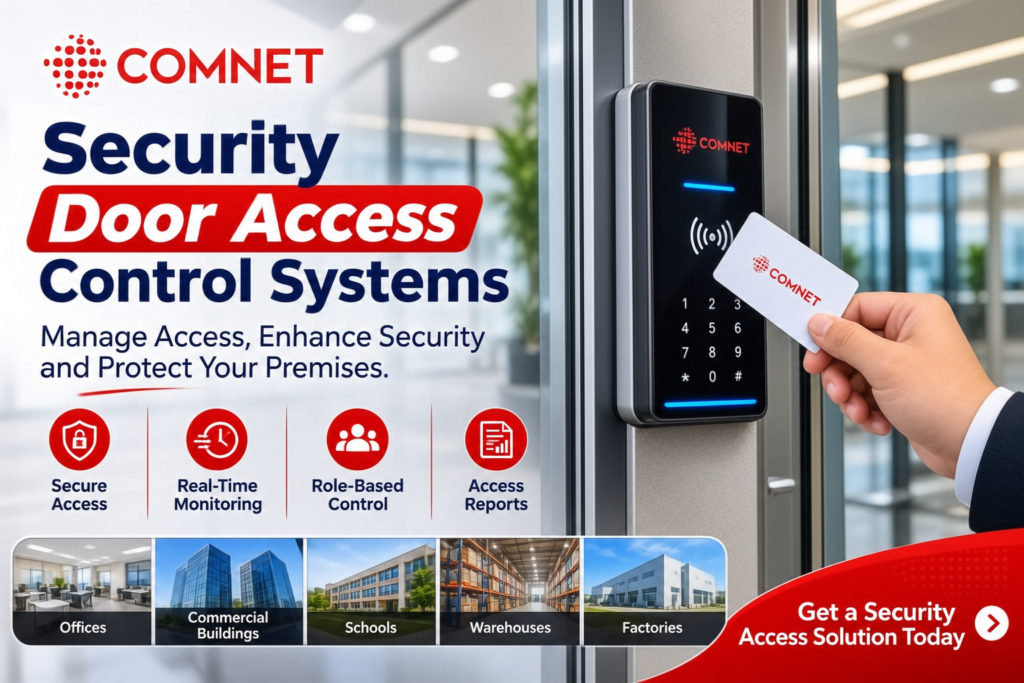
A properly planned electronic door access control system can help businesses manage selected entry points more systematically.
Controlling Access Between Reception and Office Areas
One practical arrangement is to separate the public reception area from internal working spaces using controlled doors.
Visitors can remain in the designated waiting area until an authorised employee receives them. This helps prevent unrestricted movement through the workplace.
Supporting Authorised Employee Entry
Employees can use individual credentials to access the areas permitted by their roles. This reduces dependence on shared physical keys and allows administrators to manage permissions more efficiently.
Managing Temporary Access
Some access control platforms support temporary credentials or time-based permissions. Where available, these functions can be useful for approved visitors, contractors or service personnel who require access for a limited period.
Businesses should confirm that the selected system supports the required visitor workflow before implementation.
Designing a Practical Visitor Access Process
Technology should complement a clear visitor management procedure rather than replace human supervision entirely.
Step 1 – Verify the Visitor’s Purpose
Reception personnel should establish who the visitor intends to meet and whether an appointment or approval is required.
Step 2 – Confirm the Appropriate Access Area
The host department should identify where the visitor is permitted to go. Access to restricted facilities should require separate authorisation.
Step 3 – Provide Suitable Visitor Identification
Where the organisation uses visitor passes or temporary credentials, these should be issued according to an established procedure.
Step 4 – Manage the Visitor’s Departure
Temporary access should be ended when the visit is completed. Visitor passes and credentials should be returned or deactivated according to the system’s capabilities.
Choosing the Right Access Control Features
Not every building needs a complicated visitor security platform. The appropriate solution depends on visitor volume, building layout, the number of controlled doors and the level of supervision required.
Card-Based Access
Access cards are commonly used in commercial premises because they are straightforward for employees to carry and present.
Individual credentials can also help administrators distinguish between different authorised users.
PIN and Biometric Authentication
PIN-based or biometric authentication may be suitable for selected areas where additional verification is required. Businesses should assess convenience, privacy, security requirements and system compatibility before selecting these options.
Centralised Access Administration
For larger premises, centralised administration may help authorised personnel manage permissions across several controlled doors. The platform should provide an appropriate level of administrative access so that only designated personnel can change important settings.
Protecting Visitor Information and Personal Data
Visitor management may involve collecting names, contact details, appointment information and other personal data. Businesses in Singapore should handle such information responsibly and consider their obligations under the Personal Data Protection Act.
Access records should only be available to authorised personnel for legitimate purposes. Organisations should also establish suitable retention and disposal procedures rather than keeping visitor information indefinitely without a valid reason.
Why Door Layout and Installation Planning Matter
An access control system must work with the building’s physical layout. Reception doors, internal partitions, emergency exits and existing locking hardware all need to be considered.
Poor planning can create unnecessary queues or make it difficult for employees to move between areas. Businesses should assess door conditions, electrical requirements, cable routes and emergency release arrangements before installation.
Explore Comnet’s Physical Access Control Solutions
Comnet provides physical access control solutions for businesses looking to improve how they manage building entry points. Organisations planning to strengthen visitor and employee access arrangements can review their requirements before choosing suitable equipment.
A well-designed commercial door access control system should support the building’s visitor procedures while maintaining appropriate access restrictions for internal areas.
Build a More Organised Visitor Experience
A professional visitor experience begins with clear entry procedures and a secure environment. Businesses should make it convenient for authorised guests to reach their intended destination without allowing unrestricted movement throughout the premises.
Combining suitable visitor management practices with reliable security door access control systems can help organisations improve daily building operations. For businesses in Singapore reviewing their physical entry arrangements, explore Comnet’s solutions at https://www.comnet.sg/physical-access-control-systems/ and discuss a suitable access control approach for your premises.