A Houston contractor is preparing a commercial site for grading. The equipment is scheduled, the property appears relatively flat, and the crew expects straightforward earthmoving. Then the latest survey identifies a drainage path crossing the proposed work area, while part of the site falls within a regulated floodplain.
Moving soil before resolving those issues could redirect runoff, interfere with floodplain storage, or produce elevations that conflict with approved plans.
Houston site grading must begin with verified drainage and engineering requirements—not the arrival of a bulldozer.
What should contractors check before site grading in Houston? Before earthmoving, contractors should verify floodplain status, governing permits, existing drainage patterns, surveyed elevations, approved grading plans, soil conditions, and equipment access. The proposed cut-and-fill work must follow engineering requirements, while machinery selection should reflect material quantities, ground stability, drainage excavation, and construction sequencing.
Understand Existing Drainage Before Changing Ground Elevations
A relatively flat site can contain important drainage features that are easy to overlook.
Shallow swales, roadside ditches, surface depressions, existing storm drains, and natural overland flow paths determine where runoff travels during rainfall.
For example, raising the rear portion of a commercial lot without accounting for its existing drainage pattern could redirect surface water toward an adjacent property or prevent runoff from reaching a designated inlet.
Before grading, contractors should review:
- Existing topographic contours and low-lying areas
- Surface runoff entering or leaving the property
- Drainage easements, ditches, channels, and outfalls
- Existing stormwater infrastructure
- Proposed changes to drainage paths
The objective is not simply to make the ground level. It is to construct the grades and drainage features established by the civil engineer’s design.
Verify Floodplain Status and Permits Before Earthmoving
Floodplain construction planning requires two separate determinations: where the property falls within applicable flood hazard areas and which authority regulates the proposed work.
Check FEMA Flood Hazard Information
FEMA’s Flood Insurance Rate Maps (FIRMs) identify Special Flood Hazard Areas, regulatory floodways, and other mapped flood risks.
The 1-percent-annual-chance floodplain is commonly called the 100-year floodplain. This describes an annual probability, not an event that occurs only once every century.
FEMA also maps certain 0.2-percent-annual-chance flood areas.
Contractors and developers should review effective mapping, relevant map revisions, and project-specific surveys. Flooding can also occur outside mapped high-risk areas.
A flood map identifies hazards; it does not authorize grading, excavation, or filling.
Understand Which Local Authority Applies
City of Houston: Chapter 19 of the Code of Ordinances regulates development within the city’s defined special flood hazard areas. Applicable work requires floodplain development authorization, potentially including engineering documentation and mitigation review.
Unincorporated Harris County: The Harris County Office of the County Engineer administers applicable county development and floodplain requirements. Its guidance identifies grading, filling, excavation, and related land alteration as regulated development activities.
Harris County Flood Control District: The District manages flood risk reduction infrastructure and coordinates work affecting its facilities and rights-of-way. Projects entering District property or affecting its drainage infrastructure may require additional review and authorization.
These agencies have different responsibilities. A project manager should establish jurisdiction and obtain required approvals before scheduling earthmoving.
Review the Engineering Plans and Proposed Grades
Approved construction grading plans translate the intended site design into specific excavation and fill operations.
The contractor’s responsibility is to execute those requirements—not independently redesign the site’s drainage.
Before rough grading, the superintendent and equipment operators should understand:
- Existing elevations: Surveyed ground levels used to establish current conditions.
- Proposed grades: The finished elevations and slopes required by the design.
- Benchmarks and vertical datum: References used to control and verify elevation measurements.
- Cut-and-fill limits: Areas designated for excavation, material placement, or elevation adjustment.
- Drainage structures: Proposed swales, inlets, pipes, detention facilities, and outfall connections.
- Earthwork quantities: Estimated material volumes, hauling requirements, and material suitability.
- Construction tolerances: Project specifications governing grading accuracy and acceptable finished conditions.
Rough grading establishes the general earthwork configuration. Finish grading brings surfaces closer to specified final elevations and tolerances.
Survey controls and required inspections help confirm that the constructed grades match approved drawings.
If unforeseen conditions require a grade adjustment, the contractor should refer the issue to the responsible design professional rather than improvise with equipment.
Fill Placement Can Affect Floodplain Storage and Drainage
Placing imported fill is not simply a question of whether suitable material is available.
In regulated floodplain areas, additional fill can displace floodwater storage or interfere with conveyance. Those effects may require engineering analysis, mitigation, or restrictions under applicable regulations.
Houston’s floodplain framework addresses flood storage and conveyance, while Harris County identifies specific fill limitations, including restrictions within regulatory floodways.
Compensatory storage or other mitigation may be required where permitted and applicable, but there is no single grading solution appropriate for every property.
Contractors should confirm approved fill locations, material specifications, cut-and-fill quantities, and disposal arrangements before importing soil.
Erosion and sediment controls must also accommodate construction activities without obstructing required drainage.
Houston Soil Conditions Influence Equipment and Compaction
Clay-rich soils are common across portions of Greater Houston, but individual sites can contain varying layers of clay, sand, fill, and previously disturbed material.
Moisture makes those differences important.
Saturated or unstable ground may reduce traction, create deep ruts, affect equipment support, and complicate compaction. Excavated material that appears reusable may also fail the project’s specified material requirements.
Contractors should review available geotechnical recommendations and evaluate actual subgrade conditions.
Compaction equipment, lift thickness, moisture conditioning, and testing must follow project specifications.
A larger machine does not automatically solve unstable ground. Poor bearing conditions may require revised access, soil treatment, additional evaluation, or adjustments to the approved construction sequence.
Choose Earthmoving Equipment Based on the Approved Grading Scope
Equipment selection should follow the engineering design, earthwork quantities, available space, and operating conditions.
| Equipment | Common Sitework Application | Key Selection Considerations |
| Dozer / Bulldozer | Rough grading, material pushing, site preparation | Blade configuration, material volume, push distance, ground conditions |
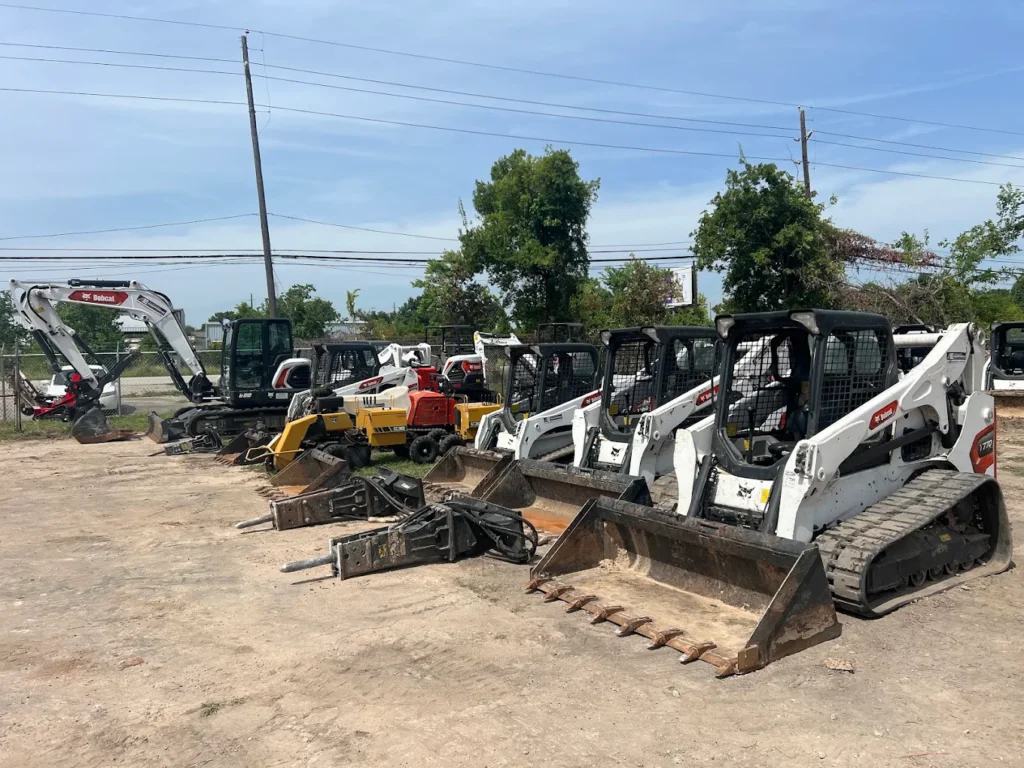
| Compact Track Loader | Smaller-area grading, material handling, site preparation | Operating weight, attachment compatibility, available space, surface conditions |
| Excavator | Drainage excavation, trenching, designated material removal | Digging depth, reach, excavation geometry, operating clearance |
| Compaction Equipment | Specified fill and subgrade compaction | Soil type, lift requirements, moisture, project specifications |
Dozers can support rough grading where material must be pushed and distributed across a suitable working area.
For contractors evaluating dozer rental in Houston, the important considerations are the approved earthmoving scope, material characteristics, travel distances, ground stability, and access—not machine size alone.
Compact track loaders may suit smaller work areas, while excavators are often more appropriate for drainage excavation and material removal.
Compactors perform a separate function: achieving specified soil density and subgrade conditions.
None of these machines substitutes for an approved grading design.
Plan Access, Material Movement, and Construction Sequencing
Even suitable equipment can disrupt a project when access and material handling are poorly coordinated.
Before mobilization, identify temporary entrances, unloading areas, haul routes, staging locations, underground utilities, and equipment travel paths.
Texas811 generally requires excavation notification at least two business days before digging, excluding weekends and holidays. Required utility responses must be checked before work begins.
Temporary spoil piles or haul routes should not block drainage facilities, occupy restricted easements, or undermine approved erosion controls.
OSHA excavation requirements also address underground installations, water accumulation, equipment near excavation edges, and inspections by a competent person.
A practical sequence connects utility verification, erosion controls, clearing, excavation, fill placement, compaction, drainage installation, and final grading.
Weather and changing ground conditions may require adjustments to the work schedule.
Five Site Grading Mistakes That Create Avoidable Problems
- Mobilizing before approvals are confirmed. Work may begin outside authorized grading limits or before required floodplain review is complete.
- Ignoring neighboring drainage. Altered elevations can redirect runoff toward adjacent properties or interfere with existing drainage paths.
- Making unauthorized field adjustments. Changing proposed grades without engineering review can compromise drainage performance and plan compliance.
- Importing fill before reviewing restrictions. Unapproved placement may affect floodplain storage, conveyance, or permitted elevations.
- Selecting machinery before evaluating conditions. Inadequate access, saturated soil, unsuitable attachments, or poor sequencing can disrupt planned earthwork.
Pre-Earthmoving Site Grading Checklist
Before grading begins, confirm:
- Governing jurisdiction and current flood hazard information
- Required permits, approvals, and applicable grading limits
- Approved plans, benchmarks, existing elevations, and proposed grades
- Drainage paths, outfalls, detention requirements, and neighboring properties
- Cut-and-fill limits, material specifications, and compaction requirements
- Soil conditions, utility locations, and excavation hazards
- Erosion controls, haul routes, stockpiles, and equipment access
- Suitable machinery, work sequencing, inspections, and weather conditions
Frequently Asked Questions
Do you need a permit to grade land in Houston?
Permit requirements depend on the property’s jurisdiction, floodplain status, and proposed work. City of Houston floodplain development activities are subject to Chapter 19, while unincorporated Harris County administers its own development requirements. Contractors should confirm applicable grading, drainage, and floodplain approvals with the responsible permitting authority before beginning.
Can contractors place fill dirt in a Houston floodplain?
Fill placement may be regulated or restricted because it can affect floodwater storage and conveyance. Permissibility depends on the governing regulations, floodplain classification, approved plans, and any applicable engineering or mitigation requirements. Harris County specifically prohibits fill in regulatory floodways. Contractors should not place fill until the required authorization and design are confirmed.
What should a construction grading plan include?
A grading plan typically identifies existing and proposed elevations, contours, benchmarks, drainage paths, grading limits, cut-and-fill areas, and relevant infrastructure. Depending on the project, it may also include stormwater detention, outfalls, erosion controls, and construction specifications. The responsible engineer determines the required design information and obtains applicable approvals.
Is a bulldozer suitable for every site grading project?
No. Dozers support suitable rough grading and material-pushing operations, but restricted spaces, drainage trenches, unstable ground, and specific compaction requirements may call for different equipment. Selection should consider the approved work, material volumes, push distances, access, soil support, and construction sequencing.
Resolve the Site Design Before Moving Soil
Successful grading starts with understanding what the property is legally and technically approved to become.
Floodplain verification establishes regulatory constraints. Drainage planning and proposed grades define the earthwork. Soil conditions, access, and construction sequencing determine how that work can be executed.
The right equipment is the machinery capable of performing the approved grading plan—not a substitute for the engineering decisions behind it.
Contributor: Avanza Equipment, a Houston-based construction equipment rental business.