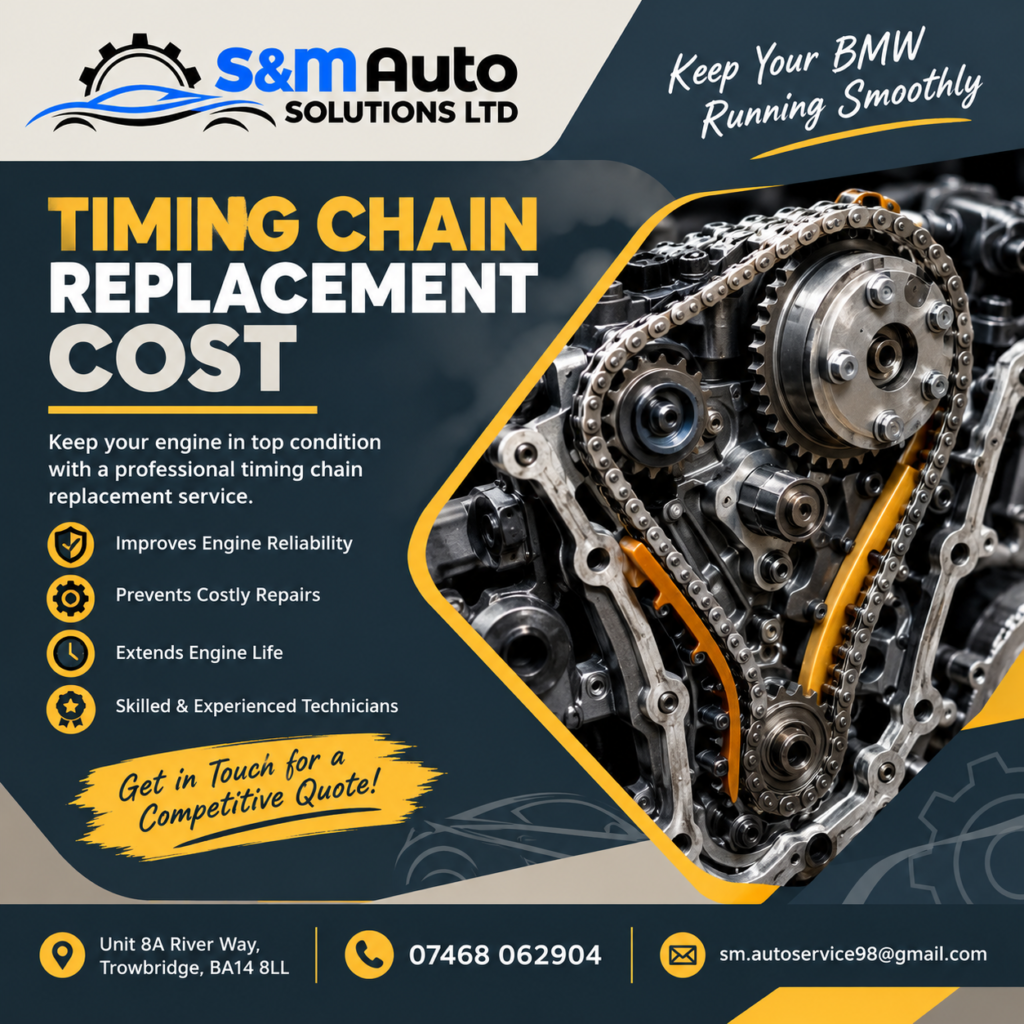
Modern BMW and MINI vehicles are designed to deliver a combination of performance, efficiency and driving comfort. However, like every mechanical component, their engines require regular maintenance to remain reliable. One important component that often receives attention as a vehicle ages is the timing chain.
The timing chain plays a vital role in synchronising the crankshaft and camshaft, ensuring that engine valves open and close at the correct time. When this component becomes stretched, worn or damaged, it can affect engine performance and potentially cause serious internal damage.
For vehicle owners planning maintenance in 2026/2027, understanding timing chain replacement cost is an important part of managing vehicle ownership expenses. Knowing the warning signs, replacement process and factors affecting repair costs can help drivers make informed decisions before a minor mechanical issue develops into a major engine problem.

1. Understanding How a Timing Chain Works
A timing chain is a metal chain located inside the engine. Its primary function is to maintain accurate synchronisation between the crankshaft and camshaft. This synchronisation allows the engine’s valves and pistons to operate in the correct sequence.
Unlike a timing belt, which is generally manufactured from reinforced rubber-based materials, a timing chain uses metal links designed for long-term operation.
However, a timing chain is not completely maintenance-free. Over time, several components within the timing system can experience wear, including:
- Timing chain links and connecting components.
- Chain tensioners responsible for maintaining correct tension.
- Plastic or composite timing chain guides.
- Camshaft and crankshaft sprockets.
- Related oil-fed tensioning components.
Engine oil quality is particularly important because many timing chain systems depend on proper lubrication and hydraulic tensioner operation.
Following the manufacturer’s recommended servicing schedule and using the correct engine oil specification can help reduce unnecessary wear.
2. Common Warning Signs That a Timing Chain Needs Attention
Recognising early warning signs can help prevent expensive engine repairs. Although symptoms vary between BMW and MINI models, several common indicators deserve attention.
Unusual Engine Rattling
A rattling or metallic noise, particularly during a cold start, can indicate excessive timing chain movement or a problem with the tensioner. However, other engine components can produce similar sounds, so professional inspection is necessary.
Engine Management Warning Light
A stretched timing chain can affect the relationship between crankshaft and camshaft timing. This may trigger engine management warning lights or generate diagnostic trouble codes relating to camshaft and crankshaft correlation.
Rough Idling and Reduced Performance
Incorrect valve timing can affect combustion efficiency. Drivers might notice uneven idling, reduced acceleration, hesitation or difficulty starting the engine.
Difficulty Starting the Vehicle
When timing chain wear becomes significant, engine timing may become inconsistent. This can result in starting problems or irregular engine operation.

Metallic Noise from the Engine
Persistent metallic sounds should never be ignored. Although they do not automatically confirm timing chain failure, they can indicate a mechanical issue requiring further investigation.
Drivers experiencing these symptoms should arrange a professional inspection rather than continuing to operate the vehicle without understanding the cause.
3. What Influences BMW and MINI Timing Chain Replacement Costs?
The overall timing chain replacement cost depends on several factors, including the vehicle’s engine design, model year, labour requirements and condition of the surrounding components.
There is no single price that applies to every BMW or MINI vehicle.
Vehicle Model and Engine Type
Different engines have different timing chain layouts and accessibility requirements. Some designs require significantly more dismantling than others.
For example, a BMW timing chain replacement may involve different labour procedures depending on the engine family, vehicle generation and installation arrangement.
Similarly, the MINI Cooper timing chain replacement process varies according to the model, engine specification and production year.
Labour and Engine Accessibility
Labour is often a significant part of the overall repair expense. Some engines provide relatively straightforward access to the timing system, while others require substantial dismantling.
The time required to remove surrounding components, inspect the engine and install replacement parts can influence the final quotation.
Replacement Parts
A complete repair may require more than a replacement chain. Depending on inspection findings, the technician may recommend replacing:
- Timing chain.
- Chain tensioner.
- Timing chain guides.
- Sprockets, where required.
- Seals and gaskets
- Engine oil and associated service components.
Replacing worn supporting components at the same time can help reduce the risk of repeat labour.
Extent of Existing Damage
If the chain has stretched without causing further damage, the repair may be relatively straightforward.
However, if the chain has jumped timing or broken, the engine may have suffered internal damage involving valves, pistons or other components. Additional repairs can substantially increase the total expense.

4. BMW and MINI Timing Chain Replacement: What Owners Should Know
BMW and MINI vehicles share engineering technologies across various model generations, but their timing systems are not identical.
BMW Timing Chain Replacement
A BMW timing chain replacement should begin with a detailed assessment of the engine. Technicians generally investigate unusual noises, fault codes, timing correlation and chain tension before recommending replacement.
The correct repair procedure depends on the specific engine code. Using manufacturer-approved procedures, suitable timing tools and compatible replacement components is important for maintaining accurate engine timing.
MINI Cooper S Timing Chain Replacement
The Mini Cooper S timing chain replacement process can be particularly important for owners experiencing cold-start rattling, rough running or timing-related fault codes.
Different generations of the MINI Cooper S use different engine configurations. Therefore, technicians should identify the exact engine before estimating labour requirements or ordering components.
A proper mini cooper timing chain replacement should also include checks of the chain guides, tensioner and related timing components.
MINI One Timing Chain Replacement
Owners of the MINI One should also pay attention to unusual engine noises and changes in performance.
The mini one timing chain replacement cost depends on the engine specification, parts availability, labour requirements and any additional damage discovered during inspection.
It is important not to assume that every MINI One requires the same repair procedure. Vehicle identification and engine-specific diagnosis are essential.
5. Best Practices for Preventing Timing Chain Problems in 2026/2027
Although timing chain wear cannot always be prevented, sensible maintenance practices can help protect engine components and reduce the likelihood of premature problems.
Consider the following recommendations:
- Use the correct engine oil: Always follow the manufacturer’s recommended oil specification for your particular engine.
- Maintain regular oil changes: Old or contaminated engine oil can affect lubrication and hydraulic tensioner performance.
- Investigate unusual noises: Do not ignore persistent rattling, particularly during cold starts.
- Avoid delaying diagnosis: Early investigation may help identify chain tensioner or guide problems before they become more serious.
- Check vehicle service history: When purchasing a used BMW or MINI, review available maintenance records and investigate any previous timing chain repairs.
- Use qualified technicians: Timing chain work requires accurate engine timing, suitable tools and knowledge of the specific engine design.
Another important consideration is the quality of replacement parts. Compatible components that meet the required specifications should always be selected rather than choosing parts based on price alone.

Conclusion
Timing chain maintenance remains an important consideration for BMW and MINI owners in 2026/2027. Although timing chains are designed for durability, wear affecting the chain, tensioners and guides can eventually create mechanical problems.
Understanding the symptoms, arranging timely inspections and following appropriate maintenance practices can help drivers avoid unexpected repair expenses.
Whether investigating a mini timing chain replacement, a MINI Cooper S repair or a BMW engine timing issue, an accurate diagnosis should always come before replacing components.
For additional information about repair considerations and mini cooper timing chain replacement cost, vehicle owners can explore the relevant maintenance guidance available from S&M Auto Service.
Ultimately, informed maintenance decisions, suitable replacement parts and professional installation are essential for keeping BMW and MINI engines operating reliably.
Contact Us : https://www.smautoservice.co.uk/contact-us/
About Us : https://www.smautoservice.co.uk/about-us/
Website Link : https://www.smautoservice.co.uk/
Read More :
- https://xuzpost.com/https-www-smautoservice-clutch-replacement-cost-uk-2026-2027-repair-tips-signs-local-expert-advice/
- https://www.smautoservice.co.uk/how-much-do-auto-service-advisors-make/
- https://www.smautoservice.co.uk/what-are-auto-detailing-services/
- https://www.smautoservice.co.uk/how-to-service-auto-air-conditioning/
- https://www.smautoservice.co.uk/are-auto-service-contracts-worth-it/
- https://www.smautoservice.co.uk/trusted-auto-repairs-honest-service-reliable-results/