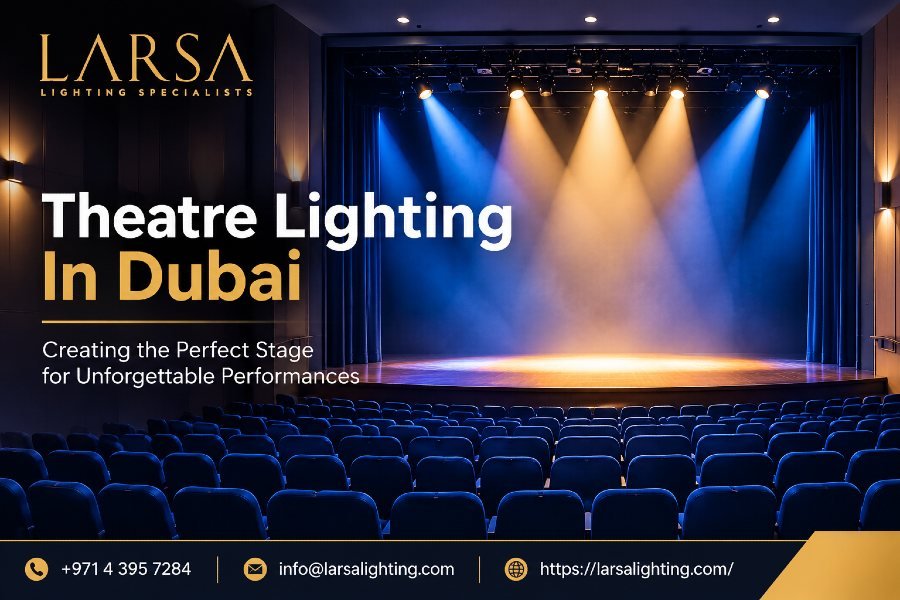
A successful theatre experience depends on more than talented performers, impressive sets, and quality sound. Lighting plays an equally important role in shaping the atmosphere, directing audience attention, highlighting performers, and creating visual depth. From intimate stage productions to large performing arts venues, the right lighting system helps every performance communicate its intended mood and message.
Choosing suitable Theatre Lighting in Dubai requires careful consideration of the venue’s architecture, stage requirements, audience comfort, and operational needs. With modern lighting technology offering greater flexibility and energy efficiency, theatre designers and developers must select solutions that balance visual quality with practical performance.
Understanding the Different Lighting Needs of a Theatre
A theatre is made up of several spaces, each requiring a different lighting approach. The stage, auditorium, entrance, foyer, corridors, and backstage areas all serve specific purposes. A single lighting arrangement cannot effectively meet every requirement.
The stage needs flexible illumination to highlight performers and create dramatic effects. The auditorium requires comfortable lighting that supports seating and movement without distracting audiences. Meanwhile, entrances and public areas need sufficient brightness for navigation, safety, and visual appeal.
Before selecting fixtures, it is important to understand how the venue will be used. A school auditorium, black-box theatre, multipurpose performance hall, and professional theatre have different technical and operational requirements. The lighting design should reflect the type of productions, audience capacity, and frequency of events.
Choose the Right Lighting for the Stage
Stage lighting is one of the most important elements of theatre design. It helps performers remain visible while creating atmosphere, depth, and visual interest throughout a production.
Different lighting positions serve different purposes:
-
Front lighting: Illuminates performers’ faces and expressions, helping audiences follow the action.
-
Side lighting: Highlights body movements and creates definition, particularly during dance performances.
-
Backlighting: Separates performers from the background and adds depth to the stage.
-
Top lighting: Creates dramatic shadows and highlights specific areas of the performance.
-
Accent lighting: Draws attention to important scenery, props, and architectural features.
A well-planned combination of these lighting techniques allows designers to create different scenes without relying on excessive brightness. Fixture positioning, beam angles, mounting heights, and stage dimensions should all be considered during planning.
Consider LED Technology for Better Efficiency
LED lighting has become an important choice for modern theatre environments. Compared with conventional lighting technologies, LED fixtures generally consume less electricity, produce less unwanted heat, and require less frequent maintenance.
They also offer excellent flexibility for productions that require changing colours, brightness levels, and lighting effects. Depending on the fixture type, operators can adjust colour output to support different scenes and performance styles.
However, selecting LED fixtures involves more than comparing power consumption. Important factors include colour consistency, dimming performance, beam quality, noise levels, and compatibility with lighting control systems.
For professional venues hosting regular performances, reliable equipment and long-term service support are particularly important. The right specification should reflect the theatre’s actual usage rather than simply choosing the most advanced or expensive products.
Plan Comfortable Auditorium and Front-of-House Lighting
The auditorium must provide a comfortable environment before, during, and after a performance. Its lighting should reveal architectural details when the space is in use while allowing the room to become suitably dark once the show begins.
Dimmable downlights, concealed linear fixtures, aisle markers, and low-level step lights can work together to provide balanced illumination. Glare control is particularly important because audiences spend extended periods facing the stage. Poorly positioned fixtures or exposed high-output light sources can become distracting during performances.
Colour temperature should also complement the auditorium’s interior materials. Warm white lighting can enhance timber, fabric, and decorative finishes, while neutral white light may suit contemporary interiors and circulation areas. The final selection should be tested against the actual materials rather than relying on a standard colour temperature.
Foyers, entrances, and corridors require a different approach. Wall washers, accent lighting, and linear fixtures can improve visibility while highlighting architectural features. Clear illumination around reception desks, signage, and doorways also helps visitors navigate the venue comfortably.
Select a Suitable Lighting Control System
A theatre lighting system should be easy to operate while providing enough flexibility for different performances and events. Lighting controls allow operators to adjust brightness, create scenes, and coordinate multiple fixtures according to production requirements.
Preset controls are useful for everyday activities, including audience arrival, seating, intermissions, cleaning, and closing. Professional production teams may require advanced lighting consoles and network-based control systems to manage complex stage effects.
Separating architectural lighting controls from stage production controls can make operation more efficient. Both systems should still be capable of coordinating when necessary. For example, a show setting can reduce auditorium brightness while maintaining appropriate aisle illumination.
When planning Theatre Lighting in Dubai, it is important to consider the experience of the operating team. A complicated control system may offer extensive capabilities, but it can become difficult to manage without proper training and documentation. The ideal solution balances functionality, ease of use, and future adaptability.
Coordinate Lighting with Theatre Architecture
Lighting should be considered during the early architectural and interior design stages rather than added shortly before project completion. Theatre ceilings often contain multiple technical elements, including speakers, ventilation systems, sprinklers, projection equipment, acoustic treatments, and lighting fixtures.
Poor coordination can create installation difficulties, restrict fixture positioning, and make maintenance challenging. Early planning helps establish suitable mounting locations, cable routes, equipment access, and control infrastructure.
Emergency lighting also requires attention. Exit signs, aisle illumination, and emergency fittings must provide reliable visibility during power interruptions while remaining visually integrated with the interior.
For venues in Dubai and the wider UAE, designers should additionally consider local authority requirements, temperature conditions, dust exposure in exterior areas, and the availability of ongoing maintenance support.
Prioritise Testing and Long-Term Maintenance
Lighting drawings and digital visualisations provide a useful starting point, but they cannot always demonstrate how fixtures will perform in the actual environment. Testing sample fixtures and creating mockups can help evaluate brightness, beam angles, glare, colour quality, and material appearance before installation decisions are finalised.
Commissioning is equally important. It involves checking fixture operation, adjusting aiming positions, programming controls, and testing different lighting scenes. The system should be evaluated under realistic conditions, including audience arrival, performances, intermissions, cleaning, and emergency operation.
Proper documentation also supports long-term reliability. Fixture schedules, control settings, maintenance instructions, and replacement recommendations help venue operators manage the system efficiently.
Regular inspection and cleaning can further protect lighting performance. Replacing faulty components promptly and maintaining control equipment helps prevent unexpected interruptions during scheduled events.
Working with Professional Lighting Specialists
Selecting suitable theatre fixtures involves balancing architectural requirements, technical specifications, operational needs, and budget considerations. Professional lighting specialists can help translate these requirements into a coordinated lighting plan.
Larsa Lighting approaches lighting as both a technical discipline and an architectural element. Its experience in lighting solutions supports the selection of appropriate fixtures and systems that align with project requirements, installation considerations, and long-term performance.
For theatre developments, working with experienced lighting professionals can help architects, consultants, contractors, and venue operators make informed decisions from the initial planning stage through installation and commissioning.
Conclusion
Choosing the right theatre lighting requires a complete understanding of the performance space and its intended use. From stage illumination and auditorium comfort to intelligent controls, energy efficiency, and maintenance access, every element contributes to the overall experience.
A carefully coordinated approach to Theatre Lighting in Dubai helps create venues that support performers, engage audiences, and remain practical for everyday operation. By prioritising quality, flexibility, and early technical planning, theatre developers can establish lighting environments that perform reliably across different productions and events.