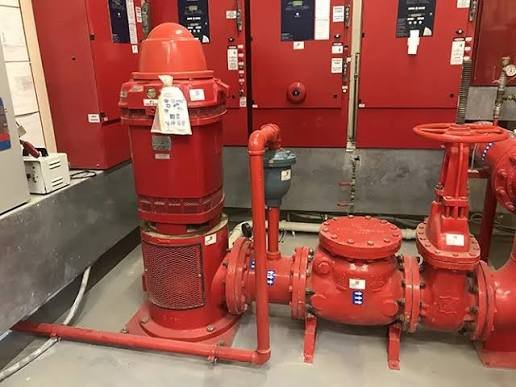
A fire pump plays an important role in maintaining the water flow and pressure required by a building’s fire protection system. Its capacity must match the hydraulic demands of the sprinkler system, standpipes, and other connected fire protection equipment. However, selecting a pump with a capacity much higher than the system requires can create performance problems instead of improving fire protection.
This condition is known as fire pump oversizing. It occurs when a fire pump is selected with a flow or pressure rating that exceeds the actual hydraulic requirements of the system by an unnecessary margin.
Although a larger fire pump may appear to provide an additional safety margin, its impact depends on the complete system design. Excessive pump capacity can affect operating pressure, water distribution, equipment reliability, energy consumption, and long-term maintenance.
Understanding fire pump oversizing is particularly important for commercial buildings, industrial facilities, warehouses, hospitals, and high-rise properties where dependable fire protection is essential.
This article explains why fire pumps become oversized, how oversizing affects system performance, and what engineers and building owners should consider when selecting the right fire pump.
What Causes Fire Pump Oversizing?
Fire pump oversizing usually happens when the selected pump does not accurately reflect the calculated water demand of the fire protection system. Several design and selection decisions can contribute to this problem.
1. Incorrect hydraulic demand calculations
Hydraulic calculations determine how much water a fire protection system needs and at what pressure. These calculations consider factors such as building height, sprinkler density, pipe dimensions, friction losses, elevation differences, and the available water supply.
If these requirements are calculated incorrectly, the selected fire pump may have a much higher flow or pressure rating than necessary.
For example, a commercial building might require a fire pump capable of delivering 750 GPM at a specified pressure. Selecting a 1,250 GPM pump without a justified hydraulic requirement could result in unnecessary excess capacity.
2. Selecting a pump based on future expansion
Some building owners and designers choose larger pumps because they anticipate future construction or increased water demand.
Although planning for expansion can be sensible, the decision should consider the actual future fire protection requirements. A pump selected for an undefined expansion plan may not operate efficiently under the building’s current demand conditions.
Future requirements should be evaluated through proper hydraulic calculations rather than assumptions about additional capacity.
3. Confusing higher pressure with better fire protection
Another common reason for oversizing is the belief that a higher-pressure fire pump automatically provides better protection.
However, fire protection systems require specific flow and pressure conditions. Excessive pressure can place additional stress on pipes, valves, fittings, and sprinkler components.
The goal is not to achieve the highest possible discharge pressure. It is to deliver the required water supply under the design conditions.
4. Ignoring the actual pump performance curve
A fire pump’s performance curve shows the relationship between flow rate and discharge pressure. Engineers use this curve to understand how the pump performs under different operating conditions.
Selecting a pump based only on its rated capacity, without evaluating the complete curve, can result in a mismatch between pump performance and system demand.
The pump curve should be evaluated against the system demand curve, available suction pressure, and pressure ratings of connected components.
How Does Fire Pump Oversizing Affect System Performance?
An oversized fire pump can influence several aspects of a fire protection system. The extent of the impact depends on the pump characteristics, system design, water supply, and operating conditions.
1. Excessive discharge pressure
One of the most important concerns associated with fire pump oversizing is excessive discharge pressure.
A pump with a higher pressure rating than the system requires may produce discharge pressure that exceeds the allowable working pressure of connected components, particularly under low-flow or no-flow conditions.
This can increase stress on:
-
Fire protection piping and joints.
-
Sprinkler heads and fittings.
-
Control valves and check valves.
-
Pressure gauges and other accessories.
-
Standpipe and hose connections.
For example, a system designed for a particular pressure range may experience excessive pressure when an oversized pump operates near its shutoff condition.
This does not mean every oversized pump will cause immediate equipment damage. However, the pump’s complete pressure performance must be checked against the pressure ratings of the system components.
2. Increased risk of water hammer
Water hammer occurs when flowing water experiences a sudden change in velocity. This can happen when valves close quickly, pumps start or stop, or water flow changes unexpectedly.
An oversized pump can contribute to hydraulic pressure problems when its operating characteristics are not properly matched to the system.
Sudden pressure changes can affect piping, joints, valves, and other connected equipment. Repeated pressure fluctuations may also increase wear on system components.
Proper pump selection, suitable piping arrangements, and appropriate valve operation help reduce these risks.
3. Operation away from the intended duty point
Every centrifugal fire pump has a performance curve that indicates its expected operating range.
When a pump is significantly oversized, the system’s normal demand may fall far below the pump’s rated flow. Depending on the pump curve and system characteristics, this can result in operation close to the low-flow or shutoff region.
Operating conditions matter because:
-
Water circulation inside the pump can become less favorable.
-
Internal heating can increase during prolonged low-flow operation.
-
Vibration and mechanical stress may become concerns.
-
Hydraulic performance may differ from the intended operating conditions.
Fire pumps are designed to meet demanding emergency conditions, but that does not mean every operating point is equally suitable for continuous operation.
The pump should be selected and evaluated using its certified performance curve rather than rated capacity alone.
4. Higher energy consumption during testing
Fire pumps are generally installed for emergency fire protection rather than continuous water distribution. However, they must undergo periodic testing and maintenance to verify their readiness.
An oversized pump may require more power than a properly selected unit under certain operating conditions.
During flow testing, excess capacity can also create additional demands on the test arrangement, water supply, drainage, and flow-measuring equipment.
This makes correct pump selection important not only during an emergency but also throughout the equipment’s maintenance life.
5. Increased mechanical wear
Operating a pump far from its preferred operating region can contribute to mechanical problems.
Depending on the pump design and operating conditions, these may include:
-
Increased vibration.
-
Higher bearing loads.
-
Seal and packing wear.
-
Greater hydraulic instability.
-
Additional stress on the motor or engine.
These issues are not automatic consequences of every oversized fire pump. However, they are important considerations when evaluating a pump that operates consistently outside its intended duty range.
6. Additional strain on water supply infrastructure
A fire pump can only perform as intended when its water supply is capable of supporting the required flow.
An oversized pump may create unnecessary demand on the suction supply, particularly during testing or operation at high flow rates.
If the available water source cannot support the pump’s operating requirements, suction pressure may decrease.
This can affect pump performance and increase the risk of cavitation under unfavorable conditions.
Cavitation occurs when local pressure inside the pump falls sufficiently for vapor bubbles to form and subsequently collapse. It can damage internal pump surfaces and reduce hydraulic performance.
Therefore, engineers must evaluate the water supply, suction piping, and pump requirements together rather than treating pump capacity as an independent selection decision.
What Does NFPA 20 Say About Fire Pump Sizing?
NFPA 20 is an important reference for engineers, designers, contractors, and other professionals involved in fire pump installations.
The 2025 edition of NFPA 20 is the current edition as of November 2026. It establishes requirements for fire pump selection, installation, performance, controllers, power supplies, and acceptance testing.
For centrifugal fire pumps, the standard establishes important performance criteria:
| Operating condition | Required performance |
|---|---|
| 100% rated flow | At least 100% of rated pressure |
| 150% rated flow | At least 65% of rated pressure |
| Shutoff (churn) | Not more than 140% of rated pressure |
These criteria describe the required performance characteristics of a centrifugal fire pump. They are not a recommendation to select a pump substantially larger than the calculated system demand.
The 2025 edition also includes updates concerning automatic fire pump testing, circulation relief valves, and other installation requirements. These developments reinforce the importance of proper pump performance verification and system readiness.
One important distinction is that a larger rated capacity is not automatically a code violation. The selected pump must still satisfy the applicable hydraulic demand, performance, installation, and component pressure requirements. The authority having jurisdiction (AHJ) and applicable local codes also play an important role in approval.
How to Identify an Oversized Fire Pump
Identifying an oversized fire pump requires more than comparing its rated GPM with the building’s estimated water demand. Engineers should evaluate actual operating conditions and the complete fire protection system.
Here are some important checks:
1. Compare hydraulic demand with pump capacity
Review the hydraulic calculations for the most demanding sprinkler or standpipe system connected to the pump.
Compare the calculated flow and pressure requirements with the pump’s rated capacity.
A significant difference between the required and selected capacity should prompt further engineering evaluation.
2. Review the certified pump curve
The certified pump curve provides information about pressure, flow, and pump performance at different operating points.
Engineers should examine:
-
Rated flow and rated pressure.
-
Shutoff or churn pressure.
-
Performance at 100% and 150% rated flow.
-
Expected operating point under system demand.
-
Available suction pressure at different flow conditions.
The objective is to confirm that the pump can satisfy the required hydraulic demand without exceeding system limitations.
3. Check system pressure ratings
Every component in a fire protection system has a specified pressure rating.
Review the ratings of piping, valves, fittings, sprinkler components, and other connected equipment. Compare these ratings with the maximum pressure the pump can produce under the applicable operating conditions.
This evaluation helps identify potential overpressure concerns before they affect system reliability.
4. Examine acceptance test results
Fire pump acceptance testing helps verify whether the installed pump performs according to its intended specifications.
Testing should evaluate the pump at the applicable flow conditions and compare the results with the manufacturer’s certified performance curve.
Unexpected pressure readings, unusual vibration, or deviations from the expected performance should be investigated by qualified fire protection professionals.
How Can Engineers Prevent Fire Pump Oversizing?
Preventing fire pump oversizing begins during the design and equipment selection stages. A systematic approach helps ensure that the pump meets fire protection requirements without introducing unnecessary capacity.
1. Perform accurate hydraulic calculations
Start with a detailed assessment of the building’s fire protection requirements.
Consider:
-
Building height and occupancy.
-
Sprinkler system design density.
-
Required standpipe flow.
-
Friction losses.
-
Elevation differences.
-
Available water supply pressure.
These calculations establish the actual flow and pressure requirements that guide pump selection.
2. Select the pump using its complete performance curve
Do not select a fire pump based only on its rated GPM or horsepower.
Review the manufacturer’s certified curve to understand how the pump performs across its operating range.
The selected pump should meet the calculated demand while remaining within the applicable performance and pressure limitations.
NFPA 20’s guidance also cautions against applying a pump at capacities below 90% of its rated capacity, making proper selection especially important.
asme.nfpadata.engineer
3. Evaluate suction conditions
A fire pump needs an adequate water supply to deliver its required performance.
Engineers should evaluate suction pressure, available water volume, suction pipe sizing, and potential restrictions.
A pump with excessive capacity may demand more water than the available supply can reliably provide.
Proper suction-side design helps maintain the conditions needed for dependable pump operation.
4. Consider pressure requirements across different building levels
High-rise buildings often have different pressure requirements at different elevations.
A pump selected without considering elevation differences and pressure zoning may create excessive pressure in lower floors while struggling to meet the requirements of higher floors.
Depending on the building design, pressure-reducing devices, separate pressure zones, or multiple fire pumps may be appropriate.
These decisions should follow hydraulic calculations and applicable fire protection requirements.
5. Account for future expansion through engineering
If a building is expected to expand, its future fire protection requirements should be evaluated before selecting the pump.
Engineers should determine whether the anticipated expansion will change the required flow, pressure, or system configuration.
This approach is more reliable than selecting a much larger pump simply to provide an undefined capacity allowance.
The Role of Fire Pump Maintenance and Performance Testing
Correct pump selection is only one part of maintaining a reliable fire protection system. Regular inspection, testing, and maintenance are equally important.
Under NFPA 25, fire protection systems must undergo applicable inspection, testing, and maintenance procedures.
Fire pump performance testing helps identify changes in operating conditions, including reduced flow, pressure variations, and mechanical problems.
Building owners and facility managers should pay attention to:
-
Changes in suction and discharge pressure.
-
Unusual vibration or operating noise.
-
Leakage around seals and connections.
-
Abnormal temperature changes.
-
Differences between actual and expected flow.
-
Changes in performance compared with previous test results.
The 2025 edition of NFPA 20 also includes expanded provisions for automatic and remote automatic testing of electric- and diesel-driven fire pumps. These developments make testing arrangements and performance verification important considerations in modern fire pump installations.
However, automatic testing does not replace the need for the applicable inspection, maintenance, and performance verification procedures.