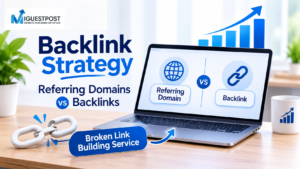
While creating quality content and optimizing website pages are not enough to build an effective online presence, companies must also have a good backlink profile to assist search engines in understanding the importance and authority of the website. Due to the fact that they can connect websites and introduce new people to valuable content, backlinks remain a very important part of SEO.
However, building links is not all there is to link building success. Companies can develop a more successful SEO strategy by understanding from where links come, how they impact the backlink profile of a website, and what opportunities are worth taking advantage of.
Backlink Profile: What Is That?
A backlink profile is an accumulation of all the links that point to a certain website. This includes information about the sites linking to it, the pages that are being linked to, anchor texts, link attributes, as well as the overall quality and relevance of the links.
Rather than relying on too many irrelevant or poor-quality links, an ideal backlink portfolio should comprise of links from credible and relevant domains.
For example, an online marketing website that gets backlinks from business journals, marketing blogs, and SEO resource pages is more likely to have a more relevant link portfolio compared to one that gets links from irrelevant websites.
By conducting frequent backlink research, businesses can gain a better insight into their existing link portfolio.
Understanding Referring Domains vs Backlinks
The topic of referring domain vs. backlink is a confusing one in SEO. Although these terms are related, they actually mean different things.
A backlink is basically a single hyperlink to another site. The unique site from which these backlinks originate is termed as a referring domain.
For example, there may be three backlinks that the company has got from another industry journal and five backlinks from the same marketing website. This will make eight backlinks from two referring sites on the webpage.
Insights Provided by Both:
- Backlinks: Shows the total number of links pointing to a site.
- Referring Domains: Shows the number of different sites linking to the page.
- Link Relevance: Helps ascertain the relevance of the linked pages to the business or industry.
- Link Quality: Helps ascertain the quality of the references.
A better insight into the backlink profile of a website can be gained through analysis of both. There may not necessarily be a correlation between strong SEO results and higher backlink numbers, especially when many of the links are coming from the same source.
Importance of Quality over Quantity in Backlinks
It is not all the same with regard to backlinks. Links need to be relevant and give useful reference information.
For example, an organization can be introduced to people who have interest in it via backlinks in a business journal. Nevertheless, when links are added to websites where they have no relevance just to manipulate search results, then these can prove to be ineffective and may pose SEO issues.
In determining backlinks, a number of issues need to be considered:
- Importance of the Website: Is it related to any issue concerning your industry?
- Editorial Standards: Does it provide content of good quality and value?
- Importance to the reader: Would the visitors find your products interesting?
- Placement of the link: Is the link placed in relation to the context?
- Quality of the website: Does the user find the website valuable?
It is not as viable to chase link quantity than link quality which involves editorial value and relevance as well as natural link placements.
How Backlink Research Helps in Identifying Potential Customers
A company will be able to get insights into its current SEO status and potential domains that it may target in the future through backlink research.
This can be done using SEO tools such as Ahrefs.
By analyzing the following, the company will be able to discover:
- websites that regularly publish material that pertains to the industry.
- publications that do not have a link to their own website, but instead provide links to their competitors.
- reference lists that need additional references.
- topics that can easily attract backlinks.
- outdated or non-existent links within reference lists.
Copying competitors is not the aim of backlink analysis. The objective is to understand the opportunities in the industry and come up with a strategy based on these publishing opportunities.
How Broken Link Building Creates New Opportunities for Backlinks
Yet another way of finding new backlink prospects is through the technique of broken link building. The concept involves finding the broken links on other sites that point to some non-existent pages and suggesting an appropriate replacement.
For example, there might be a mention of an outdated marketing guide on a certain industry blog. If the firm has something more useful on the topic, it can contact the owner of the website and suggest it as a replacement.
The following is a normal broken link building process:
- searching for relevant websites within a specific field.
- searching for broken links on those webpages.
- analyzing the themes discussed in the source webpage which was originally being linked.
- creating a new and relevant replacement website.
- reaching out to the website owner with a specific and clear suggestion.
With website research, identification of broken links, content analysis, and specific communication, a broken link building service can help businesses in handling this process.
However, suggestions for replacement links must always be relevant and helpful. Suggestions which improve readability are more likely to be considered by the website owner.
Link building in combination with content marketing
It is very important to possess valuable content in order to get organic backlinks. There are a lot of reasons why other sites would be willing to link to the site if it offers some valuable information, interesting facts, researches, etc.
Link building and content marketing may go together as long as there is a focus on providing the audience with something useful.
For instance, a company producing some report in its field may distribute it among bloggers, professional circles, etc. Some sites will use this content in their articles if they find it useful.
This approach will be able to bring referral traffic and create brand awareness and opportunities to get into relevant editorial coverage.
Why Does Strategic Link Building Need Miguestpost?
There is a need for research, quality content, and communication with relevant publication sites in order to create an ongoing link building strategy.
Using such things as guest blogging, content submission, SEO content, link building opportunities, and digital PR, Miguestpost assists business owners.
It is very important for companies to aim at having increased their visibility in the digital world and creating a strong digital presence through relevant publishing channels.
The goal is not to increase backlinks but to create substantial publishing opportunities for brand development.
Conclusion
By developing an in-depth knowledge of backlink profiles, businesses can make good SEO decisions. Businesses can come up with a more balanced link-building strategy through the analysis of referring domains, links, link relevance, and outreach opportunities.
By integrating backlink analysis with useful content and tactics such as broken link building, business can develop stronger brand authority and online visibility in the long term.