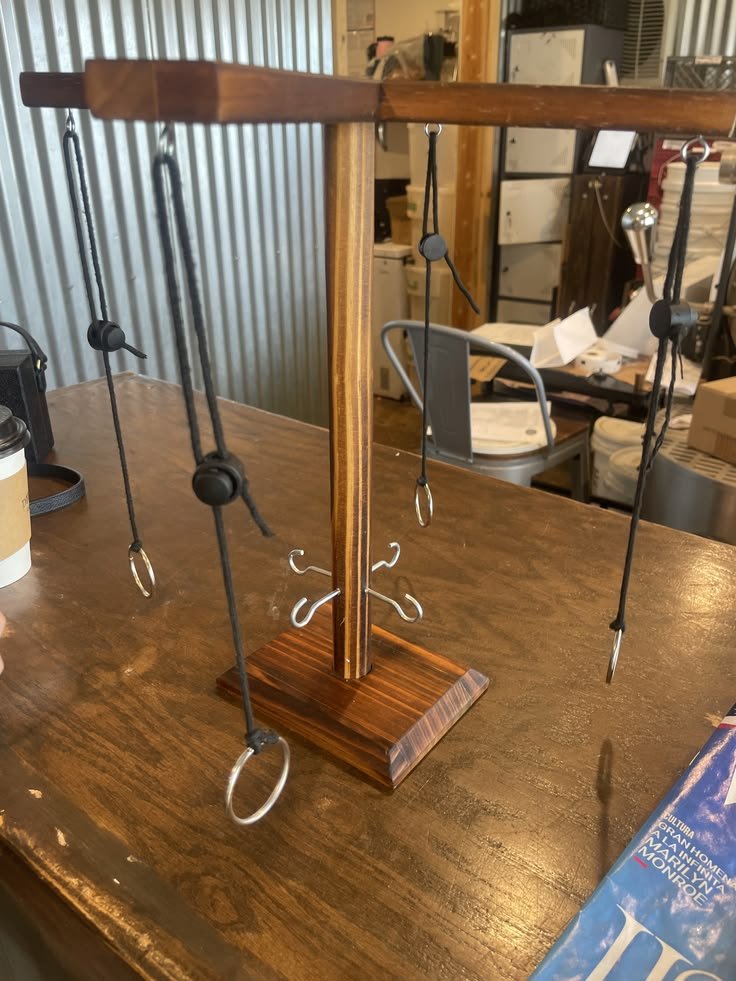
You may have seen a short video of two players leaning over a small table, each pulling a rope or cord while tiny fighters tug, spin, or wrestle against each other. Now you want one, but the listings all look alike and you are not sure what is worth buying. This guide is for you. A rope fighting tabletop toy in Pakistan is usually a compact two-player game where each person pulls a rope or string to move a figure, a lever, or a ring against the other player. Below, you will learn how these toys work, who enjoys them, what to check before paying, and how to avoid the most common buying mistakes.
Nexora Mart is your trusted destination for Online Shopping in Pakistan, offering quality toys, home appliances, energy-saving fans, and everyday products at competitive prices.
What Is a Rope Fighting Tabletop Toy?
The short answer is that it is a small, hand-powered game played on a table, where two people compete by pulling ropes. Most versions need no electricity, no screen, and no complicated setup. You place the toy between two players, each takes a rope or handle, and the pulling motion makes the figures or mechanical parts battle each other.
It helps to know that there is no single standard design. Sellers use different names for similar products, including tabletop pulling battle game, rope duel toy, and string fighting game. Some versions have two small warrior figures on a base. Others use a pulley system, a spinning arena, or a tug-of-war style track. Because of this, the photos and the product description matter more than the name. If a listing does not clearly show how the rope connects to the moving part, treat that as a warning sign.
The appeal is simple. The rules take under a minute to explain, a round lasts only a short time, and the result feels fair because both players use the same kind of movement. That makes it easy to pass around at a gathering, even among people who rarely play games.
How Does a Rope Fighting Tabletop Toy Work?
The Basic Mechanics
Inside most of these toys, the rope runs through guides or around small wheels. When you pull your rope, the force moves a lever, rotates a figure, or drags a marker toward your side. When the other player pulls, the movement goes the opposite way. The winner is usually the person who knocks over the other figure, pushes the marker past a line, or pins the opponent’s piece.
Technique matters more than raw strength. A smooth, steady pull often works better than a sudden hard yank, because a violent tug can jam the rope or pull it off its guide. Beginners tend to pull as hard as they can in the first second and then lose control. Players who watch the opponent’s rhythm and respond to it usually do better.
Playing a Round
Place the toy on a flat, stable surface and make sure both players can reach their ropes comfortably. Agree on the winning condition before you start, since different designs have different goals. Play a best-of-five or best-of-seven series so that one lucky pull does not decide everything. If the toy has removable parts, reset them carefully between rounds so that every round starts from the same position.
If a rope feels loose or the figure does not respond, stop and check the rope path before pulling harder. Forcing a toy that is out of alignment is the fastest way to damage it.
Who Is a Tabletop Rope Fighting Game Good For?
This type of toy suits children from about school age, teenagers, and adults who like quick competitive games. It works well in homes where several cousins gather during Eid holidays or school breaks, because it keeps two kids busy while others wait for their turn. It can also work on an office desk during a lunch break, where a two-minute match is easier to fit in than a board game.
Think about a family sitting together on an evening when the power goes out. A card game is hard to see in the dark and a phone drains its battery. A mechanical toy that needs only two people and a table fits that moment well. Parents also like that it gives children something physical and social to do instead of another hour on a screen.
There are honest limits, though. Many versions include small figures, pegs, or thin cords. These are not suitable for toddlers, and anything with small detachable parts should be kept away from children under three. Younger children playing at any age should be supervised, mainly to stop them from wrapping a rope around fingers or pulling it toward their face. Also remember that a game for two people can leave a third person bored, so it works best as part of a rotation or a small tournament.
What to Check Before Buying a Rope Fighting Tabletop Toy in Pakistan
Look at the material first. A plastic base can be perfectly good if it is thick and smooth, but very thin, brittle plastic cracks after a few intense matches. Wooden or metal-reinforced designs usually feel sturdier, though they may cost more and weigh more. If the listing does not state the material, ask the seller directly.
Discover the rope fighting tabletop toy in Pakistan at Nexora Mart for fun, competitive, and interactive tabletop entertainment.
Next, look at the rope. It should be strong, slightly flexible, and not too slippery. A rough, fraying cord can burn the skin and wear out fast. A very thin string may snap under steady pulling. Ask whether replacement ropes are available, or check whether you could replace one yourself with a similar cord, because the rope is the part most likely to wear out first.
Check the size and stability. A base that slides across the table during play ruins the experience, so look for rubber feet or a wide, heavy base. Also check the size against the space you have. Some versions are small enough for a school desk, while others need a proper table.
Read the age guidance. A responsible seller states a recommended age range and mentions small parts. If a listing makes bold claims, such as promising that the toy is unbreakable or suitable for every age, be cautious. No toy is unbreakable.
The common mistakes are easy to avoid. Buyers often choose the cheapest option without checking photos of the actual product. Others rely on a single polished video that may not show the real item. Some forget to ask about return or exchange terms. Take a few minutes to compare two or three listings, read the written description carefully, and notice whether customer photos match the seller’s images.
Where to Buy and What to Expect in Pakistan
In Pakistan, tabletop toys like this are usually found through online marketplaces, social media shops, and toy markets in larger cities. Each route has trade-offs. Online shops offer convenience and a wide choice, and many offer cash on delivery, which lets you inspect the parcel before paying. Local toy markets let you hold the item and test the rope, which is useful if you can visit. Social media sellers can be good, but check how long the page has been active and whether it shows genuine customer feedback.
Prices vary widely. They depend on the size, the material, whether the toy is imported or locally assembled, and the seller’s margin. Rather than chasing a single number, compare several listings of similar size and material. If one price is far lower than the rest, ask why. It often means thinner plastic or a weaker rope.
When the parcel arrives, record a short unboxing video before opening it fully. If the toy is damaged or incomplete, that video helps you make a claim. Test the rope movement right away, since many problems show up in the first few pulls. Also check the delivery estimate, especially if you need the toy for a birthday or a family event, because delivery times can differ between cities.
Be realistic about warranties. Many small toys come with no formal warranty, so a clear exchange policy matters more than any promise on the product page.
Frequently Asked Questions
Is a rope fighting tabletop toy safe for children?
It can be safe for school-age children when used with supervision and when the toy has no loose small parts that could be swallowed. Check the seller’s age guidance and keep ropes away from faces and necks. Younger children should not play without an adult nearby.
Does it need batteries or electricity?
Most rope fighting toys are purely mechanical and need no power. A few versions may add lights or sounds, so read the description to be sure. Mechanical designs are often better for long-term use because there is nothing to run out.
How long does one of these toys usually last?
That depends on the build quality and how roughly it is used. A well-made toy that is pulled smoothly can last a long time, while a weak rope or thin plastic may fail quickly. Gentle handling and a flat playing surface help extend its life.
Can adults enjoy it as much as kids?
Yes. The quick rounds and simple rules make it a good casual game for adults at gatherings or in break rooms. Larger, sturdier designs tend to suit adult hands better.
Choose Carefully and Start Playing
A rope fighting tabletop toy in Pakistan can be a fun, inexpensive way to get two people competing without screens or batteries. The main takeaway is simple: judge the toy by its material, rope quality, stability, and the seller’s honesty rather than by its name or a flashy video. Your next step is to shortlist two or three listings, compare their photos and descriptions side by side, ask about the rope and return terms, and choose the one that is clearest about what you are getting.