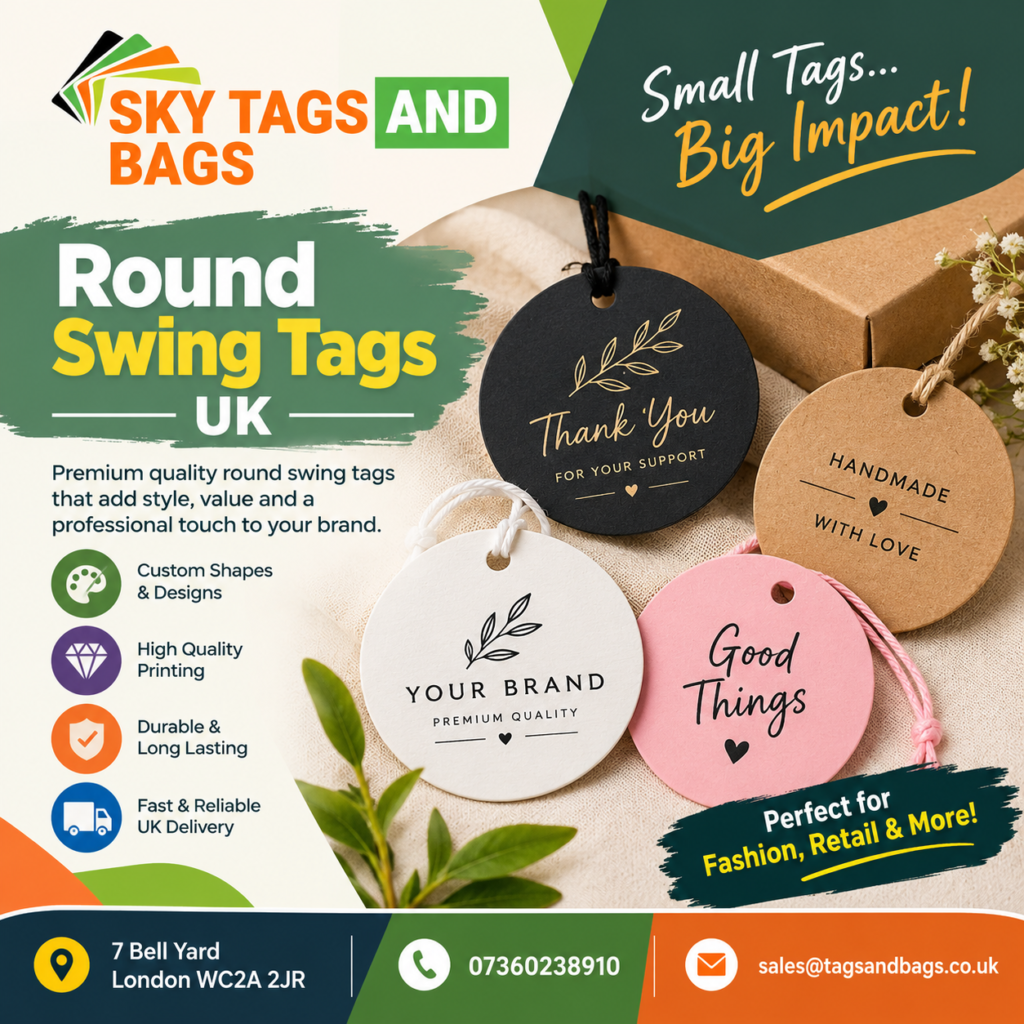
In retail, packaging details can influence how customers perceive a product before they examine it closely. Labels, materials, colours and finishing touches all contribute to a consistent brand identity. Swing tags are particularly useful because they combine essential product information with an opportunity to communicate a brand’s personality. Their shape, material and print quality can make a difference to the overall presentation.
For clothing retailers, gift shops and independent brands, round swing tags UK businesses use can offer a distinctive alternative to traditional rectangular labels. Their curved edges create a softer visual appearance, making them suitable for fashion accessories, handmade products, gift packaging and premium retail collections. When designed carefully, round tags can balance practical information with an attractive, professional finish.
Why Round Swing Tags Are Becoming Popular in Retail
Packaging design increasingly focuses on simplicity, visual consistency and memorable details. While rectangular tags remain widely used, circular designs provide another way to distinguish products on a retail display.

Round swing tags can complement different brand identities, from minimalist clothing labels to playful gift products. Their shape works particularly well with circular logos, simple typography and centrally aligned graphics. Retailers can also use both sides of a tag to organise information without making the design appear overcrowded.
Common applications include:
- Clothing and fashion accessories
- Handmade jewellery and craft products
- Gift items and seasonal collections
- Boutique retail packaging
- Sustainable fashion and lifestyle products
- Special-edition merchandise and promotional items
The effectiveness of a round tag depends on the product, the available printing area and the information customers need. A carefully planned design can improve readability while helping the product look cohesive on a shop floor or in an e-commerce photograph.
Choosing the Right Material, Size and Finish
Selecting suitable materials is an important part of producing functional swing tags. Paper weight, surface texture and finishing options influence both appearance and durability.

Cardstock is a common choice because it provides a firm surface for printed information and branding. Uncoated paper can create a natural, understated appearance, while coated stocks may produce sharper colours and a smoother finish. Recycled paper is another option for businesses looking to communicate a more environmentally conscious brand identity.
Before choosing a specification, consider the following factors:
- Size: Ensure the tag accommodates the logo, product details and any required pricing information.
- Paper thickness: Choose a weight that feels appropriate for the product without adding unnecessary bulk.
- Printing: Use clear typography and sufficient contrast to make text easy to read.
- Finishing: Consider matte coatings, textured paper or selective embellishments where they support the brand.
- Attachment: Select suitable string, cord or fasteners that remain secure during handling and display.
The circular format requires particular attention to layout. Text placed too close to the edge may appear cramped, while excessive information can make a small tag difficult to read. Leaving sufficient white space generally creates a cleaner result.

How to Design Effective and Affordable Round Swing Tags
Businesses working within limited packaging budgets need to balance visual quality with production efficiency. Affordable round swing tags can be achieved through thoughtful design decisions rather than relying on the cheapest materials available.
Start by identifying the information that genuinely needs to appear on the tag. A brand name, logo and short product detail may be sufficient for some products. Additional information, such as care instructions or website details, can be provided on another label or through digital channels when appropriate.
Several practical approaches can help manage costs:
- Standardise dimensions: Using a consistent size across multiple products may simplify production and inventory management.
- Limit unnecessary colours: A focused colour palette can support brand recognition while keeping the design visually organised.
- Plan quantities carefully: Estimate realistic demand to avoid excessive stock or repeated small print runs.
- Use both sides efficiently: Place branding on the front and supporting information on the reverse when additional space is needed.
- Match finishes to purpose: Reserve specialist finishes for products where they contribute meaningful visual value.
Ordering in larger quantities may reduce the cost per tag, depending on the printer’s pricing structure and the specifications selected. However, businesses should compare total costs, including setup, finishing, delivery and storage, rather than considering unit price alone.

Branding, Sustainability and Common Design Challenges
A swing tag should complement the product rather than compete with it. Consistent use of logos, typography and brand colours helps customers recognise a collection across different product categories. For retailers selling online, the same visual consistency can improve the appearance of product photographs and packaging presentation.
Sustainability is another consideration in modern packaging decisions. Retailers may explore recycled paper, responsibly sourced materials and reduced-plastic attachments. However, environmental claims should be accurate and supported by the material supplier’s information. A recyclable paper tag does not automatically make the entire packaging system recyclable, particularly when mixed materials or coatings are involved.
Common design challenges include overcrowded layouts, weak colour contrast, unsuitable attachment holes and paper that bends too easily. These issues can often be prevented by reviewing a digital proof and requesting a physical sample before committing to a large production run.
Businesses should also check that the tag remains legible at its intended size. A design that looks attractive on a computer screen may become difficult to read when printed at a smaller scale.

For retailers exploring specialist shapes and customised labelling, Tags and Bags provides a relevant example of a UK packaging supplier offering round swing tag options. Reviewing available specifications can help businesses understand how size, material and print choices affect the final result.
Conclusion
Round swing tags offer retailers a practical way to combine product identification, branding and visual presentation in one compact format. Their distinctive shape suits a wide range of products, while careful decisions about paper, printing, layout and attachment can improve their everyday functionality.
The most effective approach is to start with the product and customer requirements, then select a design that balances readability, durability and cost. By planning quantities carefully, avoiding unnecessary design elements and checking samples before production, businesses can create swing tags that support a consistent retail identity without introducing avoidable packaging expenses.
Contact Us : https://www.tagsandbags.co.uk/contact-us/
About Us : https://www.tagsandbags.co.uk/about-us/
Website Link : https://www.tagsandbags.co.uk/